
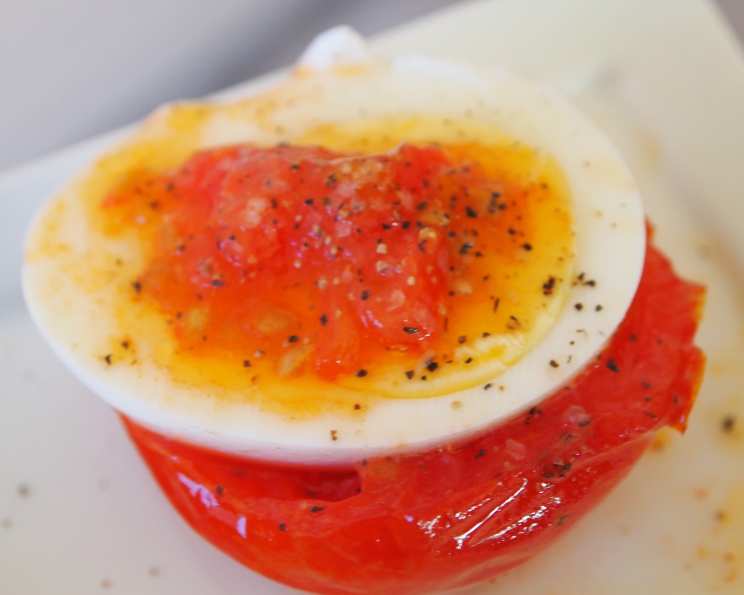
Portuguese Hard-Boiled Eggs (Ovos Duros a Portuguesa): A Culinary Journey
The aroma of simmering tomatoes and the sight of perfectly nestled eggs bring back such fond memories. My grandmother, Abuela Elena, used to make these delightful Ovos Duros a Portuguesa every Sunday. I remember sitting at her kitchen table, impatiently waiting for them to cool enough to devour, the rich tomato sauce staining my cheeks with joy. It wasn’t just a meal; it was a symbol of family, love, and the simple pleasures of Portuguese cooking.
Recipe Overview
- Prep Time: 15 minutes
- Cook Time: Varies (see instructions)
- Total Time: Varies (see instructions)
- Servings: 2-4
- Yields: 6 tomato halves
- Dietary Type: Gluten-Free
Ingredients
- 3 large tomatoes
- Tomato sauce or puree seasoned with salt, pepper, and garlic
- Salt and pepper
- Oil
- 6 hard-boiled eggs
Equipment Needed
- Knife
- Skillet or frying pan
Instructions
- Begin by preparing your tomatoes. Carefully cut each of the 3 large tomatoes crosswise in half. Gently remove the pulp from each half, creating a small cup shape. Be careful not to pierce the tomato skin. Set aside.
- Season the inside of each tomato half lightly with salt and pepper.
- Heat a small amount of oil in a skillet or frying pan over medium heat.
- Place the seasoned tomato halves in the hot oil and cook for a few minutes, turning occasionally, until they are slightly softened. This step helps to develop their flavor and prevent them from being too firm in the final dish. About 3-5 minutes is usually sufficient. Remove from the pan and place on a plate.
- Prepare your hard-boiled eggs. If you don’t have them pre-cooked, place 6 eggs in a saucepan, cover with cold water, bring to a boil, then reduce heat and simmer for 10-12 minutes. Immediately cool the eggs under cold running water to stop the cooking process. Peel the eggs carefully.
- Place a freshly shelled hard-boiled egg in each cooked tomato half.
- Pour a generous spoonful of thick tomato sauce or puree over each egg-filled tomato half. The tomato sauce should be seasoned with salt, pepper, and garlic. If your sauce is unseasoned, adjust accordingly. Make sure there’s enough sauce to coat the egg slightly and pool in the tomato cavity.
- If you want to bake them, preheat oven to 350 degrees F (175 degrees C). Arrange filled tomato halves in a baking dish. Bake for 10-15 minutes until heated through.
Expert Tips & Tricks
- Tomato Selection: Choose ripe, firm tomatoes for the best flavor and structure. Roma or vine-ripened tomatoes work particularly well.
- Seasoning the Sauce: Taste the tomato sauce before adding it to the eggs. Adjust the salt, pepper, and garlic to your preference. A pinch of sugar can also balance the acidity of the tomatoes. Fresh herbs like basil or oregano can add an extra layer of flavor.
- Preventing Soggy Tomatoes: Don’t overcook the tomatoes in the skillet. You want them slightly softened, not mushy. A quick sear is all they need.
- Hard-Boiled Egg Perfection: For perfectly cooked hard-boiled eggs with no green ring, use the cold-water method described above. This prevents overcooking the eggs.
Serving & Storage Suggestions
These Portuguese Hard-Boiled Eggs are best served warm as a starter or light lunch. Garnish with fresh parsley or basil for a pop of color and flavor. They pair wonderfully with crusty bread for soaking up the delicious tomato sauce.
Leftovers can be stored in an airtight container in the refrigerator for up to 2 days. Reheat gently in a skillet or microwave. Note that the tomatoes may become softer upon reheating. These are best served immediately.
Nutritional Information
Estimates, actual values may vary.
| Nutrient | Amount per Serving | % Daily Value |
|---|---|---|
| Calories | 250 kcal | 13% |
| Total Fat | 15g | 19% |
| Saturated Fat | 4g | 20% |
| Cholesterol | 200mg | 67% |
| Sodium | 250mg | 11% |
| Total Carbohydrate | 10g | 4% |
| Dietary Fiber | 3g | 12% |
| Sugars | 5g | – |
| Protein | 15g | 30% |
Variations & Substitutions
- Spicy Kick: Add a pinch of red pepper flakes to the tomato sauce for a spicy version.
- Cheese Lover’s Delight: Sprinkle grated Parmesan or Pecorino Romano cheese over the eggs before serving for an added layer of richness.
- Vegetarian Twist: For a heartier vegetarian option, add cooked lentils or chickpeas to the tomato sauce.
- Mediterranean Flair: Incorporate olives, capers, and a drizzle of olive oil for a Mediterranean-inspired take on this classic dish.
FAQs (Frequently Asked Questions)
Q: Can I use canned tomatoes instead of fresh tomatoes?
A: While fresh tomatoes provide the best flavor, you can use canned diced tomatoes in a pinch. Be sure to drain them well and adjust the seasoning accordingly.
Q: How can I prevent the eggs from sticking to the pan when hard-boiling them?
A: To avoid sticking, start with cold water covering the eggs. Once the water boils, remove from heat, cover, and let sit for 12 minutes. This method also helps prevent the green ring around the yolk.
Q: Can I prepare this dish ahead of time?
A: Yes, you can prepare the tomato halves and hard-boil the eggs in advance. Assemble the dish just before serving or baking.
Q: What’s the best way to peel hard-boiled eggs?
A: Immediately after cooking, place the eggs in an ice bath. This helps the shell separate from the egg. Gently tap the egg on a hard surface to crack the shell, then peel under cold running water.
Q: Can I add other vegetables to the sauce?
A: Absolutely! Feel free to add diced onions, bell peppers, or zucchini to the tomato sauce for added flavor and nutrients. Sauté them before adding the sauce.
Final Thoughts
Portuguese Hard-Boiled Eggs (Ovos Duros a Portuguesa) are more than just a recipe; they’re a taste of tradition, a celebration of simple ingredients, and a reminder of the joy that can be found in sharing a delicious meal with loved ones. I encourage you to try this recipe and create your own memories in the kitchen. Whether you stick to the classic version or add your own creative twists, I hope this dish brings as much happiness to your table as it has to mine. Bom apetite!