
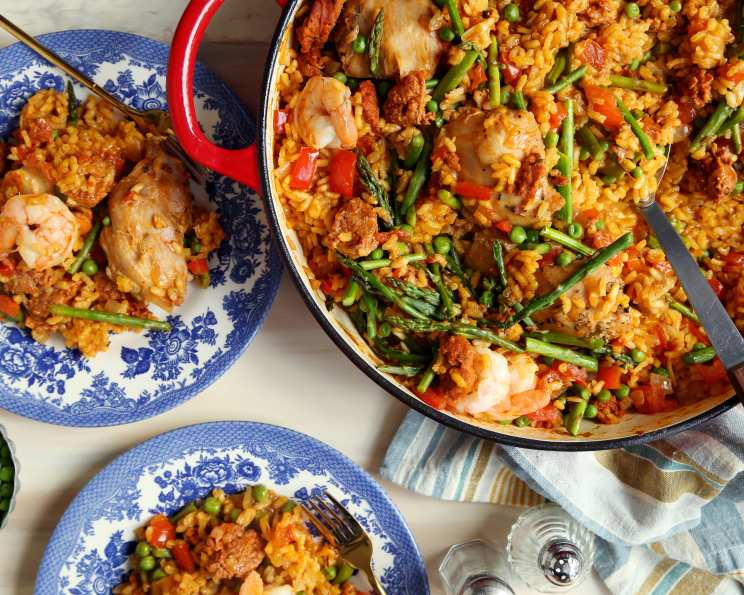
Portuguese Paella: A Taste of the Algarve in Your Kitchen
The first time I tasted paella, I wasn’t even in Spain. It was a small, sun-drenched restaurant in Lagos, Portugal, the Algarve coast shimmering in the distance. The aroma alone – saffron, seafood, and something subtly smoky – was intoxicating. As I took my first bite of the golden, perfectly seasoned rice, studded with succulent shrimp and tender chicken, I knew I was experiencing something truly special. This Portuguese version, with its unique chourico kick, instantly became a favorite, a culinary memory I’ve been trying to recreate ever since.
Recipe Overview
- Prep Time: 20 minutes
- Cook Time: 25 minutes
- Total Time: 45 minutes
- Servings: 6
- Dietary Type: Gluten-Free
Ingredients
- 6 skinless chicken thighs (about 1 1/2 lbs.)
- 1 teaspoon chopped fresh rosemary or 1/4 teaspoon dried rosemary
- 3/4 teaspoon salt, divided
- 1/4 teaspoon fresh ground black pepper
- 2 teaspoons canola oil
- 1 link Portuguese chourico, sliced in rounds
- 1 cup onion, chopped
- 1/2 cup red bell pepper, chopped
- 1 1/2 cups uncooked arborio rice or 1 1/2 cups other medium grain rice
- 1/2 cup diced plum tomato
- 1 teaspoon sweet paprika
- 1/4 teaspoon saffron thread, crushed
- 1 garlic clove, minced
- 3 cups chicken broth
- 3/4 lb large shrimp, peeled and deveined
- 1 cup asparagus, cut diagonally
- 1/2 cup frozen peas, thawed
Equipment Needed
- Large oven-proof nonstick skillet or paella pan
- Aluminum foil
Instructions
- Begin by preheating your oven to 400 degrees Fahrenheit (200 degrees Celsius). This ensures even cooking of the paella later.
- Prepare the chicken by sprinkling it evenly with the rosemary, 1/2 teaspoon of the salt, and the black pepper. This step seasons the chicken beautifully and infuses it with herbaceous flavor.
- Heat the canola oil in a large oven-proof nonstick skillet or paella pan over medium-high heat. Ensure the pan is hot before adding the chicken for proper searing.
- Add the seasoned chicken to the hot skillet and cook for 3 minutes on each side, or until lightly browned. The goal here is to sear the chicken, not cook it through, to develop a rich flavor and beautiful color.
- Remove the browned chicken from the pan, cover it to keep it warm, and set it aside. This prevents the chicken from drying out while you prepare the rest of the paella.
- Add the sliced chourico to the pan and cook until lightly browned, rendering some of its flavorful fat. The chourico adds a distinctive Portuguese smoky and spicy note to the dish.
- Add the chopped onion and red bell pepper to the pan and cook for 7 minutes, stirring constantly, until they soften and become fragrant. This creates the aromatic base for the paella.
- Add the rice, tomato, paprika, saffron, and garlic to the pan. Cook for 1 minute, stirring constantly, ensuring the rice is coated in the flavorful mixture and the spices are blooming.
- Return the browned chicken to the pan, nestling it among the rice and vegetables.
- Pour in the chicken broth and add the remaining 1/4 teaspoon of salt. Bring the mixture to a boil, ensuring all ingredients are evenly distributed.
- Once boiling, wrap the handle of the pan securely with aluminum foil to protect it from the oven heat. Cover the pan tightly with a lid or aluminum foil.
- Bake the paella in the preheated oven at 400°F (200°C) for 10 minutes. This allows the rice to begin absorbing the broth and the flavors to meld together.
- After 10 minutes, remove the paella from the oven and stir in the shrimp, asparagus, and peas. Distribute them evenly throughout the dish.
- Cover the pan again and return it to the oven for an additional 5 minutes, or until the shrimp are no longer translucent and the rice is tender and has absorbed most of the liquid. The paella is done when the rice is cooked through, but still has a slight bite, and the liquid has been absorbed, leaving a moist and flavorful dish.
Expert Tips & Tricks
- The Saffron Secret: Don’t skimp on the saffron! This is the signature flavor of paella, giving it its vibrant color and unique aroma. For best results, crush the saffron threads before adding them to the dish to release their full flavor and color.
- Perfect Rice Texture: Achieving the right rice texture is key to a great paella. Arborio rice is ideal, but other medium-grain rice varieties can work well too. Avoid long-grain rice, as it tends to dry out more easily. The rice should be cooked through but still have a slight bite to it, a texture known as “al dente”.
- Don’t Overcrowd the Pan: Use a large enough skillet or paella pan to allow the ingredients to cook evenly. Overcrowding the pan can lead to uneven cooking and a less flavorful dish.
- Create a Socarrat: For an authentic paella experience, aim for a slight crust of toasted rice at the bottom of the pan, known as “socarrat.” This adds a delightful textural contrast and a nutty, caramelized flavor. To achieve socarrat, increase the heat slightly during the last few minutes of cooking, keeping a close eye to prevent burning.
Serving & Storage Suggestions
Serve the Portuguese paella hot, directly from the pan, garnished with fresh parsley or lemon wedges. The presentation is part of the experience!
Leftovers can be stored in an airtight container in the refrigerator for up to 3 days. To reheat, gently warm the paella in a skillet over low heat, adding a splash of chicken broth or water to prevent it from drying out. You can also reheat it in the microwave, but be careful not to overcook the shrimp.
While paella is best enjoyed fresh, it can be frozen for longer storage. Allow the paella to cool completely before transferring it to a freezer-safe container. Thaw it overnight in the refrigerator before reheating as described above.
Nutritional Information
| Nutrient | Amount per Serving | % Daily Value |
|---|---|---|
| Calories | 335.6 kcal | N/A |
| Calories from Fat | 44 g | 13% |
| Total Fat | 4.9 g | 7% |
| Saturated Fat | 0.9 g | 4% |
| Cholesterol | 105.7 mg | 35% |
| Sodium | 1040.5 mg | 43% |
| Total Carbohydrate | 47.6 g | 15% |
| Dietary Fiber | 3.6 g | 14% |
| Sugars | 3.4 g | N/A |
| Protein | 23.5 g | 46% |
Variations & Substitutions
- Seafood Fiesta: Feel free to add other seafood to the paella, such as mussels, clams, or calamari. Adjust the cooking time accordingly.
- Vegetarian Delight: Omit the chicken and chourico for a vegetarian version. Add more vegetables, such as artichoke hearts, green beans, or mushrooms. Use vegetable broth instead of chicken broth.
- Spice it Up: If you like a little more heat, add a pinch of red pepper flakes or a splash of piri-piri sauce (Portuguese hot sauce) to the paella.
- Rice Variety: While arborio rice is traditional, bomba rice is also an excellent choice for paella. It absorbs more liquid than arborio rice, resulting in a very flavorful and moist dish.
FAQs (Frequently Asked Questions)
Q: Can I make this paella ahead of time?
A: While paella is best served fresh, you can prepare some of the components ahead of time. Chop the vegetables, measure the spices, and even sear the chicken in advance. Store them separately in the refrigerator and assemble the paella just before cooking.
Q: Can I use different types of rice?
A: Arborio rice is the preferred choice for its creamy texture, but other medium-grain rice varieties can also be used. Avoid long-grain rice, as it tends to dry out.
Q: How do I know when the paella is done?
A: The paella is done when the rice is cooked through and has absorbed most of the liquid. The shrimp should be pink and opaque, and the asparagus should be tender.
Q: Can I add lemon juice to the paella?
A: A squeeze of fresh lemon juice can brighten the flavors of the paella and add a touch of acidity. Add it just before serving.
Q: What can I serve with Portuguese Paella?
A: A simple green salad, crusty bread, and a glass of vinho verde (Portuguese green wine) make a perfect accompaniment to this paella.
Final Thoughts
This Portuguese Paella is more than just a recipe; it’s a journey to the sun-kissed shores of the Algarve. With its vibrant flavors, colorful ingredients, and comforting aroma, it’s a dish that’s sure to impress. Don’t be intimidated by the list of ingredients – the process is surprisingly simple, and the results are well worth the effort. Gather your ingredients, embrace the process, and prepare to transport yourself to Portugal with every delicious bite! I encourage you to give it a try and share your feedback. Bom apetite!