
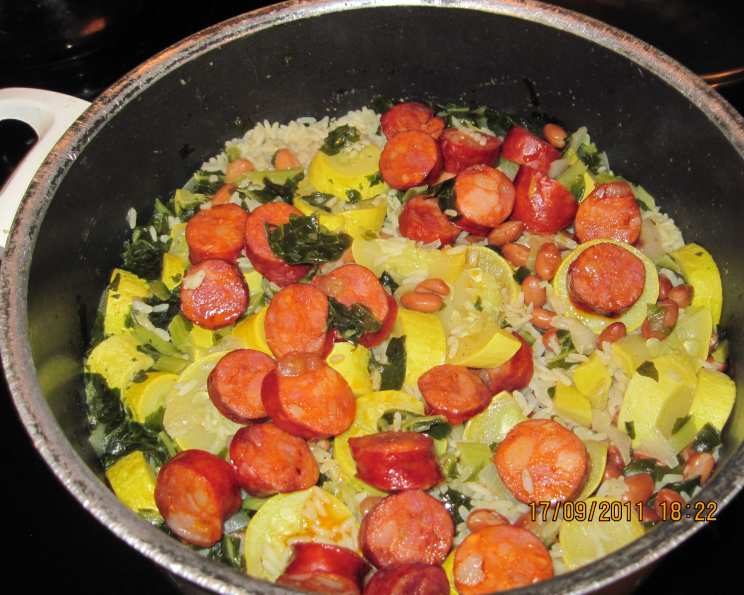
Portuguese Sausage Rice: A Taste of Home
The aroma alone transports me back to my grandmother’s cozy kitchen. I remember being a child, perched on a stool, watching her meticulously slice linguica, the spicy scent filling the air. She’d hum softly as she browned the sausage, and I knew a comforting, flavorful meal was on its way. This Portuguese Sausage Rice isn’t just a recipe; it’s a warm embrace of family, tradition, and simple, delicious ingredients.
Recipe Overview
- Prep Time: 5 minutes
- Cook Time: 30 minutes
- Total Time: 35 minutes
- Servings: 4
- Dietary Type: Varies (see substitutions)
Ingredients
- ¼ cup butter
- 1 (16 ounce) package Gaspar’s linguica sausage
- 1 teaspoon salt
- 4 cups water
- 2 cups rice
Equipment Needed
- Large Pot with Lid
Instructions
-
In a large pot over medium heat, add the butter and sliced linguica sausage.
-
Brown the linguica. This process should take approximately 15 minutes, allowing the sausage to release its flavorful oils into the butter. Be sure to stir occasionally to ensure even browning and prevent sticking. The rendered fat from the linguica will contribute significantly to the overall richness of the dish.
-
Add the water and salt to the pot. Stir to dissolve the salt and combine all ingredients.
-
Bring the mixture to a boil. This is crucial for initiating the cooking process of the rice.
-
Once boiling, add the rice. Stir gently to distribute the rice evenly throughout the liquid.
-
When the rice and water return to a boil, immediately reduce the heat to the lowest possible simmer. Cover the pot tightly with a lid.
-
Stir the rice occasionally throughout the cooking time to prevent sticking to the bottom of the pot.
-
Allow the rice to simmer, covered, for approximately 15-20 minutes, or until all the water has been absorbed and the rice is tender. Check for doneness by fluffing the rice with a fork. If the rice is still too wet, continue to simmer for a few more minutes, uncovered, to allow any remaining liquid to evaporate. If the rice is sticking to the bottom and appears to be drying out too quickly, add a splash more water (about ¼ cup) and cover again until the rice is fully cooked.
Expert Tips & Tricks
-
Linguica Selection: Gaspar’s brand is a classic choice for this recipe, but feel free to experiment with other brands or types of Portuguese sausage. Just be mindful that the spice level and fat content may vary, so adjust the salt and butter accordingly.
-
Rice Choice: While any long-grain rice will work, using a high-quality variety will result in a superior texture and flavor. Consider using a converted long-grain rice, such as Uncle Ben’s, which is known for its fluffy texture and resistance to sticking.
-
Browning is Key: Don’t rush the browning process of the linguica. This step is essential for developing the rich, savory flavor that permeates the entire dish. The more color you achieve on the sausage, the more depth of flavor you’ll get in the final product.
-
Low and Slow: Simmering the rice on low heat is crucial for even cooking and preventing scorching. Resist the urge to crank up the heat, as this will likely result in unevenly cooked rice and a burnt bottom.
-
Fluff and Rest: Once the rice is cooked through, fluff it gently with a fork to separate the grains and allow steam to escape. Let the rice rest for a few minutes before serving to allow the flavors to meld and the texture to stabilize.
Serving & Storage Suggestions
Serve this Portuguese Sausage Rice hot as a main course or side dish. It pairs beautifully with a simple green salad, steamed vegetables, or grilled chicken or fish. To elevate the presentation, garnish with a sprinkle of fresh parsley or cilantro.
Leftovers can be stored in an airtight container in the refrigerator for up to 3-4 days. To reheat, simply microwave until warmed through, adding a splash of water if needed to prevent drying out. For longer storage, the cooked rice can be frozen for up to 2-3 months. Thaw overnight in the refrigerator before reheating.
Nutritional Information
| Nutrient | Amount per Serving | % Daily Value |
|---|---|---|
| Calories | 452.7 kcal | N/A |
| Calories from Fat | N/A | 24% |
| Total Fat | 12.1 g | 18% |
| Saturated Fat | 7.4 g | 37% |
| Cholesterol | 30.5 mg | 10% |
| Sodium | 690.8 mg | 28% |
| Total Carbohydrate | 77.4 g | 25% |
| Dietary Fiber | 1.4 g | 5% |
| Sugars | 0 g | 0% |
| Protein | 6.6 g | 13% |
Variations & Substitutions
-
Vegetarian: For a vegetarian version, substitute the linguica with smoked tofu or vegetarian sausage. Add a teaspoon of smoked paprika to enhance the smoky flavor. You may also need to add a little olive oil to compensate for the rendered fat from the linguica.
-
Low-Sodium: Reduce the amount of salt or use a low-sodium linguica. You can also enhance the flavor with herbs and spices like garlic powder, onion powder, and black pepper.
-
Spicy: If you prefer a spicier dish, add a pinch of red pepper flakes or a diced jalapeño to the pot while browning the linguica.
-
Healthier: Replace butter with olive oil. Use brown rice instead of white rice. Brown rice will require more cooking time (about 45 minutes) and more water (about 5 cups).
FAQs (Frequently Asked Questions)
Q: Can I use a different type of sausage?
A: Absolutely! While linguica is traditional, other types of smoked sausage or chorizo can be used. Keep in mind that the flavor profile will change depending on the sausage you choose.
Q: Can I add vegetables to this recipe?
A: Yes, you can! Diced onions, bell peppers, or peas would be great additions. Add them to the pot when browning the linguica.
Q: What type of rice is best for this dish?
A: Long-grain rice is generally recommended for its fluffy texture. However, you can also use medium-grain rice, but be mindful that it may result in a slightly stickier texture.
Q: How do I prevent the rice from sticking to the bottom of the pot?
A: Stirring the rice occasionally during cooking helps prevent sticking. Also, ensuring the heat is on low simmer and the pot is tightly covered will help distribute the heat evenly.
Q: Can I make this recipe in a rice cooker?
A: Yes, you can adapt this recipe for a rice cooker. Sauté the linguica in a separate pan first, then transfer it to the rice cooker with the rice, water, and salt. Follow the rice cooker’s instructions for cooking white rice.
Final Thoughts
I truly hope this recipe brings as much comfort and joy to your table as it has to mine. This Portuguese Sausage Rice is more than just a meal; it’s a taste of home, a connection to family, and a reminder that simple ingredients can create something truly special. Don’t hesitate to experiment with variations, share your feedback, and most importantly, enjoy the process of creating this delicious dish! Pair it with a crisp Vinho Verde for a truly authentic Portuguese experience.