
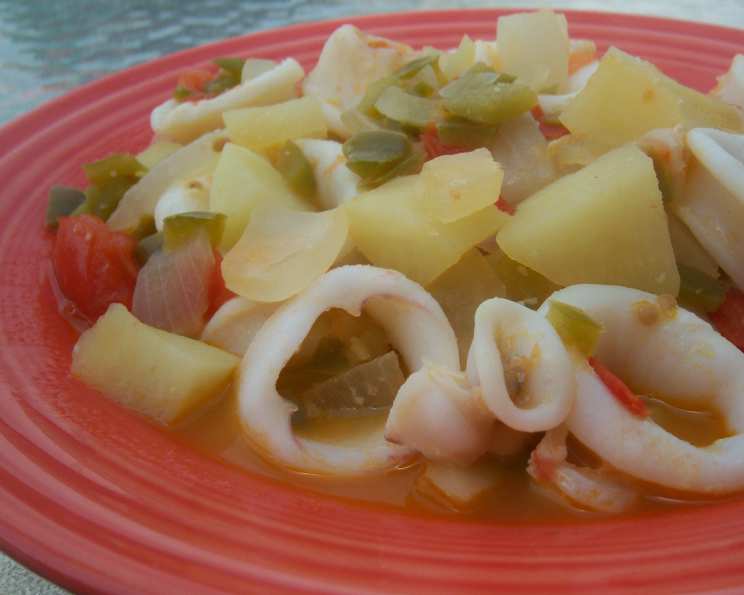
Potato and Baby Squid Stew: A Taste of the Spanish Coast
The scent of the sea, mingled with the earthy aroma of potatoes and the subtle sweetness of peppers, always brings me back to a small seaside taverna in Spain. I was backpacking through the country years ago, and this unassuming little place, with its weathered wooden tables and boisterous laughter, served up the most soul-satisfying stew I’ve ever had. It was simple, rustic, and utterly unforgettable—a true taste of the Spanish coast. After returning home, I was determined to recreate that magic, and after countless attempts, I’m thrilled to share my version of this heartwarming Potato and Baby Squid Stew.
Recipe Overview
- Prep Time: 20 minutes
- Cook Time: 35 minutes
- Total Time: 55 minutes
- Servings: 4
- Dietary Type: Pescatarian
Ingredients
- 3 tablespoons olive oil
- 1 onion, chopped
- 2 green bell peppers, chopped
- 2 cloves garlic, minced
- 1 large tomato, seeded and chopped
- 1 bay leaf
- 1/2 cup dry white wine
- 1 lb potato, peeled and cut into 1 inch cubes
- 1 1/2 cups fish stock or 1 1/2 cups bottled clam juice
- 1 pinch saffron thread, crushed
- 1 lb baby calamari, cut into 1 inch rings
- Buttered noodles for serving (optional)
Equipment Needed
- Large skillet or Dutch oven
- Cutting board
- Sharp knife
- Measuring cups and spoons
Instructions
-
Begin by heating the olive oil in a large skillet or Dutch oven over medium heat. Make sure the oil is shimmering but not smoking.
-
Add the chopped onion, green bell peppers, and minced garlic to the skillet. Sauté the vegetables for about 10 minutes, or until they are softened and the onions are translucent. Stir occasionally to prevent them from browning too quickly. This step is crucial for building the foundation of flavor for the stew.
-
Add the seeded and chopped tomato and the bay leaf to the skillet. Continue to sauté for another 3 minutes, stirring occasionally, allowing the tomatoes to break down slightly and release their juices.
-
Pour in the dry white wine and bring it to a boil. Let the wine boil until it is reduced by half, which should take approximately 4-5 minutes. This process intensifies the flavor of the wine and adds depth to the stew.
-
Add the peeled and cubed potatoes, fish stock (or clam juice), and crushed saffron thread to the skillet. Stir well to combine all the ingredients.
-
Bring the mixture to a simmer, then reduce the heat to low, cover the skillet, and cook until the potatoes are tender. This should take about 20 minutes, but may vary depending on the type of potato used. Stir occasionally to prevent sticking and to ensure even cooking. You can check the doneness of the potatoes by piercing them with a fork – they should be easily pierced with little resistance.
-
Once the potatoes are tender, add the baby calamari (cut into 1-inch rings) to the skillet. Simmer until the squid is cooked through, which typically takes only about 2 minutes. Be careful not to overcook the squid, as it can become tough and rubbery. The squid is done when it turns opaque and firm.
-
Season the stew to taste with salt and pepper. Start with a small amount and adjust as needed to achieve the desired flavor.
-
Serve the Potato and Baby Squid Stew hot, either on its own as a hearty tapas dish or over buttered noodles as a more substantial main course. A sprinkle of fresh parsley or a drizzle of olive oil can add a touch of elegance to the presentation.
Expert Tips & Tricks
- For extra flavor: Consider adding a pinch of smoked paprika (pimentón de la Vera) along with the saffron. This will add a smoky depth to the stew that complements the seafood beautifully.
- Don’t overcook the squid: Squid cooks very quickly, so keep a close eye on it and remove it from the heat as soon as it is cooked through to prevent it from becoming rubbery.
- Make ahead: The stew can be made ahead of time, up to a day in advance. In fact, the flavors often meld and deepen overnight. Add the squid just before serving to ensure it remains tender.
- Wine pairing: A crisp, dry white wine such as Albariño or Vermentino would be an excellent accompaniment to this stew.
Serving & Storage Suggestions
This Potato and Baby Squid Stew is best served hot, either as a comforting appetizer or a satisfying main course. Ladle the stew into bowls and garnish with a sprinkle of fresh parsley or a drizzle of good quality olive oil for an extra touch of richness.
Leftover stew can be stored in an airtight container in the refrigerator for up to 2-3 days. To reheat, gently warm the stew in a saucepan over low heat, stirring occasionally, until heated through. You can also reheat it in the microwave, but be careful not to overcook the squid.
While freezing is not recommended due to the texture of the potatoes and squid potentially changing, the stew can be frozen for up to 1 month. Thaw it overnight in the refrigerator before reheating.
Nutritional Information
| Nutrient | Amount per Serving | % Daily Value |
|---|---|---|
| Calories | 354 kcal | N/A |
| Calories from Fat | N/A | N/A |
| Total Fat | 12.7 g | 19% |
| Saturated Fat | 2.1 g | 10% |
| Cholesterol | 265.1 mg | 88% |
| Sodium | 199.8 mg | 8% |
| Total Carbohydrate | 31.9 g | 10% |
| Dietary Fiber | 4.5 g | 17% |
| Sugars | 5 g | N/A |
| Protein | 23.2 g | 46% |
Note: Nutritional information is an estimate and may vary based on specific ingredients and preparation methods.
Variations & Substitutions
- Spicy version: Add a pinch of red pepper flakes or a chopped chili pepper to the skillet along with the onion and peppers for a spicy kick.
- Vegetarian option: Replace the fish stock with vegetable broth and omit the squid for a delicious vegetarian potato stew. You could add chickpeas or white beans for added protein.
- Seafood medley: Feel free to add other types of seafood to the stew, such as shrimp, mussels, or clams. Adjust the cooking time accordingly.
- Potato type: While this recipe calls for a generic “potato”, using Yukon Gold potatoes will lend a creamier texture to the stew. Red potatoes will hold their shape well and provide a slightly firmer texture.
- Fresh herbs: Add fresh thyme or oregano along with the bay leaf for an enhanced herbal flavor.
FAQs (Frequently Asked Questions)
Q: Can I use frozen squid instead of fresh?
A: Yes, frozen squid can be used. Just make sure to thaw it completely before adding it to the stew. Pat it dry to remove any excess moisture.
Q: How do I prevent the squid from becoming tough?
A: The key is not to overcook it. Squid cooks very quickly, so add it to the stew at the very end and simmer for just a couple of minutes, until it turns opaque and firm.
Q: Can I make this stew in a slow cooker?
A: While it’s possible, it’s not ideal. The squid can become very tough in a slow cooker. If you want to use a slow cooker, add the squid during the last 30 minutes of cooking.
Q: What is saffron and where can I find it?
A: Saffron is a spice derived from the Crocus sativus flower. It adds a unique flavor and a vibrant yellow color to dishes. You can find it in the spice aisle of most grocery stores, although it can be quite expensive. A little goes a long way!
Q: Can I use canned tomatoes instead of fresh?
A: Yes, you can use canned diced tomatoes as a substitute for fresh tomatoes. Use about 1 cup of canned tomatoes, drained.
Final Thoughts
I hope this Potato and Baby Squid Stew brings you as much joy and comfort as it has brought me over the years. It’s a simple dish with complex flavors, perfect for a cozy weeknight meal or a casual gathering with friends. Don’t be afraid to experiment with different variations and substitutions to make it your own. And most importantly, savor every bite and let the flavors transport you to the sunny shores of Spain. I’d love to hear your feedback, so please share your thoughts and experiences with this recipe! Why not serve it with a crusty loaf of bread to soak up all the delicious broth? ¡Buen provecho!