
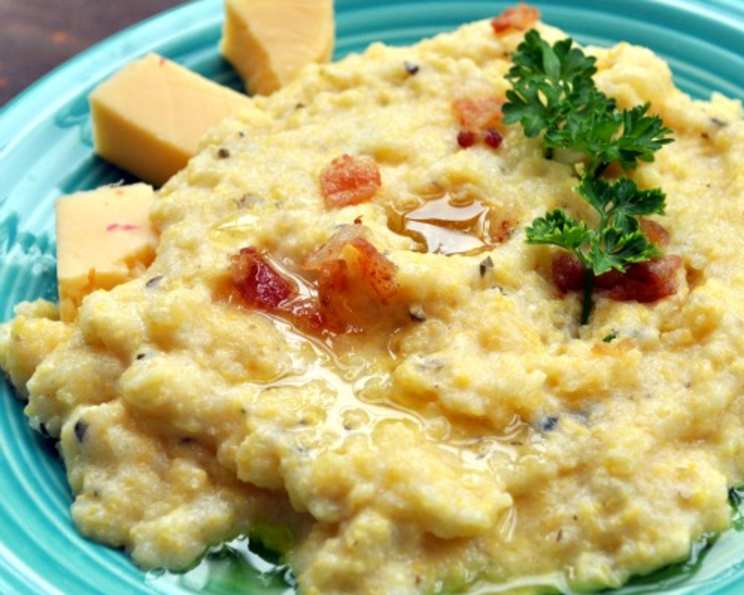
Potato Polenta: A Hearty Taste of the Italian Alps
The aroma alone takes me back to a small trattoria nestled high in the Dolomites. It was a snowy evening, and the air was crisp and cold. Inside, the warmth of the fire and the tantalizing scent of simmering potatoes and cheese enveloped me. The owner, a Nonna with a smile as warm as her oven, placed a steaming bowl of potato polenta before me. One bite, and I was hooked. It was comfort food at its finest – rustic, satisfying, and bursting with the flavors of the mountains. This recipe aims to recreate that moment.
Recipe Overview
- Prep Time: 20 minutes
- Cook Time: 50 minutes
- Total Time: 1 hour 10 minutes
- Servings: 8
- Dietary Type: Gluten-Free
Ingredients
- 4 lbs Idaho potatoes
- 1/2 teaspoon salt
- 8 ounces bacon, cut into 1-inch pieces
- 6 ounces Montasio cheese, cut into 1/2-inch cubes
- 1 cup polenta (uncooked corn meal polenta flour)
- 4 tablespoons olive oil
- 1/2 cup onion, sliced
Equipment Needed
- Large heavy-bottomed saucepan
- Wooden spoon
- Potato masher
Instructions
- Begin by peeling the potatoes.
- Place the peeled potatoes in a large, heavy-bottomed saucepan.
- Cover the potatoes completely with water.
- Cook the potatoes over medium-high heat until they are tender enough to be easily pierced with a fork. This typically takes about 20-25 minutes.
- Once the potatoes are cooked, carefully drain most of the water from the saucepan, leaving approximately one cup of the cooking water with the potatoes.
- Using a potato masher, thoroughly mash the potatoes in the remaining water until smooth.
- Add the salt and polenta to the mashed potatoes.
- Mix the ingredients well until a smooth consistency is achieved, ensuring there are no lumps of polenta flour remaining.
- Return the saucepan to medium heat.
- Cook the potato and polenta mixture for approximately 20-30 minutes, stirring frequently with a wooden spoon to prevent sticking and burning. The mixture will thicken considerably as it cooks.
- While the potato polenta is cooking, prepare the bacon and onion soffritto. In a separate skillet, heat the olive oil over medium heat.
- Add the bacon pieces and sliced onion to the skillet.
- Sauté the bacon and onion, stirring occasionally, until the bacon is rendered and crisp, and the onions are softened and translucent. This usually takes about 10-15 minutes.
- Once the polenta is cooked and begins to pull away from the sides of the saucepan, remove it from the heat. This is a sign that it has reached the desired consistency.
- Add the Montasio cheese cubes and the bacon and onion soffritto to the cooked polenta.
- Mix all the ingredients together thoroughly until the cheese is melted and evenly distributed throughout the polenta.
- Serve the potato polenta immediately.
Expert Tips & Tricks
- For an extra creamy texture, consider using a ricer instead of a potato masher. This will ensure there are no lumps in the potatoes.
- If you don’t have Montasio cheese, you can substitute with Fontina or another semi-hard Italian cheese with a similar flavor profile.
- To prevent the polenta from sticking to the bottom of the pan, use a heavy-bottomed saucepan and stir frequently, especially during the last 10 minutes of cooking.
- The cooking time for the polenta may vary depending on the type of polenta flour used. Keep an eye on the consistency and adjust accordingly. It should be thick enough to hold its shape but still creamy.
- If the polenta becomes too thick during cooking, you can add a little more water or broth to loosen it up.
- You can prepare the bacon and onion soffritto ahead of time and store it in the refrigerator until ready to use.
Serving & Storage Suggestions
Serve the potato polenta hot, as a main course or a hearty side dish. It pairs well with roasted meats, sausages, or vegetables. You can garnish it with a sprinkle of grated Parmesan cheese or fresh herbs for added flavor and visual appeal.
Leftover potato polenta can be stored in an airtight container in the refrigerator for up to 3 days. To reheat, add a splash of milk or broth and microwave until heated through, stirring occasionally. You can also reheat it in a saucepan over low heat, stirring frequently. If the polenta becomes too thick during reheating, add more liquid to loosen it up.
Potato polenta can also be frozen for longer storage. Allow it to cool completely before transferring it to a freezer-safe container. It can be stored in the freezer for up to 2 months. To reheat frozen polenta, thaw it in the refrigerator overnight and then reheat as described above.
Nutritional Information
| Nutrient | Amount per Serving | % Daily Value |
|---|---|---|
| Calories | 423.5 kcal | N/A |
| Calories from Fat | 182 g | N/A |
| Total Fat | 20.3 g | 31% |
| Saturated Fat | 5.3 g | 26% |
| Cholesterol | 19.3 mg | 6% |
| Sodium | 401 mg | 16% |
| Total Carbohydrate | 52.5 g | 17% |
| Dietary Fiber | 6.3 g | 25% |
| Sugars | 2.3 g | N/A |
| Protein | 9.2 g | 18% |
Note: Nutritional information is an estimate and may vary depending on specific ingredients and preparation methods.
Variations & Substitutions
- Vegetarian Version: Omit the bacon and sauté mushrooms, bell peppers, or other vegetables in olive oil to create a vegetarian soffritto.
- Spicy Kick: Add a pinch of red pepper flakes to the bacon and onion soffritto for a spicy kick.
- Herbaceous Twist: Stir in fresh herbs such as rosemary, thyme, or sage to the polenta during the last few minutes of cooking.
- Cheese Variations: Experiment with different types of cheese, such as Gruyere, Asiago, or Parmesan, to create unique flavor combinations.
- Dairy-Free: Replace the Montasio cheese with a plant-based cheese alternative. Ensure to check the ingredients of your polenta flour to be dairy-free.
FAQs (Frequently Asked Questions)
Q: Can I use instant polenta for this recipe?
A: While instant polenta can be used, the texture and flavor will be different. Traditional polenta flour provides a richer, more authentic taste and a creamier texture.
Q: How do I know when the polenta is cooked through?
A: The polenta is cooked when it begins to pull away from the sides of the saucepan and forms a thick, creamy mass. It should also be easy to stir without sticking excessively to the bottom of the pan.
Q: Can I make this recipe ahead of time?
A: Yes, you can prepare the potato polenta ahead of time and reheat it when ready to serve. Store it in an airtight container in the refrigerator for up to 3 days. You may need to add a little liquid when reheating to restore its creamy consistency.
Q: What if I don’t have Montasio cheese?
A: If you don’t have Montasio cheese, you can substitute with Fontina, Gruyere, or another semi-hard Italian cheese with a similar flavor profile.
Q: Can I freeze the potato polenta?
A: Yes, you can freeze leftover potato polenta. Allow it to cool completely before transferring it to a freezer-safe container. It can be stored in the freezer for up to 2 months. Thaw overnight in the refrigerator before reheating.
Final Thoughts
This Potato Polenta recipe is more than just a dish; it’s a journey to the heart of the Italian Alps. With simple ingredients and straightforward steps, you can recreate the comforting flavors of this rustic delight in your own kitchen. Don’t be afraid to experiment with variations and substitutions to make it your own. I encourage you to try this recipe and share your feedback. Pair it with a glass of dry red wine and a simple green salad for a complete and satisfying meal. Buon appetito!