
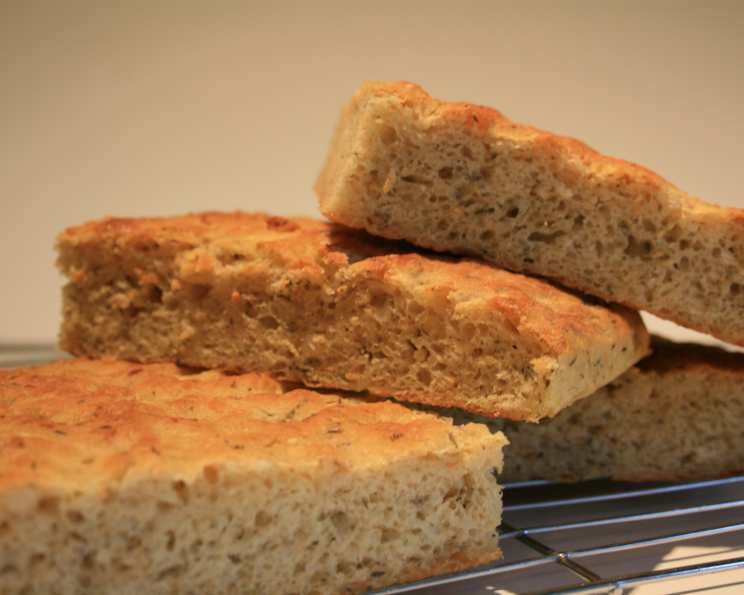
Potato Rosemary Focaccia: A Rustic Slice of Italy
The scent of rosemary always transports me back to a small trattoria in Tuscany, where I first tasted focaccia con patate e rosmarino. The sun-drenched patio, the laughter of locals, and the simple, earthy flavors of that potato rosemary focaccia created a memory I’ve cherished for years. It was unlike any bread I’d ever had – soft and yielding, with a crisp, golden crust and the subtle sweetness of potatoes mingling with the aromatic rosemary. Recreating that experience in my own kitchen has become a labor of love, a constant pursuit of that perfect rustic simplicity.
Recipe Overview
- Prep Time: 2 hours 35 minutes
- Cook Time: 40-50 minutes
- Total Time: 3 hours 15-25 minutes
- Servings: 6-8
- Yield: 1 focaccia
- Dietary Type: Vegetarian
Ingredients
- 2 1⁄2 teaspoons active dry yeast
- 4 1⁄2 cups all-purpose flour, plus more for dusting
- 2 cups mashed potatoes (no butter or milk added)
- 1 tablespoon salt
- 2 garlic cloves, sliced thin
- 1 teaspoon crumbled dried rosemary
- 1⁄3 cup olive oil, plus more for greasing
- 1 1⁄2 lbs red potatoes
- Salt and pepper to taste
Equipment Needed
- Large bowl
- Small bowl
- Plastic wrap
- Floured surface
- Oiled bowl
- 15 1/2- by 10 1/2-inch jelly-roll pan
- Mandoline or hand-held slicer
- Cooling rack
Instructions
-
In a small bowl, sprinkle the yeast over 1 cup of warm water (about 105-115°F) and let it proof for 5 minutes, or until it is foamy. This step ensures your yeast is active and will help the dough rise properly. If the yeast doesn’t foam, it’s likely inactive and you’ll need to start with fresh yeast.
-
In a large bowl, combine 4 cups of the flour with the mashed potatoes and the salt. Mix well until the mixture resembles a coarse meal. The mashed potatoes should be cooled to room temperature before adding them to the flour. This prevents the heat from prematurely activating the yeast.
-
Add the yeast mixture to the flour and potato mixture. Stir the dough until it is well combined. It will be somewhat sticky at this stage, which is perfectly normal.
-
Turn the dough out onto a floured surface and begin to knead it. Gradually incorporate as much of the remaining 1/2 cup of flour as necessary to prevent the dough from sticking to your hands and the surface. Knead for 8 to 10 minutes, or until the dough is smooth and elastic. The dough should be soft and pliable, but not overly sticky. If it’s too sticky, add a little more flour, a tablespoon at a time, until it reaches the right consistency.
-
Form the dough into a ball. Put it in an oiled bowl, and turn it to coat it with the oil. This will prevent the dough from drying out as it rises.
-
Let the dough rise, covered with plastic wrap, in a warm place for 1 1/2 hours, or until it is double in bulk. A warm environment will encourage the yeast to work its magic and create a light and airy focaccia. A good place to let the dough rise is in a slightly warmed oven (turned off!), or a warm spot in your kitchen away from drafts.
-
While the dough is rising, prepare the flavored oil. In a small bowl, stir together the garlic, the rosemary, and the 1/3 cup of olive oil. Cover the mixture and let it stand. This allows the oil to infuse with the flavors of the garlic and rosemary, creating a delicious topping for the focaccia.
-
Turn the dough out into a well-oiled 15 1/2- by 10 1/2-inch jelly-roll pan. Press it evenly into the pan, making sure to reach all the corners. This step requires a bit of patience to evenly distribute the dough.
-
Let it rise again, covered loosely, in a warm place for 45 minutes or less, or until it is almost double in bulk. This second rise is crucial for a light and airy focaccia. Keep an eye on the dough – it should be puffy and almost doubled in size, but not quite.
-
Using a mandoline or hand-held slicer, cut the red potatoes into paper-thin slices. Aim for slices that are translucent and uniform in thickness. This ensures they cook evenly and become tender in the oven.
-
Arrange the potato slices on the dough, overlapping them attractively. Be generous with the coverage. The potatoes are a key component of this focaccia, so make sure every bite gets a taste of their earthy sweetness.
-
Brush the potato slices with the oil mixture, discarding the garlic. The garlic is used only to flavor the oil, and removing it prevents it from burning during baking.
-
Sprinkle the focaccia with salt and pepper to taste. Don’t be shy with the salt – it enhances the flavors of the potatoes, rosemary, and olive oil.
-
Bake it in the bottom third of a preheated 400°F oven for 40 to 50 minutes, or until it is golden brown and the potatoes are tender. The baking time may vary depending on your oven, so keep a close eye on the focaccia. The bottom should be golden brown and crisp, and the potatoes should be soft and slightly browned.
-
Let the focaccia cool in the pan on a rack. Serve it warm or at room temperature. Allowing it to cool slightly before serving allows the flavors to meld and the texture to improve.
Expert Tips & Tricks
- For a crisper crust, lightly brush the pan with olive oil before pressing the dough into it.
- If you don’t have a mandoline, use a very sharp knife to slice the potatoes as thinly as possible.
- Experiment with different herbs like thyme, oregano, or sage in addition to or instead of rosemary.
- To make ahead, prepare the dough through the first rise and refrigerate it overnight. Bring it to room temperature before continuing with the recipe.
- If the focaccia is browning too quickly, tent it loosely with aluminum foil.
Serving & Storage Suggestions
Serve the Potato Rosemary Focaccia warm or at room temperature, cut into squares or wedges. It’s delicious on its own as a snack, appetizer, or light lunch. It also pairs well with soups, salads, and grilled meats.
Store leftover focaccia at room temperature, wrapped tightly in plastic wrap or in an airtight container, for up to 2 days. You can also store it in the refrigerator for up to 4 days. To reheat, wrap it in foil and warm it in a preheated 350°F oven for 10-15 minutes, or until heated through. For longer storage, freeze the focaccia for up to 2 months. Thaw it completely before reheating.
Nutritional Information
| Nutrient | Amount per Serving | % Daily Value |
|---|---|---|
| Calories | 592.3 kcal | N/A |
| Calories from Fat | 122 g | 21% |
| Total Fat | 13.6 g | 20% |
| Saturated Fat | 2.1 g | 10% |
| Cholesterol | 1.4 mg | 0% |
| Sodium | 1397.8 mg | 58% |
| Total Carbohydrate | 103 g | 34% |
| Dietary Fiber | 6.1 g | 24% |
| Sugars | 2.8 g | N/A |
| Protein | 13.9 g | 27% |
Note: Nutritional information is an estimate and may vary based on specific ingredients and preparation methods.
Variations & Substitutions
- Gluten-Free: Substitute the all-purpose flour with a gluten-free all-purpose flour blend. You may need to adjust the amount of liquid.
- Vegan: This recipe is already vegan.
- Herb Variations: Try using fresh herbs instead of dried rosemary for a more vibrant flavor.
- Cheese Topping: Sprinkle grated Parmesan or Pecorino Romano cheese over the potatoes before baking for a richer flavor.
- Spicy Kick: Add a pinch of red pepper flakes to the oil mixture for a little heat.
FAQs (Frequently Asked Questions)
Q: Can I use leftover roasted potatoes instead of boiling red potatoes?
A: While boiled potatoes are traditional for this recipe, using leftover roasted potatoes that haven’t been seasoned too heavily can work in a pinch. Just ensure they are sliced thinly.
Q: What if my dough doesn’t rise?
A: Make sure your yeast is fresh and activated properly in warm water. The room temperature also affects rising time – ensure a warm (but not hot) environment.
Q: Can I use a stand mixer to make the dough?
A: Yes, a stand mixer with a dough hook can be used. Mix on low speed until the dough comes together, then increase to medium speed and knead for 8-10 minutes.
Q: How can I prevent the potatoes from browning too much?
A: Slicing them thinly is key. If they start to brown too quickly, you can loosely tent the focaccia with foil during the last 15 minutes of baking.
Q: Can I add other vegetables to the focaccia?
A: Yes, feel free to experiment! Thinly sliced onions, zucchini, or bell peppers would all be delicious additions.
Final Thoughts
This Potato Rosemary Focaccia is more than just a recipe; it’s an invitation to slow down, savor simple pleasures, and create memories in your own kitchen. Don’t be intimidated by the rising times—they are well worth the wait. Each step is a chance to imbue your focaccia with your personal touch. I encourage you to give this recipe a try, embrace the process, and share your creation with friends and family. Serve it alongside a robust Chianti for an authentic Italian experience. Buon appetito!