
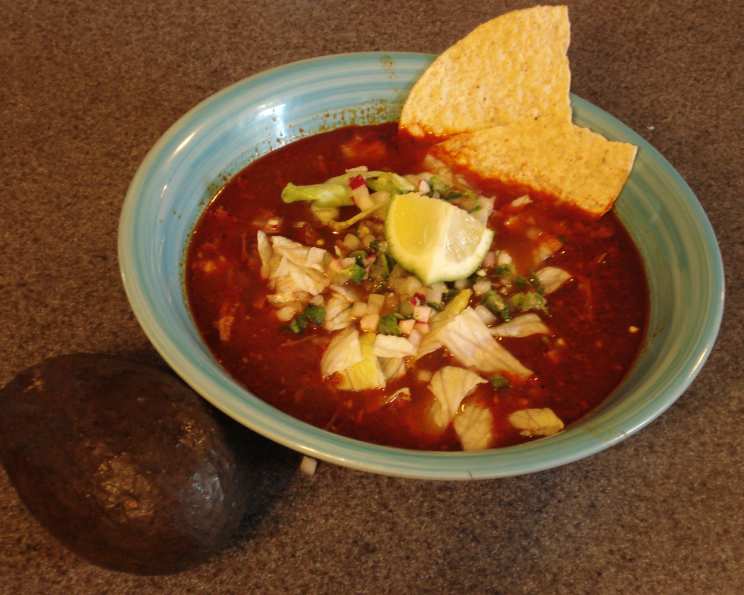
Pozole Rojo: A Culinary Journey into Mexico’s Heart
The first time I tasted Pozole Rojo, it wasn’t in a restaurant, but at a small family gathering in Oaxaca. The rich, complex aroma filled the air, a symphony of toasted chilies, savory pork, and earthy hominy. The matriarch of the family, with a smile as warm as the stew itself, ladled a generous portion into my bowl, and from that moment on, I was hooked. The vibrant flavors and comforting warmth spoke of tradition, family, and a deep connection to the land – a culinary experience that has stayed with me ever since.
Recipe Overview
- Prep Time: 1 hour
- Cook Time: 3 hours
- Total Time: 4 hours
- Servings: 8-10
- Yield: Large Pot of Stew
- Dietary Type: Gluten-Free
Ingredients
- 1 bunch mint (1 ounce)
- 1 bunch cilantro (1 ounce)
- 4 lbs country-style pork ribs (not lean)
- 10 cups water
- 26 garlic cloves, peeled, divided (about 1 1/2 heads)
- 1 (1/2 lb) white onion, quartered, plus 1/2 cup, chopped
- 1 teaspoon dried oregano (preferably Mexican)
- 5 whole black peppercorns
- 2 ounces dried guajillo chilies (6 to 9) or 2 ounces dried New Mexico peppers, wiped clean (6 to 9)
- 1 1⁄2 ounces dried ancho chiles, wiped clean (2 to 4)
- 1 whole clove
- 2 tablespoons vegetable oil
- 3 (15 ounce) cans hominy, rinsed and drained (also called pozole)
- Salt to taste
Accompaniments (Optional):
- Crema or queso fresco
- Dried oregano or dried hot red pepper flakes
- Lime wedges
Equipment Needed
- Large pot or Dutch oven
- Large sieve
- Blender
- Large cast-iron skillet
- Kitchen string
- Tongs
Instructions
-
Begin by preparing the herb bundle. Tie together the mint and cilantro with kitchen string to create a bouquet garni. This will infuse the broth with aromatic flavors.
-
In a large pot or Dutch oven, combine the pork ribs and water. Bring the mixture to a boil over high heat. As it boils, carefully skim off any froth that rises to the surface. This step helps create a cleaner, clearer broth.
-
Once the froth is removed, reduce the heat to a gentle simmer. Add the tied herb bundle, 20 garlic cloves, quartered onion, dried oregano, peppercorns, and 2 teaspoons of salt. Gently simmer the mixture, uncovered, for approximately 2 hours, or until the pork is very tender and easily pulls apart.
-
After the pork has simmered, carefully strain the broth through a large sieve into a large heatproof bowl. This separates the solids from the flavorful liquid. Return the strained broth to the pot. Discard the spent mint and cilantro.
-
Transfer the cooked onion and garlic from the sieve to a blender. Add 1 1/2 cups of the strained broth and purée until completely smooth. Use caution when blending hot liquids to avoid splattering. Add the purée back into the pot with the remaining broth.
-
Remove the pork ribs from the broth. Discard the bones and coarsely shred the pork into bite-sized pieces. Return the shredded pork to the broth.
-
While the pork is simmering, prepare the chili paste. Slit the guajillo (or New Mexico) and ancho chiles lengthwise. Remove the stems and seeds.
-
Heat a large cast-iron skillet over medium heat until hot. Toast the chiles in batches, opened flat, turning and pressing them with tongs, until they become more pliable and slightly change in color. This should take about 30 seconds per batch. Be careful not to burn the chiles, as this will impart a bitter flavor.
-
Transfer the toasted chiles to a bowl and pour 2 1/2 cups boiling water over them. Cover the bowl and let the chiles soak until softened, about 30 minutes.
-
After soaking, transfer the chiles and 1 1/2 cups of the soaking liquid to a cleaned blender. Add the chopped onion, the remaining 6 garlic cloves, the clove, and 3/4 teaspoon salt. Blend until a smooth paste forms, about 2 minutes.
-
Heat the vegetable oil in the cast-iron skillet over medium heat until it shimmers. Add the chili paste to the skillet. Be careful, as the paste will spatter. Cook the paste, stirring occasionally, until it slightly thickens, about 5 minutes.
-
Add the cooked chili paste and hominy to the pot with the pork and broth. Simmer for 5 minutes to allow the flavors to meld together. Season with additional salt to taste.
Expert Tips & Tricks
- Toasting the chilies is crucial for developing their flavor. However, watch them carefully as they can burn quickly, resulting in a bitter taste.
- The chili paste can be made a day or two in advance to save time. Store it in an airtight container in the refrigerator.
- If you don’t have a cast-iron skillet, any heavy-bottomed pot will work for toasting the chilies and cooking the chili paste.
- For a spicier pozole, add a few dried chile de árbol to the soaking mixture.
- If you prefer a smoother broth, you can strain it again after adding the chili paste.
Serving & Storage Suggestions
Serve the Pozole Rojo hot in large bowls. Offer a variety of accompaniments such as shredded cabbage or lettuce, diced onion, radishes, avocado, lime wedges, crema or queso fresco, dried oregano, and dried hot red pepper flakes. Let your guests customize their bowls to their liking.
Leftover Pozole can be stored in an airtight container in the refrigerator for up to 3 days. It can also be frozen for up to 2 months. To reheat, simply bring the pozole to a simmer on the stovetop or microwave until heated through. You may need to add a little water or broth if the stew has thickened too much.
Nutritional Information
(Estimated per serving, without accompaniments)
| Nutrient | Amount per Serving | % Daily Value |
|---|---|---|
| Calories | 550 kcal | 28% |
| Total Fat | 30g | 46% |
| Saturated Fat | 12g | 60% |
| Cholesterol | 100mg | 33% |
| Sodium | 600mg | 25% |
| Total Carbohydrate | 40g | 13% |
| Dietary Fiber | 8g | 32% |
| Sugars | 5g | – |
| Protein | 35g | 70% |
Variations & Substitutions
- Vegetarian Pozole: Substitute the pork ribs with mushrooms or butternut squash. Use vegetable broth instead of water.
- Pozole Verde: Use tomatillos, poblano peppers, and jalapeños instead of guajillo and ancho chilies for a green version of the stew.
- Chicken Pozole: Use chicken thighs or a whole chicken instead of pork ribs.
- Spicier Pozole: Add a few dried chile de árbol to the soaking mixture for the chilies.
- Vegan Pozole: Omit the pork and any dairy toppings.
FAQs (Frequently Asked Questions)
Q: Can I use canned hominy instead of dried?
A: Yes, canned hominy is a convenient option. Be sure to rinse and drain it well before adding it to the stew.
Q: How do I prevent the chili paste from splattering when I cook it?
A: Make sure the skillet isn’t too hot and stir the paste frequently. You can also use a splatter screen.
Q: Can I make this in a slow cooker?
A: Yes, you can adapt this recipe for a slow cooker. Brown the pork ribs before adding them to the slow cooker with the other ingredients. Cook on low for 6-8 hours.
Q: Is there a substitute for the dried chilies?
A: While dried chilies are essential for the authentic flavor, you can use chili powder or a pre-made chili paste in a pinch, but the flavor will be different.
Q: How long does Pozole Rojo last in the freezer?
A: Pozole Rojo can be stored in the freezer for up to 2 months. Make sure to store it in an airtight container.
Final Thoughts
Pozole Rojo is more than just a stew; it’s a celebration of Mexican culinary heritage. It’s a dish meant to be shared with loved ones, enjoyed slowly, and savored with each spoonful. Gather your ingredients, embrace the process, and prepare to be transported to the heart of Mexico with this deeply satisfying and flavorful recipe. Don’t hesitate to experiment with different toppings and variations to make it your own! ¡Buen provecho!