
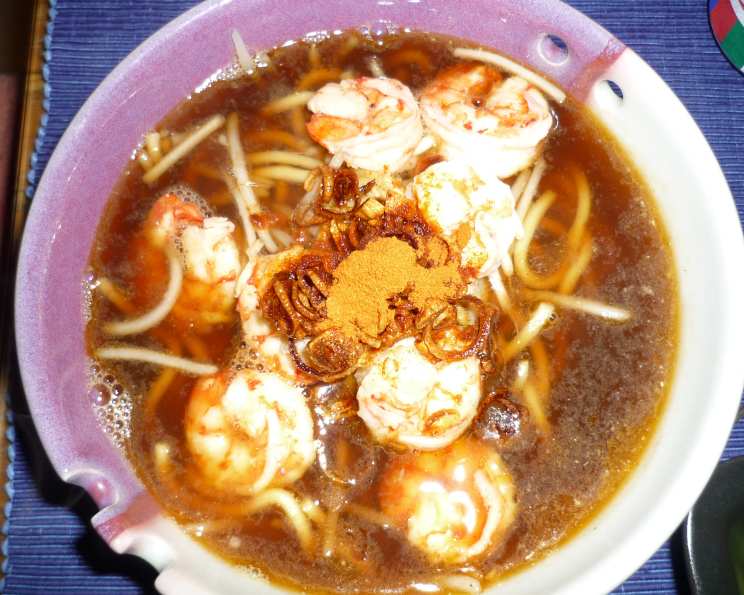
A Symphony of Flavors: Crafting the Perfect Prawn Noodles
The aroma alone transports me back to the bustling hawker centers of Singapore. I remember being a young culinary student, completely overwhelmed by the sheer variety of dishes. But the first time I tasted prawn noodles, or hae mee, it was love at first slurp. The rich, complex broth, the perfectly cooked prawns, and the satisfying chew of the noodles created a flavor explosion that I’ve been chasing ever since. It’s a dish that embodies comfort, tradition, and the vibrant culinary spirit of Singapore.
Recipe Overview
- Prep Time: 20 minutes
- Cook Time: 35 minutes
- Total Time: 55 minutes
- Servings: 2
- Yields: 2 bowls
- Dietary Type: Not Vegetarian
Ingredients
- 20 large prawns
- 400 g pork ribs (soft bone pork is best)
- 1 liter water
- 250 g hokkien noodles (may be substituted or mixed with vermicelli)
- 6 shallots
- 2 garlic cloves
- 50 g dried anchovies
- 50 g bean sprouts
- 50 g Chinese spinach
- 4 tablespoons olive oil
- 1 tablespoon dark soya sauce
- 1 teaspoon salt
- 1 teaspoon pepper
- 4 chili peppers
Equipment Needed
- Large soup pot
- Separate pot for blanching
- Frying pan or wok
- Slotted spoon or strainer
Instructions
-
Begin by preparing the prawns. De-shell the prawns, carefully reserving the shells and heads. Set the peeled prawns aside.
-
Thoroughly clean the peeled prawns under cold running water. This helps remove any lingering impurities.
-
In a large soup pot, heat 2 tablespoons of olive oil over medium heat. Add the reserved prawn shells and prawn heads to the pot.
-
Add the dried anchovies to the prawn shells and heads mixture in the pot. Fry everything together for approximately 2-3 minutes, stirring frequently. This crucial step releases the deep umami flavors that form the base of the broth. Be careful not to burn the anchovies, as this will impart a bitter taste.
-
Carefully pour 1 liter of water into the pot with the cooled prawn shells, heads, and anchovies. Bring the mixture to a boil over high heat.
-
Add the pork ribs to the boiling broth. Return the mixture to a boil.
-
Crush the garlic cloves lightly, leaving the skin intact. Adding the garlic with the skin on imparts a more subtle, aromatic flavor to the broth. Add the crushed garlic to the broth.
-
Reduce the heat to low, allowing the broth to simmer gently for 30 minutes. Simmering is essential for extracting the maximum flavor from the ingredients and creating a rich, complex broth.
-
After simmering, carefully remove the prawn shells, prawn heads, and dried anchovies from the broth using a slotted spoon or strainer. Discard these solids. They have served their purpose and extracting every bit of flavor!
-
Season the broth with 1 tablespoon of dark soya sauce, 1 teaspoon of salt, and 1 teaspoon of pepper. Adjust the seasonings to your taste preference. The dark soya sauce adds depth of color and a hint of sweetness.
-
While the broth is simmering, prepare the fried shallots. Slice the shallots thinly. In a frying pan or wok, heat the remaining 2 tablespoons of olive oil over medium heat. Deep fry the sliced shallots until they are golden brown and crispy. Remove the fried shallots from the oil and set aside.
-
In a separate pot, bring water to a boil. Prepare the yellow noodles, bean sprouts, and Chinese spinach. Blanch the noodles, bean sprouts, and spinach in the boiling water until they are just cooked through. This usually takes only a minute or two. Avoid overcooking, as this will make the vegetables soggy.
-
In another separate pot, bring water to a boil. Add the peeled prawns to the boiling water and cook until they are pink and cooked through. This usually takes only a few minutes. Be careful not to overcook the prawns, as they will become tough and rubbery.
-
To assemble the dish, place the cooked noodles, bean sprouts, and spinach in a bowl.
-
Arrange the cooked prawns on top of the noodles and vegetables.
-
Ladle the hot prawn broth over the noodles and prawns.
-
Garnish with the fried shallots and sliced chili peppers. Serve immediately and enjoy!
Expert Tips & Tricks
- For a richer broth: Roast the prawn heads and shells in the oven at 350°F (175°C) for 10-15 minutes before frying them in the pot. This will deepen the flavor even further.
- Spice level: Adjust the number of chili peppers to your preferred heat level. You can also use chili oil for an extra kick.
- Make-ahead broth: The broth can be made a day in advance and stored in the refrigerator. This allows the flavors to meld even further.
- Pork rib variations: Instead of soft bone pork ribs, you can also use spare ribs or pork belly for a richer flavor. Just adjust the cooking time accordingly.
- Noodle options: If you can’t find hokkien noodles, you can substitute with thick wheat noodles or even rice noodles.
Serving & Storage Suggestions
Serve the prawn noodles immediately while the broth is hot and the noodles are perfectly cooked. Garnish with extra fried shallots, chili peppers, and a squeeze of lime juice for a burst of freshness.
Leftover prawn noodles can be stored in the refrigerator for up to 2 days. Store the noodles and broth separately to prevent the noodles from becoming soggy. Reheat the broth in a saucepan over medium heat and reheat the noodles by blanching them in boiling water for a few seconds. Combine and enjoy! It is not recommended to freeze prawn noodles, as the texture of the noodles and prawns will deteriorate.
Nutritional Information
| Nutrient | Amount per Serving | % Daily Value |
|---|---|---|
| Calories | 758 kcal | 38% |
| Total Fat | 42g | 64% |
| Saturated Fat | 12g | 60% |
| Cholesterol | 182mg | 61% |
| Sodium | 1058mg | 44% |
| Total Carbohydrate | 56g | 19% |
| Dietary Fiber | 3g | 12% |
| Sugars | 4g | 8% |
| Protein | 39g | 78% |
Note: Nutritional information is an estimate and may vary based on specific ingredients and cooking methods.
Variations & Substitutions
- Vegetarian Option: Use vegetable broth instead of water and omit the pork ribs and anchovies. Substitute with shiitake mushrooms for umami flavor. Tofu can replace prawns.
- Gluten-Free: Use gluten-free rice noodles and tamari instead of dark soya sauce. Ensure all other ingredients are gluten-free.
- Spicy Coconut Prawn Noodles: Add a can of coconut milk to the broth for a creamy, spicy twist. Adjust the amount of chili peppers to your preferred heat level.
- Seafood Medley: Add other types of seafood, such as shrimp, squid, or fish balls, to the noodles for a more complex flavor.
FAQs (Frequently Asked Questions)
Q: Can I use pre-cooked prawns to save time?
A: Yes, you can use pre-cooked prawns, but be sure to add them at the very end to avoid overcooking. Gently warm them through in the broth before serving.
Q: What can I do if my broth is not flavorful enough?
A: Simmer the broth for a longer period to extract more flavor from the prawn shells, heads, and anchovies. You can also add a small amount of fish sauce or shrimp paste for an extra umami boost.
Q: How do I prevent the noodles from becoming too soft?
A: Do not overcook the noodles. Blanch them in boiling water for only a minute or two until they are just cooked through.
Q: Can I use frozen prawns?
A: Yes, you can use frozen prawns. Be sure to thaw them completely before cooking.
Q: Is there a substitute for dark soya sauce?
A: If you don’t have dark soya sauce, you can use regular soya sauce with a touch of molasses or brown sugar for color and sweetness.
Final Thoughts
Now it’s your turn to embark on this flavorful journey! Don’t be intimidated by the steps – prawn noodles are a labor of love that rewards you with an incredibly satisfying and complex dish. Feel free to experiment with the variations and substitutions to create your own personalized version. I encourage you to share your creations and experiences with me! Pair this amazing noodle soup with a refreshing glass of iced tea or a crisp, dry white wine for the ultimate culinary experience. Happy cooking!