
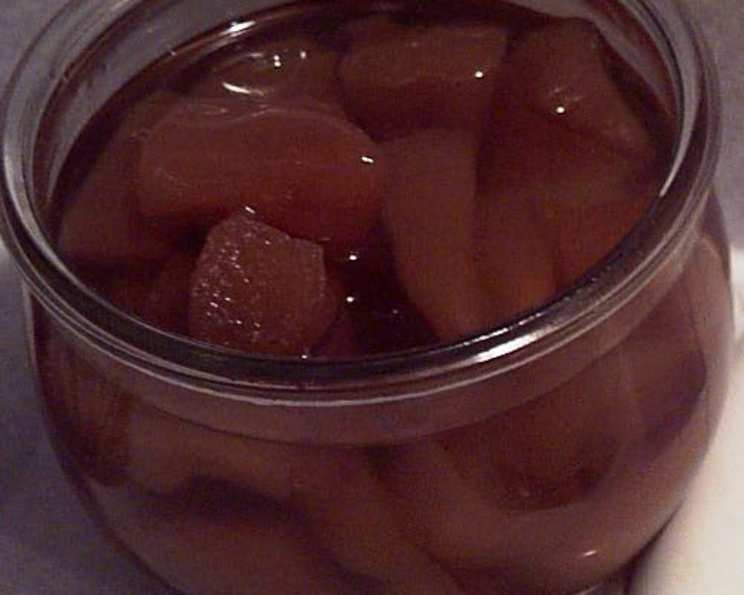
Sparkling Jewels: Crafting Homemade Preserved Ginger
The first time I tasted preserved ginger, I was a wide-eyed child visiting my grandmother. She always had an assortment of curious jars lining her pantry shelves, each filled with some culinary treasure. But it was the glistening, translucent pieces of ginger, suspended in a shimmering syrup, that truly captured my imagination. The spicy-sweet bite, the warmth spreading through my chest – it was an adventure in every nibble. I remember sneaking slivers of it when I thought she wasn’t looking, and the small zing always made me smile. That simple candied ginger became a symbol of her love and the magic of her kitchen.
Recipe Overview
- Prep Time: 20 minutes (plus overnight soaking)
- Cook Time: Varies depending on ginger age
- Total Time: Approximately 3 days (includes soaking and resting)
- Yields: Approximately 1 lb
- Dietary Type: Vegetarian, Gluten-Free
Ingredients
- 1 lb fresh gingerroot, peeled and scrubbed, cut into 2-inch pieces
- 1 1/2 cups water
- 1 lb sugar
Equipment Needed
- Large bowl
- Large saucepan or kettle
- Another saucepan
- Airtight glass jars
Instructions
-
Begin by preparing the ginger. Thoroughly rinse the scrubbed and peeled ginger roots. Place them in a large bowl and cover them with cold water. Allow the ginger to soak overnight in the refrigerator. This process helps to soften the ginger and mellow its sharp flavor.
-
The next day, drain the ginger. Place the drained ginger in a large saucepan or kettle and cover it with cold water.
-
Bring the water to a boil over high heat. Once boiling, drain the ginger. Repeat this boiling and draining process three or more times. The exact number of repetitions will depend on the age and potency of your ginger. Older ginger will require more repetitions to reduce its spiciness. You’ll know it’s ready when a piece tastes pleasantly mild.
-
In a separate saucepan, combine the sugar and 1 1/2 cups water. Bring the mixture to a boil over medium heat, stirring constantly until the sugar is completely dissolved.
-
Continue to boil the syrup for 20 minutes without stirring. This will allow the syrup to thicken slightly.
-
Carefully stir in the drained ginger root into the boiling syrup. Ensure that the ginger pieces are well coated.
-
Bring the syrup back to a boil. Once boiling, remove the pan from the heat and let it stand overnight at room temperature. This resting period allows the ginger to fully absorb the sweet syrup.
-
The following day, you have two options for storing your preserved ginger: refrigeration or water bath processing.
-
Refrigeration: If you plan to use the preserved ginger within a few weeks, simply store it in airtight glass jars in the refrigerator.
-
Water Bath Processing: For longer-term storage, process the jars in a water bath according to standard canning procedures. This will create a shelf-stable product that can be stored at room temperature. Be sure to follow proper canning guidelines to ensure safety. This includes using sterilized jars, leaving the correct headspace, and processing for the appropriate amount of time based on your altitude.
-
Expert Tips & Tricks
- For a more delicate flavor, use young ginger (also known as spring ginger). It has thinner skin and a milder taste.
- Don’t discard the cooking water from the boiling process! It can be cooled and used as a flavorful base for soups or stocks. It’s even good in tea.
- If the syrup crystallizes after cooling, simply reheat it gently until the sugar dissolves again.
- To prevent the ginger from sticking together during storage, toss the preserved ginger pieces in a little granulated sugar after they have cooled slightly.
- For a spicier preserved ginger, reduce the number of boiling steps.
Serving & Storage Suggestions
The versatility of preserved ginger is truly remarkable. It is wonderful all on its own, or as a component in other dishes. Serve it alongside cheese and charcuterie, chop it finely and add it to scones or muffins, or pair it with dark chocolate for an unexpected treat. It also adds a delightful zing to savory dishes, such as stir-fries and curries.
When stored properly in an airtight container in the refrigerator, preserved ginger will last for several weeks. If processed in a water bath, it can be stored at room temperature for up to a year. Once opened, refrigerate water-bath-processed ginger.
Nutritional Information
Note: Nutritional information is an estimate and may vary based on specific ingredients and portion sizes.
| Nutrient | Amount per Serving (1 oz) | % Daily Value |
|---|---|---|
| Calories | 150 kcal | 8% |
| Total Fat | 0.1 g | 0% |
| Saturated Fat | 0 g | 0% |
| Cholesterol | 0 mg | 0% |
| Sodium | 5 mg | 0% |
| Total Carbohydrate | 38 g | 14% |
| Dietary Fiber | 1 g | 4% |
| Sugars | 35 g | N/A |
| Protein | 0.2 g | 0% |
Variations & Substitutions
- For a tangier flavor, add a splash of lemon juice or lime juice to the syrup during the final boiling stage.
- Experiment with different spices! Add a cinnamon stick, a few star anise pods, or a pinch of ground cloves to the syrup for a warm and aromatic twist.
- Use honey instead of sugar for a more natural sweetener. The flavor will be different, but delicious!
- For a sugar-free version, experiment with sugar substitutes like erythritol or stevia. However, keep in mind that these may affect the texture and flavor of the syrup.
FAQs (Frequently Asked Questions)
Q: How do I know when the ginger has been boiled enough?
A: The number of boiling cycles depends on the age and spiciness of the ginger. Taste a small piece after each cycle. When the spiciness is reduced to a pleasant level, it’s ready.
Q: Can I use powdered ginger instead of fresh ginger?
A: No, this recipe requires fresh ginger to achieve the desired texture and flavor.
Q: My syrup crystallized. What did I do wrong?
A: Syrup crystallization can happen if sugar crystals are introduced or if the syrup boils for too long. Gently reheat the syrup until the crystals dissolve, and avoid stirring excessively during boiling.
Q: Do I have to process the jars in a water bath?
A: No, you can store the preserved ginger in the refrigerator, but water bath processing extends its shelf life and allows for room-temperature storage.
Q: Can I reuse the syrup after I’ve eaten all the ginger?
A: Absolutely! The ginger-infused syrup is delicious. Use it to sweeten tea, drizzle over pancakes, or create flavorful cocktails.
Final Thoughts
Creating your own preserved ginger is an incredibly rewarding experience. The process itself is a journey of transformation, watching humble ginger root become glistening jewels of flavor. But more than that, it’s about connecting with a culinary tradition, creating something special to share with loved ones, or simply savoring a moment of sweet, spicy bliss. So, gather your ingredients, roll up your sleeves, and embark on this adventure. I guarantee you’ll be delighted with the results. Don’t forget to let me know how it turns out. Happy preserving!