
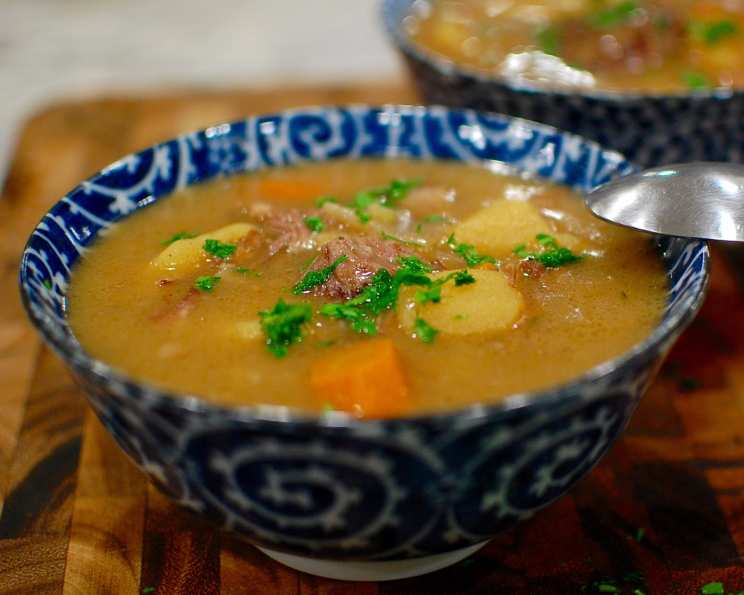
Prime Rib Stew: A Hearty Celebration of Leftovers
There’s a certain magic in transforming the remains of a grand feast into something equally satisfying. I remember one particularly cold January, the remnants of our Christmas prime rib threatened to become another forgotten tupperware in the back of the fridge. My grandmother, Nana Rose, with her uncanny ability to conjure deliciousness from seeming scraps, rescued it. She simmered those precious pieces with humble vegetables and fragrant herbs, turning them into a stew so deeply flavorful it warmed us from the inside out, chasing away the winter blues with every spoonful. That stew, a testament to resourcefulness and love, has been a staple in my kitchen ever since.
Recipe Overview
- Prep Time: 20 minutes
- Cook Time: 8-10 hours on low, 6 hours on high, or 1-2 hours on stovetop
- Total Time: 8 hours 20 minutes – 10 hours 20 minutes (slow cooker), or 2-3 hours (stovetop)
- Servings: 6
- Yield: About 8-10 cups of stew
- Dietary Type: Generally Dairy-Free (check bouillon cube ingredients), can be Gluten-Free
Ingredients
- 2-3 rib bones leftover from prime rib roast
- 8 ounces meat scraps or fat trimmings leftover from prime rib roast
- 2 cups leftover au jus sauce
- 1/2 – 1 cup leftover wine (red or white)
- 7-8 cups water
- 2 beef bouillon cubes (or substitute with beef broth)
- 1 onion, chopped
- 4 medium potatoes, peeled and cubed
- 4 carrots, peeled and sliced
- 3-6 sprigs thyme
- Salt, to taste
- Pepper, to taste
- 1 cup water
- 1/2 cup flour
Equipment Needed
- Large Crockpot/Slow Cooker (or Dutch oven for stovetop method)
- Slow cooker liners (optional, for easier cleanup)
- Cutting board
- Knife
- Large spoon
Instructions
-
Prepare the Ribs: Save the ribs from your leftover standing rib roast (also known as “prime rib”). Using a sharp knife, cut between the ribs to separate them into individual pieces. This will allow them to fit more easily into your cooking pot and will help release more of their rich flavor into the stew as more surface area is exposed to the cooking liquid.
-
Layer the Base in the Slow Cooker: Place the ribs and any leftover meat scraps or fat trimmings into the bottom of a large crockpot/slow cooker. (If you are using slow cooker liners, place one in the crockpot now.)
-
Add the Liquids: Pour in any leftover au jus, plus any leftover wine (either red or white works beautifully). The au jus will significantly enhance the flavor of the stew, so definitely use it if you have it. If you don’t have any au jus, don’t worry; you can still make a delicious stew without it. Next, pour the water into the crockpot and add the bouillon cubes and thyme sprigs. If you have beef broth on hand, you can substitute it for the water and bouillon cubes for an even richer flavor.
-
Introduce the Vegetables: Add the chopped potatoes, carrots, and onions to the crockpot. Season the stew with approximately 1/4 teaspoon of black pepper and 1/2 teaspoon of salt. Remember that the au jus and bouillon cubes already contain salt, so adjust accordingly to your taste.
-
Slow Cook to Perfection: Cover the crockpot and set it to low for 8-10 hours or high for 6 hours. If you prefer to cook this stew on the stovetop, you can. Simply simmer the meat/bones with the liquid in a Dutch oven or large pot over medium-low heat for about 1-2 hours, then add the vegetables during the last hour of cooking.
-
Cool and Separate the Meat: Once the cooking time is complete, remove the meat trimmings and rib bones from the stew and set them aside to cool. If you find any thyme “twigs,” remove them from the stew at this point.
-
Thicken the Stew: In a small bowl, mix 1/2 cup flour with 1 cup water using the back of a spoon until the mixture is smooth and forms a slurry. Stir the slurry into the stew, re-cover the crockpot, and continue cooking on high for about 20-30 minutes. This will help to thicken the stew to your desired consistency.
-
Return the Meat: While the stew is thickening, separate the meat from the cooled bones and fat. Discard the bones and fat and add the meat back into the pot.
-
Final Seasoning and Serve: Once the stew has thickened to your liking, taste it and adjust the seasonings with additional salt and pepper as needed.
-
Serve and Enjoy: Serve your hearty prime rib stew hot with a side of steamed rice or leftover garlic bread or dinner rolls. For an extra touch, add a dollop of leftover creamy horseradish to each serving (if you enjoy it).
Expert Tips & Tricks
-
Browning the Meat: For even deeper flavor, consider browning the meat scraps and rib bones in a skillet before adding them to the slow cooker. This will create a rich, caramelized crust that enhances the overall taste of the stew.
-
Vegetable Variety: Feel free to add other vegetables you enjoy, such as celery, parsnips, or turnips.
-
Herb Infusion: Use a cheesecloth or muslin bag to bundle the thyme sprigs and other herbs (such as rosemary or bay leaf) together. This makes it easier to remove them from the stew after cooking.
-
Make-Ahead Magic: This stew is even better the next day! The flavors have more time to meld together. Prepare the stew a day ahead of time and store it in the refrigerator. Simply reheat before serving.
-
Degreasing: If your stew seems too fatty, let it cool completely and then refrigerate it. The fat will solidify on the surface, making it easy to skim off before reheating.
Serving & Storage Suggestions
Serve this prime rib stew hot in bowls, garnished with fresh herbs like parsley or thyme. A crusty loaf of bread is perfect for soaking up the flavorful broth.
Leftover stew can be stored in an airtight container in the refrigerator for up to 3-4 days. For longer storage, freeze the stew in freezer-safe containers for up to 2-3 months. Thaw overnight in the refrigerator before reheating.
Reheat the stew gently on the stovetop over medium heat, stirring occasionally, until heated through. You can also reheat it in the microwave in 1-2 minute intervals, stirring in between.
Nutritional Information
| Nutrient | Amount per Serving | % Daily Value |
|---|---|---|
| Calories | 350 kcal | 18% |
| Total Fat | 18g | 28% |
| Saturated Fat | 7g | 35% |
| Cholesterol | 75mg | 25% |
| Sodium | 800mg | 35% |
| Total Carbohydrate | 25g | 9% |
| Dietary Fiber | 5g | 20% |
| Sugars | 6g | |
| Protein | 20g | 40% |
Note: Nutritional information is an estimate and may vary based on specific ingredients and portion sizes.
Variations & Substitutions
-
Gluten-Free: This stew is naturally gluten-free if you use gluten-free beef broth or bouillon cubes. For thickening, use a gluten-free flour blend or cornstarch instead of all-purpose flour.
-
Spicy Kick: Add a pinch of red pepper flakes or a chopped jalapeño to the stew for a touch of heat.
-
Creamy Version: Stir in a dollop of sour cream or plain Greek yogurt just before serving for a creamier texture.
-
Vegetarian Option: While this recipe is based on prime rib, you can adapt it into a vegetarian stew by using vegetable broth, adding more vegetables like mushrooms and lentils, and using a smoked paprika to mimic the smoky flavor of the meat.
FAQs (Frequently Asked Questions)
Q: Can I use a different cut of beef if I don’t have prime rib leftovers?
A: Absolutely! While prime rib adds a unique richness, you can use other cuts like chuck roast or short ribs. Just adjust the cooking time accordingly to ensure the meat is tender.
Q: What if I don’t have any leftover au jus?
A: No problem. Substitute with additional beef broth and a splash of Worcestershire sauce to mimic the umami flavor.
Q: Can I freeze this stew?
A: Yes, this stew freezes well. Let it cool completely before transferring it to freezer-safe containers. Thaw overnight in the refrigerator before reheating.
Q: How can I prevent the potatoes from getting mushy?
A: Cut the potatoes into larger chunks and add them to the slow cooker during the last 2-3 hours of cooking to prevent them from becoming overcooked.
Q: Is it necessary to remove the thyme sprigs before serving?
A: Yes, it’s best to remove the thyme sprigs as they can be woody and unpleasant to eat. You can use a cheesecloth bag to bundle them together for easy removal.
Final Thoughts
This Prime Rib Stew is more than just a recipe; it’s a way to honor the memory of a delicious meal and transform it into something new and comforting. It’s a celebration of resourcefulness, a testament to the magic that can happen when you take simple ingredients and transform them with patience and love. So, gather your leftovers, embrace the process, and create a stew that will warm your heart and nourish your soul. Don’t be afraid to experiment with your favorite vegetables and seasonings. I encourage you to try this recipe and share your own variations. Bon appétit!