
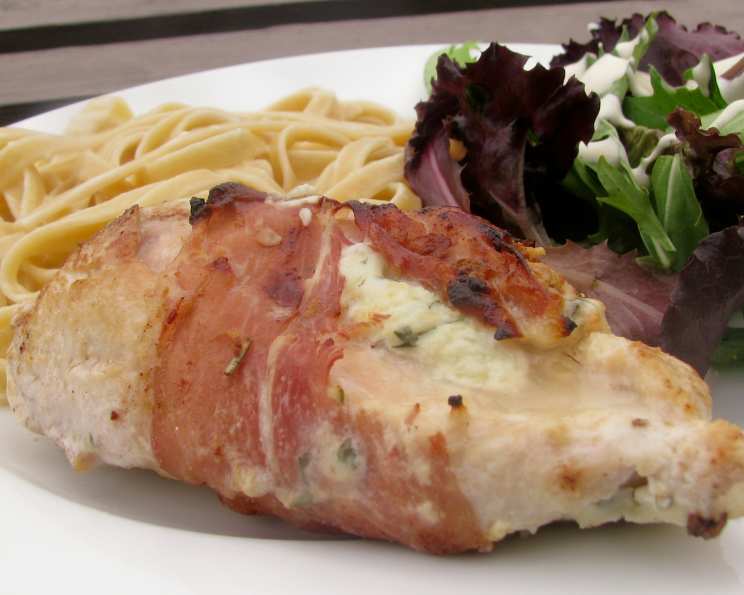
Prosciutto-Wrapped Stuffed Chicken With Herbed Ricotta
I can still picture it vividly: the cozy warmth of my grandmother’s kitchen, the aroma of herbs mingling with savory prosciutto. It was one of those rare, effortless dishes that always felt special, perfect for a Sunday supper or a casual gathering with friends. The simplicity of the stuffed chicken, the creamy ricotta filling bursting with fresh herbs, and the salty kiss of the prosciutto—it was a symphony of flavors and textures that never failed to bring a smile to everyone’s face. Now, decades later, I find myself recreating that memory, hoping to share the same comforting experience with my own loved ones.
Recipe Overview
- Prep Time: 15 minutes
- Cook Time: 20 minutes
- Total Time: 35 minutes
- Servings: 4
- Dietary Type: Gluten-Free
Ingredients
- ½ cup ricotta cheese
- Salt, to taste
- Pepper, to taste
- 3 tablespoons Parmigiano-Reggiano cheese, grated
- 1 garlic clove, finely chopped
- 1 tablespoon flat leaf parsley, chopped
- 2-3 small sage leaves, chopped
- 1 small sprig rosemary, chopped
- 4 small chicken breasts, skinless, boneless
- 1-2 teaspoons olive oil
- 4 slices prosciutto di Parma (thin sliced)
- Chicken stock
- ½ lemon, juice of
- 1 tablespoon butter
Equipment Needed
- Small bowl
- Cutting board
- Knife
- Ovenproof skillet
Instructions
- Preheat oven to 400 degrees F (200 degrees C).
- Measure the ricotta cheese into a small bowl.
- Add in the chopped parsley, sage, and rosemary, along with the finely chopped garlic.
- Add in the grated Parmigiano-Reggiano cheese and stir well to blend all ingredients into a cohesive mixture. Season with salt and pepper to taste.
- Butterfly each chicken breast. To do this, place a chicken breast on a cutting board and, using a sharp knife, slice horizontally through the center of the breast, being careful not to cut all the way through. Open the breast like a book.
- Fill each butterflied chicken breast with a fourth of the ricotta cheese mixture. Spread the filling evenly over one side of the butterflied breast.
- Wrap each filled chicken breast in a slice of the prosciutto di Parma. Ensure the prosciutto covers as much of the chicken as possible.
- Add 1 to 2 teaspoons olive oil to an ovenproof skillet. Warm the skillet over medium-high heat.
- Add in the prepared chicken breasts and brown, turning once for 4 to 6 minutes. The goal is to get a nice sear on the prosciutto, not to fully cook the chicken at this stage.
- Place the pan with the chicken in the preheated oven and bake for 12 to 15 minutes, or until the chicken is cooked through and the internal temperature reaches 165°F (74°C).
- Remove the chicken from the pan and set aside to rest briefly.
- Deglaze the pan with chicken stock. Pour the chicken stock into the skillet, scraping up any browned bits from the bottom of the pan with a spatula. This will add depth and flavor to your sauce.
- Add in the lemon juice and butter to the pan. Simmer the sauce for a few minutes, adding additional chicken stock as needed to reach your desired consistency.
- Spoon the sauce over the chicken breasts and serve immediately.
Expert Tips & Tricks
- Herb Variations: Feel free to experiment with different herbs based on your preferences. Thyme, oregano, or even a pinch of red pepper flakes can add a unique twist.
- Cheese Choices: While Parmigiano-Reggiano is the classic choice, Pecorino Romano or Asiago cheese would also work well in the filling.
- Wine Deglazing: If you enjoy cooking with wine, deglaze the pan with a dry white wine (such as Sauvignon Blanc or Pinot Grigio) instead of chicken stock for a richer, more complex flavor. Be sure to allow the wine to reduce slightly before adding the lemon juice and butter.
- Preventing Dry Chicken: To ensure the chicken stays moist, consider pounding the chicken breasts to an even thickness before butterflying them. This helps them cook more evenly and prevents overcooking. Also, don’t skip the resting period after baking; this allows the juices to redistribute throughout the chicken.
- Make-Ahead Prep: The ricotta filling can be prepared a day in advance and stored in the refrigerator. This will save you time on the day you plan to cook the chicken. You can also butterfly the chicken breasts and stuff them with the ricotta mixture earlier in the day, wrapping them tightly in plastic wrap and storing them in the refrigerator until you’re ready to cook.
Serving & Storage Suggestions
This Prosciutto-Wrapped Stuffed Chicken is delicious served with a variety of sides. Oven-roasted asparagus, as mentioned in the original recipe, is a classic pairing. Other excellent choices include creamy polenta, mashed potatoes, or a simple green salad. Garnish with a sprig of fresh rosemary or a drizzle of extra virgin olive oil for an elegant presentation.
Leftover chicken can be stored in an airtight container in the refrigerator for up to 3 days. Reheat gently in a skillet over medium heat or in the microwave until heated through. Avoid overcooking, as this can dry out the chicken. You can also slice the leftover chicken and use it in salads or sandwiches. Freezing is not recommended, as it can affect the texture of the ricotta filling and prosciutto.
Nutritional Information
| Nutrient | Amount per Serving | % Daily Value |
|---|---|---|
| Calories | 357 kcal | 18% |
| Total Fat | 22.5g | 34% |
| Saturated Fat | 9g | 45% |
| Cholesterol | 119mg | 39% |
| Sodium | 207mg | 8% |
| Total Carbohydrate | 2g | 0% |
| Dietary Fiber | 0.2g | 1% |
| Sugars | 0.3g | 1% |
| Protein | 35.3g | 70% |
Variations & Substitutions
- Dairy-Free: For a dairy-free version, substitute the ricotta cheese with a dairy-free ricotta alternative made from almonds or cashews. You can also omit the Parmigiano-Reggiano cheese or replace it with a vegan Parmesan alternative.
- Gluten-Free: This recipe is naturally gluten-free. However, always double-check the labels of your ingredients to ensure they are certified gluten-free if you have a severe gluten intolerance.
- Vegetarian Option: While this recipe features chicken, you could adapt the filling and prosciutto for a vegetarian dish. Try stuffing large portobello mushrooms with the ricotta mixture and wrapping them in thinly sliced eggplant or zucchini ribbons instead of prosciutto. Bake until the mushrooms are tender and the eggplant/zucchini is cooked through.
- Spice It Up: Add a pinch of red pepper flakes to the ricotta filling for a subtle kick of heat.
- Seasonal Herbs: Adjust the herbs based on what’s in season. In the spring, try adding fresh chives or dill to the filling. In the fall, consider using more sage and rosemary for a heartier flavor.
FAQs (Frequently Asked Questions)
Q: Can I use dried herbs instead of fresh herbs?
A: While fresh herbs are preferred for their brighter flavor, you can use dried herbs in a pinch. Use about 1 teaspoon of dried herbs for every tablespoon of fresh herbs.
Q: How can I prevent the prosciutto from burning in the oven?
A: Make sure the prosciutto is wrapped tightly around the chicken breast. If it starts to brown too quickly, you can loosely tent the skillet with aluminum foil during the last few minutes of baking.
Q: Can I grill the chicken instead of baking it?
A: Yes, you can grill the chicken. Preheat your grill to medium heat and grill the chicken for about 6-8 minutes per side, or until cooked through.
Q: What if I don’t have an ovenproof skillet?
A: If you don’t have an ovenproof skillet, you can sear the chicken in a regular skillet and then transfer it to a baking dish to finish cooking in the oven.
Q: How do I know when the chicken is fully cooked?
A: The best way to check for doneness is to use a meat thermometer. Insert the thermometer into the thickest part of the chicken breast; it should register 165°F (74°C).
Final Thoughts
I hope this recipe brings as much joy to your table as it has to mine over the years. This Prosciutto-Wrapped Stuffed Chicken with Herbed Ricotta is truly a versatile dish, suitable for a weeknight dinner or a special occasion. Don’t be afraid to experiment with different herbs and cheeses to create your own signature version. I encourage you to give it a try and share your feedback – I’d love to hear how it turns out! Consider pairing it with a crisp, dry white wine like a Pinot Grigio or Sauvignon Blanc to complete the meal. Bon appétit!