
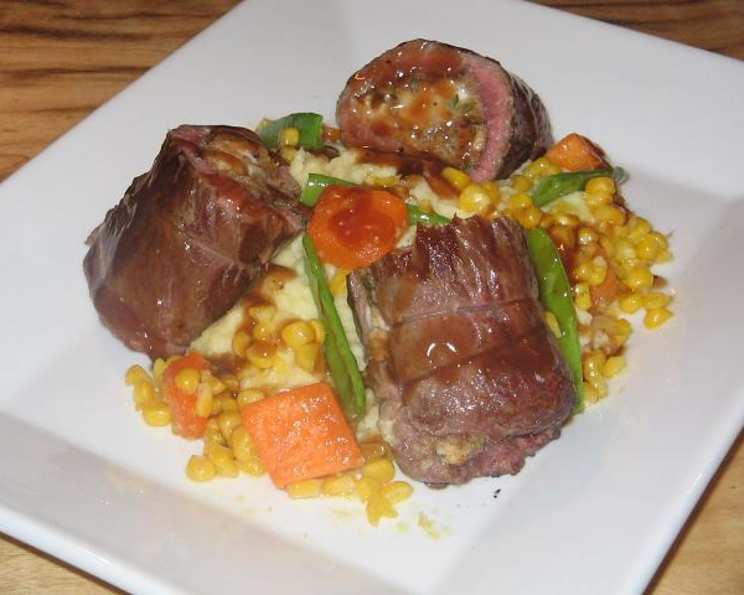
Provencal Roast Lamb Stuffed With Figs, Goat’s Cheese and Walnut
The scent always takes me back. Walking through the sprawling market in Aix-en-Provence, the air thick with the aroma of lavender, ripe figs, and roasting meats. It was there, amidst the colorful chaos, that I first tasted a dish even remotely like this. A local butcher offered a sample of lamb, stuffed with sun-drenched figs and tangy goat cheese, and I was instantly transported. It was a symphony of rustic flavors, a perfect marriage of savory and sweet that I knew I had to recreate. This recipe is my attempt to capture that memory, that feeling of Provençal sunshine on a plate.
Recipe Overview
- Prep Time: 30 minutes
- Cook Time: 1 hour 15 minutes
- Total Time: 1 hour 45 minutes
- Servings: 6
- Yield: 1 roast
- Dietary Type: Not specified
Ingredients
- 4 lbs leg of lamb (boned weight)
- Salt and pepper
- String
For the stuffing:
- ½ tablespoon olive oil
- ½ large onion, finely chopped
- 2 ¾ ounces walnut pieces
- 2 ¼ ounces breadcrumbs
- 5 ½ ounces goat’s cheese
- 8 fresh figs, quartered
- 3 sprigs thyme, leaves only
- 1 egg, beaten
Equipment Needed
- Large skillet
- Roasting pan
- Kitchen twine
Instructions
- Preheat the oven to 400 degrees F (200 degrees C).
- Trim the lamb of any excess fat. With a sharp knife, open the lamb leg out flat, like a book. Season the inside generously with salt and pepper.
- Prepare the stuffing while the oven heats up. In a skillet, heat the olive oil over medium heat. Add the finely chopped onion and cook until softened, about 5-7 minutes. Do not brown the onion; you want it to be translucent and sweet. Remove from heat.
- In a dry pan, toast the walnut pieces over medium-low heat until they are just turning brown and fragrant. This usually takes about 3-5 minutes. Be careful not to burn them. Remove from the pan and let cool slightly.
- Break the goat’s cheese into small, irregular nuggets.
- In a large bowl, gently mix together the cooked onion, toasted walnut pieces, breadcrumbs, goat’s cheese, quartered figs, and thyme leaves.
- Bind the stuffing mixture with the beaten egg and season generously with salt and pepper. Taste and adjust seasoning as needed.
- Spread the stuffing evenly over the opened piece of lamb.
- Carefully roll the lamb leg back up, encasing the stuffing inside.
- Using kitchen twine, tie the rolled lamb at regular intervals (about every 2 inches) to secure the stuffing and maintain a uniform shape.
- Season the outside of the lamb generously with salt and pepper.
- Roast the lamb in the preheated oven for 15 minutes. This initial high heat helps to sear the outside and lock in the juices.
- Turn the oven temperature down to 375 degrees F (190 degrees C) and continue cooking for another hour. The lamb should be pink in the center when finished. A meat thermometer inserted into the thickest part of the lamb should read about 135-140 degrees F for medium-rare. For medium, aim for 140-145 degrees F.
- Once cooked, remove the lamb from the oven and let it rest for at least 10-15 minutes before carving. This allows the juices to redistribute, resulting in a more tender and flavorful roast.
Expert Tips & Tricks
- Toasting the walnuts enhances their flavor and adds a nice crunch to the stuffing. Be careful not to burn them, as burnt walnuts can taste bitter.
- Don’t over-stuff the lamb, as the stuffing may spill out during cooking.
- If you’re using a very salty goat cheese, adjust the amount of salt you add to the stuffing accordingly.
- For a richer flavor, use a combination of fresh and dried figs in the stuffing.
- If the lamb starts to brown too quickly during roasting, tent it loosely with foil.
- The resting period is crucial for a tender roast. Don’t skip it!
Serving & Storage Suggestions
Serve the Provencal Roast Lamb hot, sliced into thick medallions. Spoon any pan juices over the slices. This dish pairs beautifully with roasted vegetables such as potatoes, carrots, and asparagus. A simple green salad with a light vinaigrette also complements the richness of the lamb.
Leftover roast lamb can be stored in an airtight container in the refrigerator for up to 3 days. To reheat, slice the lamb and gently warm it in a skillet with a little olive oil, or in a low oven. It can also be enjoyed cold in sandwiches or salads. The cooked lamb is not recommended for freezing, as it can become dry and lose its texture.
Nutritional Information
| Nutrient | Amount per Serving | % Daily Value |
|---|---|---|
| Calories | 906.2 kcal | N/A |
| Calories from Fat | 537 g | 59% |
| Total Fat | 59.8 g | 91% |
| Saturated Fat | 24.3 g | 121% |
| Cholesterol | 258.4 mg | 86% |
| Sodium | 397 mg | 16% |
| Total Carbohydrate | 24.2 g | 8% |
| Dietary Fiber | 3.5 g | 13% |
| Sugars | 13.1 g | N/A |
| Protein | 66.9 g | 133% |
Note: Nutritional information is an estimate and may vary based on specific ingredients and preparation methods.
Variations & Substitutions
- For a gluten-free version, use gluten-free breadcrumbs.
- Try different types of cheese, such as feta or ricotta, in place of goat’s cheese.
- Substitute dried cranberries or cherries for the figs for a festive twist.
- Add some chopped fresh rosemary or sage to the stuffing for a different herbal flavor.
- Marinate the lamb in a mixture of olive oil, lemon juice, garlic, and herbs before roasting for added flavor.
FAQs (Frequently Asked Questions)
Q: Can I prepare the stuffing ahead of time?
A: Yes, you can prepare the stuffing a day in advance and store it in the refrigerator. Bring it to room temperature before stuffing the lamb.
Q: What if I don’t have fresh figs?
A: You can use dried figs, but soak them in warm water for about 30 minutes to plump them up before using.
Q: How do I know when the lamb is cooked to the correct temperature?
A: Use a meat thermometer inserted into the thickest part of the lamb, avoiding the stuffing. Aim for 135-140 degrees F for medium-rare.
Q: Can I use a different cut of lamb?
A: While a leg of lamb is ideal, you could potentially use a boneless shoulder of lamb, but you may need to adjust the cooking time accordingly.
Q: What wine pairs well with this dish?
A: A Côtes du Rhône or other Southern Rhône red wine would be a lovely pairing, complementing the flavors of the lamb and Provençal herbs.
Final Thoughts
This Provencal Roast Lamb is more than just a recipe; it’s an experience. It’s a taste of the sun-drenched fields of Provence, a celebration of simple, fresh ingredients, and a perfect centerpiece for any gathering. Don’t be intimidated by the list of ingredients – the process is straightforward, and the result is well worth the effort. So, gather your ingredients, pour yourself a glass of wine, and embark on this culinary adventure. I encourage you to try this recipe and share your feedback. Bon appétit!