
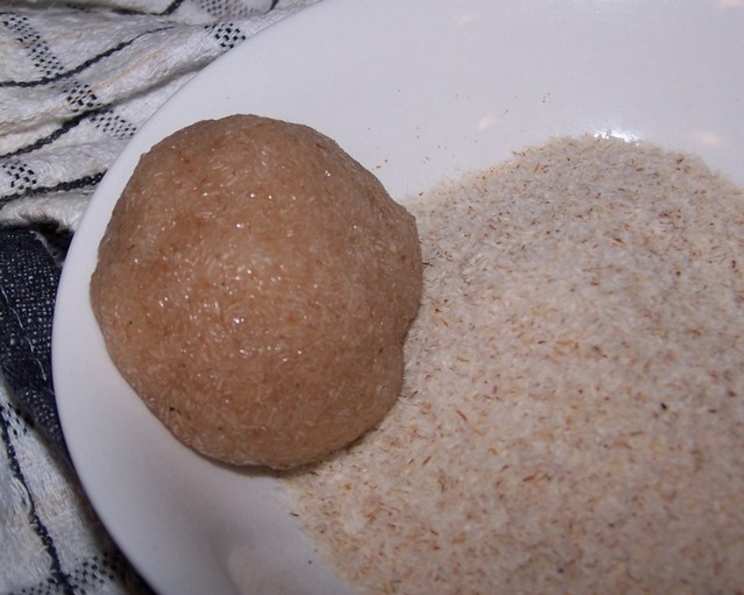
The Psyllium Secret: A Chef’s Guide to Vegan Egg Replacement
The first time I encountered psyllium husks, it wasn’t in a fancy vegan bakery, but in my grandmother’s kitchen. She was always experimenting with natural remedies, and I remember her stirring a mysterious, slightly grainy mixture into her morning smoothie. “Good for the digestion, dear,” she’d say with a twinkle in her eye. Years later, when I started exploring vegan baking, I rediscovered psyllium and realized its incredible potential as an egg replacer. It’s a truly magical ingredient – almost flavorless, but with the power to bind and create amazing textures in baked goods. This humble ingredient, once relegated to the health food aisle, has become a staple in my kitchen, opening up a world of possibilities for egg-free creations.
Recipe Overview
- Prep Time: 2 minutes
- Cook Time: 0 minutes
- Total Time: 2 minutes
- Servings: 1
- Yield: 1 ‘egg’
- Dietary Type: Vegan
Ingredients
- 1 tablespoon psyllium husks
- 2 tablespoons water
Equipment Needed
- Small bowl or cup
- Spoon
Instructions
- In a small bowl or cup, combine the psyllium husks and water.
- Stir the mixture for about 30 seconds. As you stir, you’ll notice the mixture quickly thickening.
- Continue stirring until the mixture becomes gluey and thick enough to roll into a ball. The consistency should resemble a slightly sticky gel.
- Use your psyllium egg replacer immediately. It will continue to thicken if left to sit, so prepare it right before you need to add it to your recipe.
Expert Tips & Tricks
- Psyllium Husk Fines vs. Whole Husks: Both forms work, but psyllium husk fines (the powder form) tend to hydrate a bit quicker, resulting in a smoother, more uniform gel. If using whole husks, you might need to stir a little longer to ensure even hydration.
- Consistency is Key: The goal is a thick, gluey consistency. If your mixture is too watery, add a tiny bit more psyllium husk (about 1/4 teaspoon at a time) until you reach the desired thickness. Conversely, if it’s too thick, add a tiny bit more water (1/4 teaspoon at a time).
- Bloom Time Matters: While this recipe is designed for immediate use, you can experiment with allowing the mixture to “bloom” for a few minutes (up to 5) before adding it to your recipe. This can sometimes enhance the binding effect, especially in more delicate baked goods. However, be mindful that it will continue to thicken significantly.
- Troubleshooting: If your baked good turns out too dense when using psyllium as an egg replacer, try reducing the amount of psyllium slightly in your next batch. You might also need to adjust the amount of liquid in the recipe to compensate. Conversely, if your baked good is too crumbly, try increasing the psyllium slightly.
- Beyond Baking: While this recipe focuses on egg replacement in baking, remember that psyllium can also be a fantastic binder in other vegan dishes. As mentioned, it works wonders in veggie burgers, lentil loaves, and even as a thickener in sauces and gravies.
- Experiment with Warm Water: Using slightly warm (not hot) water can sometimes help the psyllium husks hydrate more quickly and evenly.
Serving & Storage Suggestions
Since this recipe is designed as an egg replacer for immediate use within another recipe, there’s no serving or storage required for the “egg” itself. However, consider these tips for the final baked good:
- Cooling: Allow your baked goods to cool completely on a wire rack before slicing or serving. This helps them to set properly and prevents them from becoming soggy.
- Storage: Store your baked goods in an airtight container at room temperature. Most items will stay fresh for 2-3 days.
- Freezing: For longer storage, wrap baked goods tightly in plastic wrap and then place them in a freezer-safe bag or container. They can be frozen for up to 2-3 months.
- Reheating: To reheat frozen baked goods, thaw them overnight in the refrigerator or at room temperature. You can then warm them in a low oven (around 300°F/150°C) for a few minutes to restore their texture.
Nutritional Information
| Nutrient | Amount per Serving | % Daily Value* |
|---|---|---|
| Calories | 0 kcal | 0% |
| Total Fat | 0 g | 0% |
| Saturated Fat | 0 g | 0% |
| Cholesterol | 0 mg | 0% |
| Sodium | 0.6 mg | 0% |
| Total Carbohydrate | 0 g | 0% |
| Dietary Fiber | 0 g | 0% |
| Sugars | 0 g | 0% |
| Protein | 0 g | 0% |
*Percent Daily Values are based on a 2,000 calorie diet.
Variations & Substitutions
- Flavored Water: For a subtle flavor enhancement, try using herbal tea or a flavored water (e.g., cucumber water) instead of plain water. Be mindful of how the flavor will pair with your overall recipe.
- Psyllium Seed Powder: While psyllium husks are most common, you can also find psyllium seed powder. Use the same ratio as the husk replacer, but note it may absorb liquid slightly differently.
- For Gluten-Free Baking: Psyllium is a rockstar in gluten-free baking! If your recipe is also gluten-free, psyllium will help to add structure and prevent crumbliness in gluten-free baked goods, that normally eggs are used for.
- Boosted Nutrition: Instead of just using plain water, you can use flaxseed tea or even chia seed tea in place of the water. This will slightly change the consistency, and will also contribute to the nutritional value of the bake.
FAQs (Frequently Asked Questions)
Q: Can I use this psyllium egg replacer for all types of recipes?
A: This works best as a binder in baked goods like cookies, cakes, muffins, and breads, or other applications like veggie burgers where you need a binding agent. It’s not suitable for recipes where eggs are the primary structure, like omelets or custards.
Q: Why does the mixture thicken so quickly?
A: Psyllium husks are highly absorbent and have a unique ability to form a gel when mixed with water. This gel-like consistency is what makes it an effective egg replacer.
Q: Can I make a larger batch of this egg replacer and store it for later?
A: It’s best to prepare this psyllium egg replacer fresh, right before you need it. It continues to thicken over time, and it can become difficult to work with if it sits for too long.
Q: Does psyllium add any flavor to my recipe?
A: One of the great things about psyllium is that it’s virtually tasteless. It won’t significantly alter the flavor profile of your baked goods.
Q: What if my baked goods are too dry after using this egg replacer?
A: Try adding a tablespoon or two of extra liquid (e.g., non-dairy milk, applesauce, or oil) to your recipe in the next batch.
Final Thoughts
I hope this guide has illuminated the wonders of psyllium as a vegan egg replacer! Don’t be afraid to experiment and adapt this recipe to suit your favorite baked goods. Vegan baking is all about creativity and exploration. Once you’ve mastered the art of the psyllium egg, the possibilities are endless. So go ahead, whip up a batch of your favorite cookies or muffins, and experience the magic of this unassuming ingredient. And please, share your creations with me – I’d love to hear about your culinary adventures!