
Pulpo a la Gallega: A Taste of the Spanish Coast
My first encounter with Pulpo a la Gallega wasn’t in a fancy restaurant, but at a bustling Galician festival. The air was thick with the scent of woodsmoke and the sound of bagpipes, and in the middle of it all, a woman with hands like seasoned sailors expertly wielded a pair of scissors, snipping perfectly tender octopus onto wooden plates. The simplicity of the dish, just octopus, potatoes, paprika, and olive oil, was a revelation. Each bite was an explosion of flavor that transported me straight to the rugged coastline of Galicia, a memory I cherish and try to recreate every time I make this dish.
Recipe Overview
- Prep Time: 15 minutes
- Cook Time: 20-45 minutes
- Total Time: 35-60 minutes
- Servings: 4-6
- Dietary Type: Gluten-Free, Dairy-Free
Ingredients
- 2 lbs octopus
- 1 onion, halved
- 2 bay leaves
- 2 larger potatoes, boiled and sliced diagonally into rounds (about 1/2″ in thickness or less)
- 1 teaspoon hot paprika, to taste (about, or more)
- Sea salt
- Extra virgin olive oil
Equipment Needed
- Large soup pot
- Cutting board
- Sharp knife
- Wooden serving platter or plates
Instructions
- Fill a large soup pot with water, enough to submerge the octopus.
- Cut the onion in half and add it to the water, along with the bay leaves.
- Bring the water to a boil, and submerge the octopus 3 or 4 times, to scald it. This process, called “scaring” the octopus, helps to tenderize it.
- Bring the water back to a boil and place the octopus in the water.
- Reduce heat to a simmer, and cook the octopus for 20 minutes. A larger octopus will require a longer cooking time, up to 45 minutes. The octopus is done when a knife inserted into the thickest part of the tentacle meets little resistance. Start checking for doneness after 20 minutes, and continue cooking until tender. Overcooking will make the octopus rubbery.
- Remove the octopus from the water and let it cool slightly.
- Slice the octopus diagonally into rounds (ovals, really). The slices should be about 1/2″ thick.
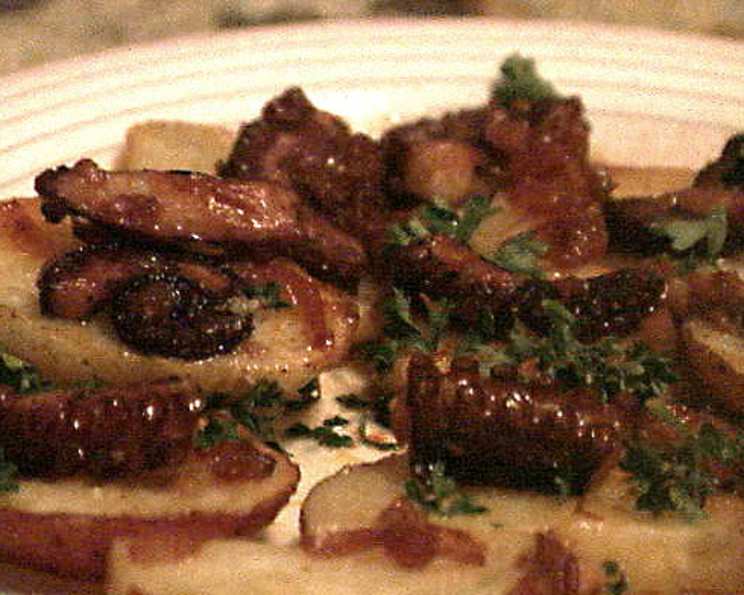
- Presentation: Arrange potato rounds on a plate or wooden serving tablet and top each with a slice of octopus.
- The potato should be about the same size as the octopus slices, if not, then cut potatoes accordingly.
- Liberally sprinkle paprika and sea salt over all. The paprika is key to this dish, don’t skimp on it!
- Drizzle generously with extra virgin olive oil.
- You may wish to garnish with chopped parsley. (Optional)
Expert Tips & Tricks
- Tenderizing the Octopus: The key to perfect Pulpo a la Gallega is tender octopus. Besides “scaring” it at the beginning, simmering is crucial. Avoid a rolling boil, which can toughen the meat.
- Perfect Potatoes: Use waxy potatoes like Yukon Gold or red potatoes. They hold their shape well after boiling and provide a nice contrast to the octopus. Don’t overcook the potatoes! They should be tender but not mushy.
- Paprika Power: Use high-quality Spanish paprika, preferably Pimentón de la Vera, which comes in sweet, bittersweet, and hot varieties. The hot paprika adds a delightful kick, but adjust to your preference.
- Olive Oil is Key: Use a good quality extra virgin olive oil. It will impart a fruity and peppery flavour which are essential to the dish.
- Serving Temperature: While traditionally served warm, Pulpo a la Gallega is also delicious at room temperature. This makes it a great dish for entertaining as it can be prepared ahead of time.
- Don’t discard the cooking liquid: The octopus cooking liquid, known as “broth,” is packed with flavor. You can reserve it to add depth to seafood stews or soups.
Serving & Storage Suggestions
Pulpo a la Gallega is best served immediately after assembly, while the octopus is still warm and the potatoes are freshly cooked. Garnish with a sprinkle of fresh parsley for a pop of color. Serve as a tapa or appetizer, or as a light main course.
Leftovers can be stored in an airtight container in the refrigerator for up to 2 days. The octopus may become slightly tougher upon reheating, so it’s best to consume it as soon as possible.
To reheat, gently warm the octopus and potatoes in a pan with a little olive oil over low heat, or microwave in short intervals until heated through. Avoid overcooking, as this will make the octopus rubbery.
Do not leave at room temperature for more than 2 hours.
Nutritional Information
| Nutrient | Amount per Serving | % Daily Value |
|---|---|---|
| Calories | 281 kcal | N/A |
| Total Fat | 22 g | 8% |
| Saturated Fat | 0.6 g | 2% |
| Cholesterol | 108.8 mg | 36% |
| Sodium | 528.8 mg | 22% |
| Total Carbohydrate | 26.7 g | 8% |
| Dietary Fiber | 3 g | 11% |
| Sugars | 2.1 g | N/A |
| Protein | 36.3 g | 72% |
Note: Nutritional information is an estimate and may vary based on specific ingredients and portion sizes.
Variations & Substitutions
- Spicy Kick: For an extra spicy kick, add a pinch of cayenne pepper or a drizzle of chili oil along with the paprika.
- Garlic Infusion: Rub the potatoes with a clove of garlic before topping with the octopus and paprika.
- Lemon Zest: A grating of lemon zest adds a bright, citrusy note to the dish.
- Smoked Paprika: Substitute regular paprika with smoked paprika for a deeper, smokier flavor.
- Different Potatoes: While waxy potatoes are preferred, you can experiment with other varieties like russet potatoes for a different texture.
- Other Seafood: Although not strictly Pulpo a la Gallega, you can use this recipe with other types of seafood, such as squid or shrimp. Adjust the cooking time accordingly.
FAQs (Frequently Asked Questions)
Q: How do I ensure the octopus is tender and not rubbery?
A: The key is to simmer the octopus gently for the correct amount of time. Don’t boil it vigorously, and test for doneness regularly with a knife.
Q: Can I use frozen octopus for this recipe?
A: Yes, frozen octopus works well. Thaw it completely in the refrigerator before cooking. Some believe that freezing helps tenderize the octopus.
Q: What type of paprika should I use?
A: Spanish Pimentón de la Vera is the traditional choice, available in sweet, bittersweet, and hot varieties. Choose the one that suits your taste preference.
Q: Can I make this dish ahead of time?
A: You can boil the octopus and potatoes ahead of time and store them separately in the refrigerator. Assemble the dish just before serving to maintain the best texture.
Q: Is there a substitute for the wine cork in the boiling water?
A: While adding a wine cork is a traditional tip, its effectiveness is debated. If you’re skeptical, simply focus on simmering the octopus gently.
Final Thoughts
Pulpo a la Gallega is more than just a recipe; it’s a culinary journey to the heart of Galicia. The simplicity of the ingredients allows the natural flavors of the octopus, potatoes, and paprika to shine through. I encourage you to try this recipe and experience the authentic taste of the Spanish coast. Share your creations and any variations you discover – I’d love to hear about your culinary adventures! Pair this dish with a crisp Albariño wine for the ultimate Galician experience. ¡Buen provecho!