
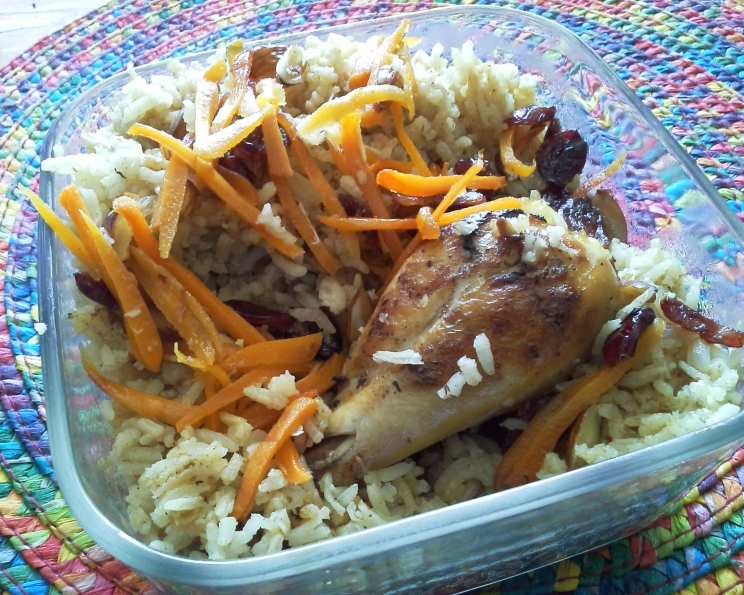
Qabali Palau: A Taste of Afghan Hospitality
The memory still warms me – the scent of cardamom and caramelized onions swirling through the air, a tapestry woven with the laughter of family gathered around a low table. My dearest friend, Fatima, had invited me to her home for Qabali Palau, a dish she described as “Afghanistan on a plate.” It wasn’t just the incredibly flavorful rice, the tender chicken, or the jewel-toned carrots and raisins that made the evening so special. It was the sheer generosity of spirit, the sense of connection and belonging, that Fatima poured into every grain of rice. That night, I learned that Qabali Palau is more than a recipe; it’s an invitation to share in the rich culture and warm hospitality of Afghanistan.
Recipe Overview
- Prep Time: 20 minutes
- Cook Time: 1 hour 10 minutes
- Total Time: 1 hour 30 minutes
- Servings: 4-6
- Yield: 1 large pot
- Dietary Type: Gluten-Free
Ingredients
- 1 ½ cups basmati rice
- 3 tablespoons olive oil, divided
- 1 onion, finely diced
- 1 lb skinless chicken drumsticks or 1 lb skinless chicken thighs
- 1 cup chicken stock
- 1 carrot, peeled and cut into matchsticks
- ½ cup raisins
- ⅓ cup slivered almonds
- 1 tablespoon sugar
- Salt
- Fresh ground black pepper
- 1 teaspoon ground cumin
- 1 teaspoon ground cardamom
- 7 cups water
Equipment Needed
- Large saucepan
- Dutch oven or large oven-safe pot with a lid
- Aluminum foil
Instructions
- Preheat your oven to 475 degrees F (246 degrees C). Rinse the basmati rice thoroughly under cold water until the water runs clear, removing excess starch. This step is crucial for achieving fluffy, separate grains. Set the rinsed rice aside to drain.
- In a large saucepan, heat 2 tablespoons of olive oil over medium heat. Add the finely diced onion and sauté, stirring frequently to prevent burning, for about 5 to 7 minutes, or until the onions are softened and translucent.
- Add the chicken (drumsticks or thighs) to the pot. Season generously with salt and pepper. Increase the heat to medium-high and brown the chicken on all sides, about 6 minutes total. This browning process develops deep, savory flavors.
- Add ½ cup of the chicken stock to the pot. Stir until the stock is almost completely evaporated. Then, add the remaining ½ cup of chicken stock. Bring the mixture to a boil, then cover the pot and simmer until the sauce becomes a dark brown color, approximately 10 minutes. This creates a concentrated, flavorful base for the Palau.
- While the chicken is simmering, prepare the carrot topping. In another saucepan, simmer the carrot sticks in a small amount of water until they turn a darker orange color, about 10 minutes. Drain off all the liquid.
- In the same saucepan (now empty), toss the simmered carrots with the remaining 1 tablespoon of olive oil, the raisins, slivered almonds, and sugar. Cook over medium heat for 3 to 4 minutes, stirring constantly, until the carrots are slightly caramelized and the raisins are plump. Pack this mixture tightly into an aluminum foil pouch to keep it warm and moist while the rice cooks.
- Remove the browned chicken from the pot and set it aside on a plate. Stir the cumin, cardamom, and pepper into the remaining sauce in the pot. Cook for another 5 minutes, allowing the spices to bloom and infuse the sauce with their aroma.
- In a Dutch oven (or a large oven-safe pot with a lid), bring the 7 cups of water to a boil. Add the drained basmati rice and boil until the rice is almost al dente, meaning it’s still slightly firm to the bite. This is a critical step to prevent mushy Palau. Strain the rice immediately and return it to the Dutch oven.
- Add the seasoned broth (from the cooked chicken) to the rice in the Dutch oven. Gently stir to distribute the flavor. Then, nestle the browned chicken pieces on top of the rice. Place the sealed aluminum foil pouch containing the carrot mixture on top of the chicken.
- Cover the Dutch oven tightly with a lid and bake in the preheated oven at 475 degrees F (246 degrees C) for 15 minutes. Then, reduce the oven temperature to 350 degrees F (175 degrees C) and continue baking for another 20 minutes.
- Remove the Dutch oven from the oven. Transfer the chicken pieces to a serving platter. Cover the platter with the cooked rice. Open the aluminum foil pouch containing the carrot mixture and sprinkle the contents evenly over the top of the rice.
Expert Tips & Tricks
- Rice Selection: Using high-quality basmati rice is crucial. Look for long-grain varieties that are aged for the best texture.
- Browning is Key: Don’t rush the browning process for the chicken. This step adds depth and complexity to the flavor profile.
- Don’t Overcook the Rice: Keep a close eye on the rice while it’s boiling. It should be almost al dente before you strain it. Overcooked rice will result in a mushy final product.
- Spice Level: Adjust the amount of cumin and cardamom to your taste. Some prefer a more pronounced spice flavor, while others prefer a more subtle balance.
- Make-Ahead Tip: You can prepare the carrot mixture a day in advance and store it in the refrigerator. Just make sure to bring it to room temperature before adding it to the rice.
Serving & Storage Suggestions
Serve Qabali Palau immediately while it’s hot. Arrange the chicken on a platter, cover it with the flavorful rice, and generously sprinkle the carrot and raisin mixture over the top. This dish is beautiful enough to be a centerpiece!
Leftovers can be stored in an airtight container in the refrigerator for up to 3 days. To reheat, gently microwave or warm in a covered pot on the stovetop with a splash of water or broth to prevent drying out. Freezing is not recommended as the rice texture may change upon thawing.
Nutritional Information
| Nutrient | Amount per Serving | % Daily Value |
|---|---|---|
| Calories | 641.7 kcal | N/A |
| Calories from Fat | 193 g | 30% |
| Total Fat | 21.5 g | 33% |
| Saturated Fat | 3.4 g | 16% |
| Cholesterol | 89.2 mg | 29% |
| Sodium | 217.9 mg | 9% |
| Total Carbohydrate | 79.8 g | 26% |
| Dietary Fiber | 5.3 g | 21% |
| Sugars | 17.7 g | 70% |
| Protein | 33.5 g | 66% |
Variations & Substitutions
- Lamb or Beef: Substitute the chicken with lamb or beef for a richer flavor. Adjust cooking times accordingly.
- Vegetarian Option: Omit the chicken and use vegetable broth instead of chicken stock. Add chickpeas or lentils for protein.
- Nuts: Use pistachios or walnuts instead of almonds for a different textural element.
- Dried Fruit: Try adding dried apricots or cranberries in addition to, or instead of, raisins.
- Spices: A pinch of saffron threads soaked in warm water can be added to the rice for a beautiful color and aroma.
FAQs (Frequently Asked Questions)
Q: Why is it important to rinse the rice before cooking?
A: Rinsing the rice removes excess starch, which prevents the grains from sticking together and becoming mushy during cooking. This results in a lighter, fluffier Palau.
Q: Can I use brown rice instead of basmati rice?
A: While you can, the cooking time will need to be adjusted significantly. Brown rice takes much longer to cook than basmati rice, and the overall texture of the dish will be different.
Q: How do I prevent the rice from burning on the bottom of the pot?
A: Ensure there is enough liquid in the pot and that the lid is tightly sealed to create steam. Also, reduce the oven temperature to 350 degrees F (175 degrees C) after the initial 15 minutes at 475 degrees F (246 degrees C).
Q: What can I do if the rice is still too hard after the cooking time?
A: Add a little more chicken stock (about ¼ cup) to the pot, reseal the lid, and continue baking at 350 degrees F (175 degrees C) for another 5-10 minutes, checking for doneness.
Q: Can I prepare Qabali Palau in a slow cooker?
A: While possible, the results may vary. You’ll need to adjust the liquid amounts and cooking time. Brown the chicken separately before adding it to the slow cooker with the rice and other ingredients. Cook on low for 4-6 hours, or until the rice is cooked through.
Final Thoughts
Qabali Palau is more than just a dish; it’s an experience. It’s a labor of love that rewards you with an explosion of flavors and textures. Don’t be intimidated by the number of steps – each one contributes to the unique character of this Afghan classic. So, gather your ingredients, invite some friends, and embark on a culinary journey to Afghanistan. Share your creations, gather feedback, and maybe even pair it with a refreshing glass of Doogh (a traditional Afghan yogurt drink) for the full experience. Enjoy the process, and savor every bite!