
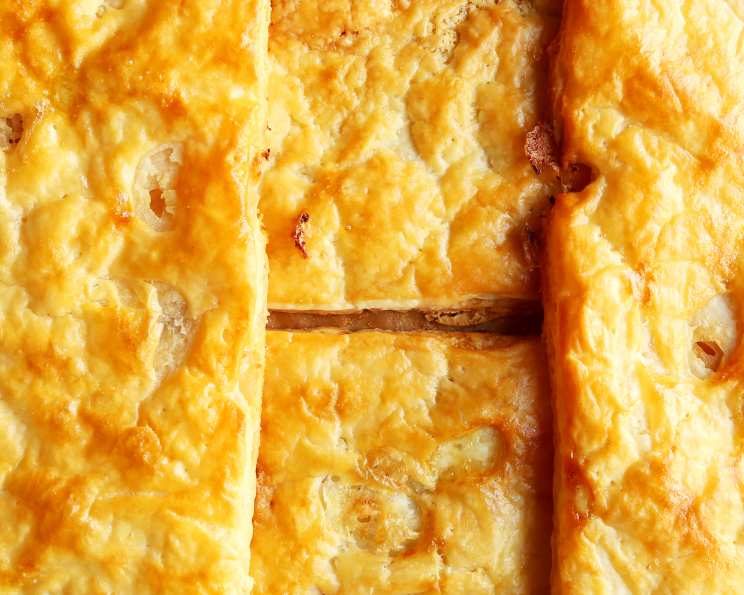
Quick and Easy Puff Pastry: A Chef’s Guide
The aroma of freshly baked puff pastry instantly transports me back to my childhood, to my grandmother’s cozy kitchen, filled with warmth and the sweet, buttery scent of her famous apple turnovers. I can still picture her meticulously folding the dough, her hands dusted with flour, as she patiently explained the magic of creating those flaky layers. That memory, that feeling, is what I strive to recreate every time I bake, and it all starts with the perfect puff pastry.
Recipe Overview
- Prep Time: 15 minutes
- Cook Time: Variable, depending on use
- Total Time: 2 hours 15 minutes (including chilling time)
- Yields: 2 puff pastry portions
- Dietary Type: Not specified, can be adapted (see Variations)
Ingredients
- 1 1⁄2 cups flour
- 1 cup butter, cold and cut into small pieces
- 1⁄2 cup sour cream, cold
Equipment Needed
- Mixing bowl
- Knife or pastry blender
- Rolling pin
- Plastic wrap
- Floured surface
Instructions
- In a mixing bowl, cut the cold butter into the flour. You can use a pastry blender or a knife to do this. The mixture should resemble coarse crumbs, with small pieces of butter still visible. It’s crucial to keep the butter cold to achieve the desired flaky texture.
- Stir in the cold sour cream. Gently combine the sour cream with the flour and butter mixture until just combined. Be careful not to overmix.
- Turn the dough out onto a lightly floured board and knead it gently until it just holds together. The key here is minimal handling. Over-kneading will develop the gluten in the flour, resulting in a tough pastry rather than a flaky one.
- Form the dough into a ball, flatten it slightly into a disc shape, and wrap it tightly in plastic wrap.
- Refrigerate the dough for at least 2 hours, or preferably overnight. This chilling period is vital as it allows the gluten to relax and the butter to firm up, which are both essential for creating those distinct layers of puff pastry.
- When ready to use, work with half of the dough at a time, keeping the other half in the refrigerator to maintain its cold temperature. This prevents the butter from melting and ensures even distribution during rolling.
- On a lightly floured surface, pound the dough with a heavy rolling pin to make it pliable. This initial pounding helps to flatten the butter and create the first layers.
- Roll the dough into a rectangle, approximately 1/4 inch thick. Use this puff pastry in any recipe that calls for it, adjusting baking times as needed based on the specific application.
Expert Tips & Tricks
- Keep everything cold: The secret to flaky puff pastry is cold ingredients. Make sure your butter and sour cream are well-chilled before you start. You can even chill your flour and mixing bowl for 30 minutes before beginning.
- Don’t overmix: Overmixing develops the gluten in the flour, which will result in a tough pastry. Mix the ingredients until just combined.
- Pounding is key: Don’t skip the pounding step! This is important for distributing the butter and creating those lovely layers.
- Use high-quality butter: The flavor of your puff pastry will largely depend on the quality of your butter. Opt for a European-style butter with a higher fat content for the best results.
- If the butter starts to melt while you are working with the dough, stop, re-wrap the dough, and place it back in the refrigerator for 15-20 minutes to firm up again.
Serving & Storage Suggestions
Puff pastry is incredibly versatile and can be used in a multitude of sweet and savory applications. Serve freshly baked puff pastry creations warm for the best texture and flavor.
- Storage: Unbaked puff pastry dough can be stored in the refrigerator for up to 2 days, tightly wrapped in plastic wrap. For longer storage, freeze the dough for up to 2 months. Thaw overnight in the refrigerator before using.
- Baked puff pastry: Once baked, puff pastry is best enjoyed immediately. It can be stored at room temperature for a few hours, but it will lose its crispness over time. For longer storage, keep it in an airtight container in the refrigerator for up to 2 days. Reheat in a preheated oven at 350°F (175°C) for a few minutes to restore some of its crispness.
Nutritional Information
Please note that the following nutritional information is an estimate and can vary depending on the specific ingredients used and portion sizes.
| Nutrient | Amount per Serving (estimated) | % Daily Value (estimated) |
|---|---|---|
| Calories | 633 kcal | N/A |
| Total Fat | 52g | N/A |
| Saturated Fat | 32.5g | N/A |
| Cholesterol | 137mg | N/A |
| Sodium | 429mg | N/A |
| Total Carbohydrate | 36.7g | N/A |
| Dietary Fiber | 1.25g | N/A |
| Sugars | 1.15g | N/A |
| Protein | 5.9g | N/A |
Variations & Substitutions
- Gluten-free Puff Pastry: Substitute the all-purpose flour with a high-quality gluten-free flour blend designed for baking. You may need to add a binder like xanthan gum to help with the structure.
- Dairy-Free Puff Pastry: Replace the butter with a vegan butter alternative that has a high fat content. Use a plant-based sour cream substitute like a cashew-based or soy-based option. Be sure to select substitutes that are very cold.
- Herb-Infused Puff Pastry: Add finely chopped fresh herbs like rosemary, thyme, or parsley to the flour mixture for a savory twist.
- Sweet Puff Pastry: Sprinkle the dough with sugar before baking for a caramelized finish.
FAQs (Frequently Asked Questions)
Q: Why is my puff pastry not puffing up?
A: The most common reason is that the butter melted during the preparation process. Ensure your ingredients are cold and work quickly to prevent the butter from softening.
Q: Can I use salted butter instead of unsalted butter?
A: Yes, but reduce the amount of salt you add to the recipe accordingly. Keep in mind that the salt content in butter can vary, so adjust to your taste.
Q: How do I know when the puff pastry is fully baked?
A: The pastry should be golden brown and puffed up. The bottom should also be cooked through and not doughy.
Q: Can I make this puff pastry in a food processor?
A: Yes, you can use a food processor to cut the butter into the flour, but be careful not to over-process. Pulse until the mixture resembles coarse crumbs.
Q: What can I use puff pastry for?
A: Puff pastry is extremely versatile. You can use it for sweet applications like tarts, turnovers, and palmiers, or for savory dishes like quiches, pot pies, and sausage rolls.
Final Thoughts
Making your own puff pastry might seem intimidating, but this quick and easy recipe proves that it’s entirely achievable at home. With a few simple ingredients and a little patience, you can create a batch of flaky, buttery dough that will elevate your baking to new heights. So, preheat your oven, dust your countertop with flour, and embark on this culinary adventure. Don’t be afraid to experiment with different fillings and flavors, and most importantly, share your creations with loved ones. After all, the best part of baking is the joy it brings to others.