
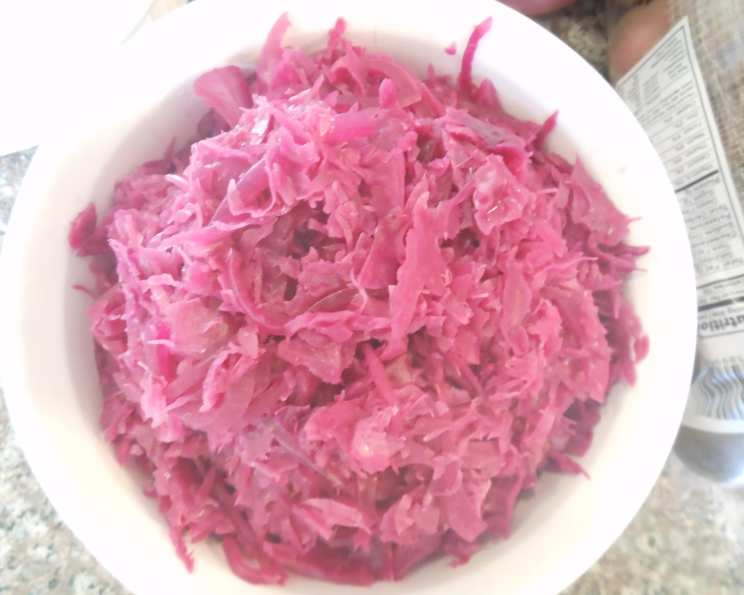
Quick Fresh Sauerkraut: A Tangy Homemade Delight
I remember the first time I tasted sauerkraut. It was at my grandmother’s house, during one of our raucous family gatherings. The aroma, a peculiar mix of sour and earthy, filled the kitchen. I was hesitant, but Grandma, with a twinkle in her eye, insisted I try just a little. That first bite was a revelation—a surprisingly bright and tangy counterpoint to the rich, meaty dishes that always graced her table. From that day on, sauerkraut held a special place in my heart, a culinary reminder of family, warmth, and the unexpected joys of trying new things. While traditionally fermented sauerkraut takes weeks, this quick version captures that essential flavor in under an hour.
Recipe Overview
- Prep Time: 15 minutes
- Cook Time: 30-45 minutes
- Total Time: 45-60 minutes
- Servings: 8
- Yield: About 6 cups
- Dietary Type: Vegan, Gluten-Free
Ingredients
- 1 tablespoon olive oil
- 1 small onion, sliced thin
- 2 (10 ounce) packages of shredded green cabbage or 1 medium green cabbage, shredded
- 1 1/4 cups cider vinegar
- 1/2 cup apple cider
- 1/2 cup water, to taste (use less water if you like it more tangy)
- 1 tablespoon kosher salt
- 1 teaspoon caraway seed (optional)
Equipment Needed
- Large skillet or pot with lid
- Cutting board
- Knife
Instructions
- Begin by prepping your ingredients. Slice the onion thinly. If using a whole head of cabbage, shred it into thin strips.
- Heat the olive oil in a large skillet or pot over medium-high heat. Once the oil is shimmering, add the sliced onion and cook, stirring constantly, until it begins to soften and turn translucent, about 3-5 minutes.
- Add the shredded cabbage to the skillet. It will seem like a lot at first, but it will cook down.
- Pour in the cider vinegar, apple cider, and water. The amount of water is adjustable to your taste; use less if you prefer a tangier sauerkraut.
- Sprinkle in the kosher salt and, if desired, the caraway seeds. Stir everything together well to combine.
- Bring the mixture to a boil, then immediately reduce the heat to low.
- Cover the skillet or pot with a lid and simmer for approximately 30 to 45 minutes, or until the cabbage is tender and has reached your desired consistency. Stir occasionally to prevent sticking. If the mixture seems to be drying out during cooking, add a little more water, one tablespoon at a time, as needed.
- Taste and adjust seasoning if needed. Add more salt to taste.
Expert Tips & Tricks
- Controlling the Tang: The ratio of cider vinegar to water dictates the tanginess of your sauerkraut. Start with the recommended amount of water and adjust to your preference in subsequent batches.
- Cabbage Prep: Pre-shredded cabbage saves time, but freshly shredded cabbage tends to have a slightly better texture. If shredding your own, aim for uniformly thin slices for even cooking.
- Caraway Seeds: These are traditional in sauerkraut, adding a distinctive aroma and flavor. However, if you’re not a fan, feel free to omit them. Other spices like juniper berries or mustard seeds can also be added for a different flavor profile.
- Don’t Overcook: Overcooked sauerkraut can become mushy. Aim for a tender but slightly firm texture. The cooking time will vary depending on the thickness of your cabbage and the heat of your stove.
- Browning: For a deeper, more complex flavor, you can lightly brown the cabbage before adding the liquids. This adds a subtle caramelized note.
Serving & Storage Suggestions
This quick fresh sauerkraut is delicious served warm or at room temperature. It’s a fantastic accompaniment to sausages, pork chops, or Reuben sandwiches. It also adds a tangy kick to salads or grain bowls.
To store leftovers, transfer the sauerkraut to an airtight container and refrigerate. It will keep in the refrigerator for up to 2 weeks. Reheat gently on the stovetop or in the microwave before serving. It is not recommended to leave at room temperature for more than two hours. It can be frozen for longer storage, but the texture may change slightly upon thawing.
Nutritional Information
| Nutrient | Amount per Serving | % Daily Value |
|---|---|---|
| Calories | 44.3 kcal | N/A |
| Calories from Fat | 15 g | 36% |
| Total Fat | 1.8 g | 2% |
| Saturated Fat | 0.3 g | 1% |
| Cholesterol | 0 mg | 0% |
| Sodium | 889.7 mg | 37% |
| Total Carbohydrate | 5.3 g | 1% |
| Dietary Fiber | 1.9 g | 7% |
| Sugars | 2.8 g | 11% |
| Protein | 1 g | 2% |
Note: Nutritional information is an estimate and may vary based on specific ingredients and preparation methods.
Variations & Substitutions
- Spicy Sauerkraut: Add a pinch of red pepper flakes or a chopped jalapeño to the skillet for a spicy kick.
- Sweet and Sour Sauerkraut: Add a tablespoon of brown sugar or maple syrup for a touch of sweetness.
- German-Style Sauerkraut: Include some chopped bacon or smoked sausage for a richer, more savory flavor.
- Wine Variation: Substitute half of the apple cider with dry white wine for a more sophisticated flavor.
- Red Cabbage Sauerkraut: Use red cabbage instead of green for a beautiful color and slightly different flavor profile.
FAQs (Frequently Asked Questions)
Q: Can I use regular white vinegar instead of cider vinegar?
A: While you can, cider vinegar provides a more rounded, slightly sweet flavor that’s characteristic of sauerkraut. White vinegar will result in a much sharper, more acidic taste.
Q: How do I know when the sauerkraut is done?
A: The cabbage should be tender but not mushy. Taste it to see if it’s reached your desired level of tenderness. The cooking time will vary depending on the thickness of your cabbage and the heat of your stove.
Q: Can I make this in a slow cooker?
A: Yes, you can! Sauté the onion in a skillet first, then transfer everything to the slow cooker and cook on low for 4-6 hours.
Q: My sauerkraut is too sour. How can I fix it?
A: Add a touch of sweetness! A tablespoon of apple cider, brown sugar, or maple syrup can help balance the acidity.
Q: Can I add other vegetables?
A: Absolutely! Grated carrots, sliced apples, or chopped celery can all be added for extra flavor and texture.
Final Thoughts
This quick fresh sauerkraut is a simple yet satisfying way to enjoy the tangy, comforting flavors of traditional sauerkraut without the weeks of fermentation. It’s a versatile side dish that pairs well with countless meals. Don’t be afraid to experiment with different variations and spices to create your own signature sauerkraut. I encourage you to give this recipe a try and share your culinary creations with friends and family. Enjoy!