
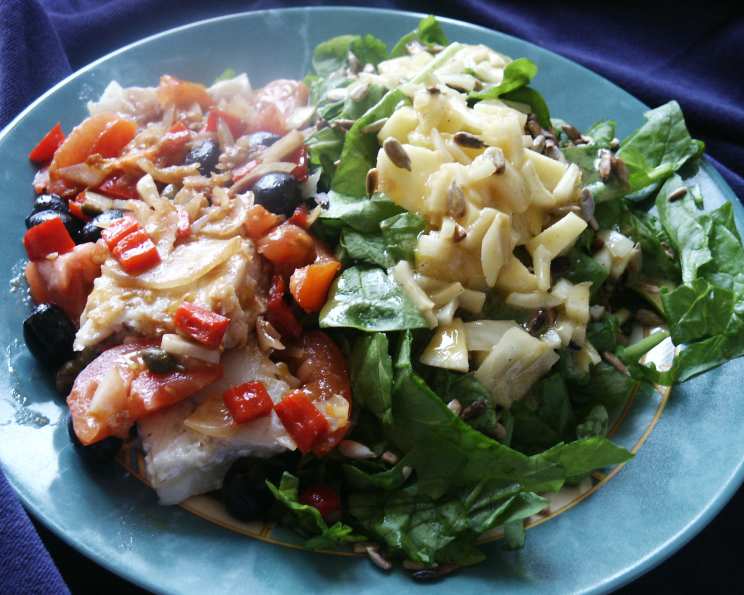
Quick Halibut Provencal: A Taste of the Mediterranean in Minutes
I remember the first time I truly tasted the South of France. It wasn’t on a sun-drenched beach or in a bustling marketplace, but in a tiny bistro tucked away in a cobblestone alley in Nice. The dish? A simple, yet incredibly flavorful, fish preparation with tomatoes, olives, and herbs. It tasted of sunshine and sea, and I’ve been chasing that flavor ever since. This Quick Halibut Provencal comes remarkably close, capturing the essence of that memorable meal without spending hours in the kitchen.
Recipe Overview
- Prep Time: 15 minutes
- Cook Time: 6-7 minutes
- Total Time: 21-22 minutes
- Servings: 2-4
- Dietary Type: Pescatarian, Gluten-Free, Dairy-Free
Ingredients
- 2 tablespoons olive oil
- 1 1/2 lbs halibut fillets, rinsed and patted dry (2 fillets)
- Salt, to taste
- 2 garlic cloves, minced
- 2 shallots, minced
- 2 cups tomatoes, peeled, diced and drained (I use Muir Glen organic)
- 3/4 cup kalamata olives, pitted
- 3 tablespoons capers
- 1/8 teaspoon red pepper flakes
- 1 teaspoon balsamic vinegar
- Fresh ground black pepper, to taste
- 6-8 basil leaves, torn
Equipment Needed
- Large nonstick sauté pan
- Plate for resting the fish
- Platter for serving
Instructions
- Heat the olive oil in a large nonstick sauté pan over medium-high heat. Ensure the pan is hot before adding the fish; this helps create a beautiful sear.
- Lightly season the halibut fillets with salt. Don’t over-salt, as the olives and capers will also contribute saltiness to the dish.
- Add the halibut fillets to the hot pan and sear until they have good color, about 4 minutes. A properly seared fillet will release easily from the pan. Avoid overcrowding the pan; cook in batches if necessary.
- Turn over the fillets, reduce the heat to low, and cook for 1 minute. This gentle cooking ensures the fish is cooked through without drying out.
- Remove the halibut fillets to a plate and keep warm. A loose tent of foil can help retain heat without making the fish soggy.
- Add the minced garlic and shallots to the pan and cook, stirring frequently, for 1 minute. Be careful not to burn the garlic, as this will impart a bitter flavor to the sauce.
- Add the diced and drained tomatoes, kalamata olives, capers, red pepper flakes, balsamic vinegar, and one-half teaspoon of salt to the pan. Sauté for 1 minute, stirring occasionally to combine the ingredients.
- Increase the heat to medium and simmer for about 2 to 3 minutes, until the vegetables are cooked through and the sauce is bubbly and slightly reduced. Taste and adjust seasoning as needed.
- Add the halibut fillets back into the sauce during the final minute of cooking, gently nestling them into the sauce to warm them through.
- Transfer the halibut fillets to a platter, spoon the sauce generously over the fish, and sprinkle with freshly ground black pepper and the torn basil. Serve immediately.
Expert Tips & Tricks
- Don’t overcook the halibut. It should be opaque and flake easily with a fork. Overcooked halibut is dry and rubbery. Using a meat thermometer, the internal temperature should reach 130-135°F (54-57°C).
- Draining the tomatoes is crucial to prevent a watery sauce. Use a fine-mesh sieve or cheesecloth to remove excess liquid.
- For a richer sauce, add a tablespoon of butter (or olive oil for dairy-free) at the end and swirl it in until melted.
- If you don’t have fresh tomatoes, you can use canned diced tomatoes, but be sure to drain them well.
- Feel free to adjust the amount of red pepper flakes to your desired level of spiciness. A pinch of cayenne pepper can also be used.
- To prevent the fish from sticking to the pan, ensure the pan is hot and the oil is shimmering before adding the fillets. You can also lightly coat the fillets with flour or cornstarch before searing, but it’s not necessary.
Serving & Storage Suggestions
Serve the Quick Halibut Provencal immediately while it’s hot. It pairs wonderfully with crusty bread for soaking up the delicious sauce, a side of steamed asparagus or green beans, or a simple rice pilaf. A crisp white wine, such as a Sauvignon Blanc or Pinot Grigio, complements the dish beautifully.
Leftovers can be stored in an airtight container in the refrigerator for up to 2 days. To reheat, gently warm the fish and sauce in a pan over low heat or in the microwave. Be careful not to overcook the fish during reheating. The sauce can be made a day ahead, stored in the refrigerator, and reheated before adding the fish. Freezing is not recommended as it can alter the texture of the fish.
Nutritional Information
| Nutrient | Amount per Serving | % Daily Value |
|---|---|---|
| Calories | 450 kcal | 23% |
| Total Fat | 25g | 38% |
| Saturated Fat | 4g | 20% |
| Cholesterol | 150mg | 50% |
| Sodium | 800mg | 35% |
| Total Carbohydrate | 10g | 4% |
| Dietary Fiber | 3g | 12% |
| Sugars | 4g | N/A |
| Protein | 50g | 100% |
Note: Nutritional information is an estimate and may vary based on specific ingredients and portion sizes.
Variations & Substitutions
- Fish: Halibut can be substituted with other firm white fish like cod, sea bass, or mahi-mahi. Adjust cooking time accordingly.
- Tomatoes: For a sweeter sauce, try using cherry tomatoes or sun-dried tomatoes.
- Olives: If you’re not a fan of kalamata olives, you can use green olives or omit them altogether.
- Herbs: While basil is traditional, you can also use other fresh herbs like oregano, thyme, or parsley.
- Spicy: Amp up the heat with a pinch more red pepper flakes or a dash of your favorite hot sauce.
- Lemon: A squeeze of fresh lemon juice at the end adds brightness to the dish.
- Vegetarian: Though Halibut Provencal traditionally includes fish, you can create a similar dish by sauteing eggplant or zucchini and topping it with the same tomato, olive, and caper mixture.
FAQs (Frequently Asked Questions)
Q: Can I use frozen halibut for this recipe?
A: Yes, but make sure to thaw it completely before cooking. Pat it dry to remove excess moisture for better searing.
Q: How do I prevent the halibut from sticking to the pan?
A: Use a nonstick pan, ensure it’s hot before adding the oil, and don’t overcrowd the pan.
Q: Can I make this dish ahead of time?
A: The sauce can be made ahead of time, but it’s best to cook the fish just before serving for optimal texture.
Q: What’s the best way to tell if the halibut is cooked through?
A: The fish should be opaque and flake easily with a fork. An internal temperature of 130-135°F (54-57°C) is ideal.
Q: Can I use dried herbs instead of fresh basil?
A: While fresh basil is preferred, you can use dried basil in a pinch. Use about 1 teaspoon of dried basil, adding it to the sauce along with the tomatoes.
Final Thoughts
This Quick Halibut Provencal is more than just a recipe; it’s a passport to the sunny shores of Provence, a taste of Mediterranean magic that you can create in your own kitchen in minutes. Don’t be afraid to experiment with the ingredients and make it your own. I encourage you to try this recipe, share your creations, and let me know what you think! It’s the perfect dish for a quick weeknight dinner or an elegant weekend meal, and I hope it brings a little bit of sunshine to your table. Pair it with a simple green salad and a glass of chilled rosé for a truly unforgettable experience. Bon appétit!