
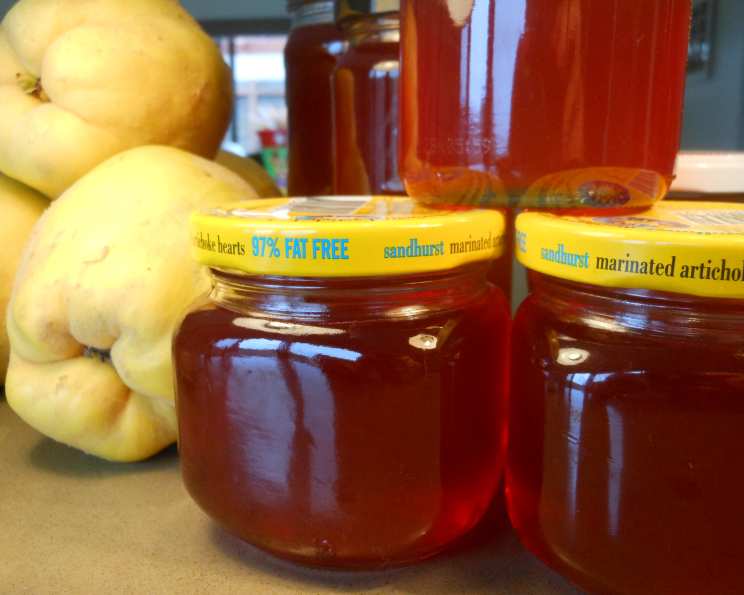
Ruby Jewels: Crafting Exquisite Quince Jelly
There’s something almost magical about quinces. My grandmother, a woman of few words but immense culinary talent, always had a pot simmering on the stove in the autumn, transforming these rock-hard, fragrant fruits into the most ethereal jelly imaginable. The air in her kitchen would be thick with the sweet, floral scent, a promise of the ruby-red treasure that awaited. It was a taste of autumn, bottled and preserved, a memory I cherish and strive to recreate every year.
Recipe Overview
- Prep Time: 20 minutes
- Cook Time: 1 hour 30 minutes
- Total Time: Overnight + 1 hour
- Yield: Approximately 2 liters
- Dietary Type: Vegan, Gluten-Free, Dairy-Free
Ingredients
- 3 kg ripe quinces
- Caster sugar (amount dependent on juice yield – see instructions)
- 3 large lemons
- 3 liters water (or enough to cover the quinces)
Equipment Needed
- Large preserving pan or heavy-bottomed pot
- Sharp knife and cutting board
- Jelly bag, cheesecloth, or fine sieve lined with muslin
- Measuring jug
- Sterilized jars with lids
- Ladle
Instructions
-
Prepare the Quinces: Begin by thoroughly washing the quinces. Use a scourer or clean cloth to rub off the fuzzy down that covers the fruit. This step is crucial for a clear jelly.
-
Chop the Quinces: Roughly quarter the quinces. There’s no need to peel or core them at this stage.
-
Simmer the Fruit: Place the quartered quinces into a large preserving pan or heavy-bottomed pot. Add 3 liters of water (or enough to completely cover the fruit).
-
Cook Until Soft: Bring the water to a simmer over medium heat. Then, reduce the heat to low and simmer gently until the quinces are very soft. This process can take well over an hour, so be patient. The fruit should easily yield when pierced with a fork.
-
Strain the Juice: Once the quinces are soft, strain the mixture through a jelly bag, cheesecloth-lined sieve, or a fine sieve lined with muslin. Suspend the bag or sieve over a bowl or pot and allow the juice to drip through naturally overnight. Do not be tempted to squeeze the bag or pulp, as this will make the jelly cloudy.
-
Measure the Juice: The next day, measure the amount of quince juice you have collected.
-
Calculate Sugar Quantity: For every 600 ml of quince juice, you’ll need to add 375g of caster sugar. This ratio is essential for a proper set.
-
Combine Juice and Sugar: Pour the juice into the preserving pan. Add the calculated amount of caster sugar.
-
Add Lemon Juice: Squeeze the juice from the 3 lemons and strain it to remove any seeds or pulp. Add the strained lemon juice to the pan with the quince juice and sugar.
-
Dissolve the Sugar: Bring the mixture to a simmering point over low heat. Stir gently until the sugar is completely dissolved.
-
Boil and Test for Set: Once the sugar is dissolved, increase the heat to high and bring the mixture to a rolling boil. Boil rapidly, skimming off any scum that rises to the surface.
-
Test for a Set: After about 10 minutes of boiling, begin testing for a set. There are a few methods you can use:
- Saucer Test: Place a small saucer in the freezer before you begin. Spoon a small amount of jelly onto the cold saucer and return it to the freezer for a minute. If the jelly wrinkles when you push it with your finger, it’s ready.
- Thermometer Test: Use a candy thermometer. Quince jelly will typically set at around 104-105°C (219-221°F).
- Flake Test: Dip a cool metal spoon into the boiling jelly, then lift it out and turn it sideways. If the jelly forms a “flake” or sheet that drips off the spoon slowly, it is ready.
-
Pour into Jars: Once the jelly has reached a soft set, remove it from the heat and carefully ladle it into sterilized, hot jars. Leave a small amount of headspace at the top of each jar.
-
Seal the Jars: Seal the jars immediately with sterilized lids. If you want to ensure a longer shelf life, you can process the jars in a boiling water bath for 10 minutes.
-
Cool and Store: Let the jars cool completely on a rack. As the jelly cools, it will stiffen further. You should hear a “popping” sound as the lids seal.
Expert Tips & Tricks
- Don’t Overcrowd the Pan: When boiling the jelly, make sure the pan is large enough to allow for rapid evaporation. Overcrowding can prevent the jelly from setting properly.
- Pectin is Key: Quinces are naturally high in pectin, which is what helps the jelly set. However, underripe quinces have more pectin than overripe ones.
- Acid Balance: The lemon juice not only adds flavor but also helps to balance the pectin and sugar, ensuring a good set.
- Sterilize Jars Properly: Properly sterilized jars are essential for preventing spoilage. You can sterilize them by boiling them in water for 10 minutes, or by running them through a hot cycle in the dishwasher.
- Keep it Clear: Patience is key when straining the juice. Disturbing the pulp will result in a cloudy jelly.
Serving & Storage Suggestions
Quince jelly is a versatile condiment that pairs beautifully with a variety of dishes. It’s traditionally served with roast lamb, pork, or game. It also makes a delicious addition to cheese boards, or simply spread on toast or scones for breakfast.
Store sealed jars of quince jelly in a cool, dark place for up to a year. Once opened, store in the refrigerator. Opened jars should be consumed within a few weeks.
Nutritional Information
(Please note that these values are estimates and may vary depending on the specific ingredients used and portion sizes.)
| Nutrient | Amount per Serving (1 tbsp) | % Daily Value* |
|---|---|---|
| Calories | 50 kcal | 3% |
| Total Fat | 0g | 0% |
| Saturated Fat | 0g | 0% |
| Cholesterol | 0mg | 0% |
| Sodium | 1mg | 0% |
| Total Carbohydrate | 13g | 5% |
| Dietary Fiber | 0g | 0% |
| Sugars | 13g | – |
| Protein | 0g | 0% |
*Percent Daily Values are based on a 2,000 calorie diet.
Variations & Substitutions
- Spiced Quince Jelly: Add a cinnamon stick, a few cloves, or a star anise to the quince mixture while simmering for a warm, aromatic twist. Remove the spices before straining the juice.
- Rosewater Quince Jelly: Stir in a teaspoon of rosewater after the jelly has set but before pouring it into the jars.
- Apple Quince Jelly: Combine quinces with tart apples for a slightly different flavor profile.
FAQs (Frequently Asked Questions)
Q: Why is my quince jelly cloudy?
A: Cloudy jelly is usually caused by squeezing the pulp during straining or not skimming off the scum during boiling.
Q: How do I know if my jars are properly sealed?
A: After cooling, the lids should be slightly concave and should not flex when pressed. If a lid doesn’t seal, store the jar in the refrigerator and use the jelly within a few weeks.
Q: Can I use a different type of sugar?
A: Caster sugar is recommended for its fine texture, which dissolves easily. Granulated sugar can also be used, but it may require more stirring to dissolve completely. Avoid using powdered sugar.
Q: My jelly didn’t set. What can I do?
A: If your jelly doesn’t set, you can re-boil it with more sugar and lemon juice. For every 4 cups of unset jelly, add 1/4 cup of lemon juice and 1/2 cup of sugar.
Q: Can I freeze quince jelly?
A: While you can freeze quince jelly, it may affect the texture and clarity. It’s best to store it in sterilized jars and process it properly for long-term storage.
Final Thoughts
Making quince jelly is a labor of love, but the reward is a jewel-toned preserve that captures the essence of autumn. Don’t be intimidated by the process – with a little patience and attention to detail, you can create a truly special treat that will impress your friends and family. This jelly is not just a spread; it’s a conversation starter, a flavor enhancer, and a beautiful gift. So, gather your quinces, put on some music, and embrace the delicious alchemy that transforms these humble fruits into something extraordinary. I encourage you to experiment with different spices and flavors to create your own unique version of this classic preserve. Share your creations and let me know what delightful combinations you discover!