
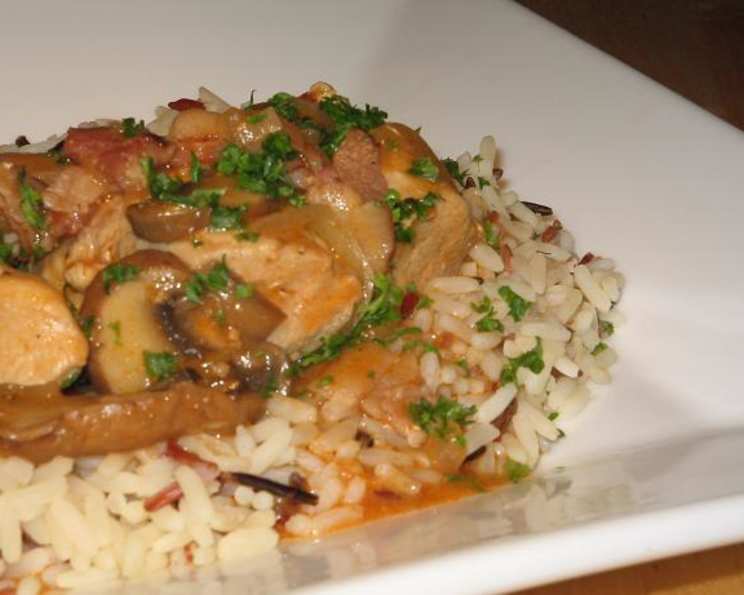
Rabbit in White Wine, Bacon, Onion, and Mushroom Sauce: A Rustic Culinary Journey
The aroma of rabbit simmering in white wine, mingling with the salty scent of bacon and earthy mushrooms, instantly transports me back to my grandmother’s countryside kitchen. I can almost feel the warmth of the wood-burning stove on my face as she’d carefully tend to the stew, her hands weathered but gentle. Each bite was a taste of home, a testament to simple ingredients transformed into something truly special. This dish isn’t just food; it’s a cherished memory, a culinary legacy I’m thrilled to share.
Recipe Overview
- Prep Time: 20 minutes
- Cook Time: 1 hour 20 minutes
- Total Time: 1 hour 40 minutes
- Servings: 2-4
- Dietary Type: Not Gluten-Free
Ingredients
- 1 rabbit, cut into 6 pieces
- 60 g flour
- Salt & freshly ground black pepper
- 30 g butter
- 2 tablespoons olive oil
- 10 small onions, peeled, but with a little root still attached
- 2 slices bacon, diced
- 1 cup dry white wine
- ½ cup water
- 1 tablespoon tomato paste
- 1 sprig thyme
- 1 bay leaf
- 1 garlic clove, crushed
- 500 g button mushrooms
- Extra butter
- Extra oil
- 2 tablespoons chopped fresh parsley
Equipment Needed
- Large heavy-bottomed pot or Dutch oven
- Skillet or frying pan
- Cutting board
- Sharp knife
Instructions
- Begin by lightly coating the rabbit pieces in the flour, seasoned generously with salt and freshly ground black pepper. Make sure each piece is evenly coated to ensure a nice browning and to slightly thicken the sauce later on.
- In a large, heavy-bottomed pot or Dutch oven, heat the butter and olive oil over medium-high heat. Once the butter is melted and the oil is shimmering, carefully add the rabbit pieces and fry until golden brown on all sides. This step is crucial for developing deep, rich flavors. Work in batches if necessary to avoid overcrowding the pan, which can lower the temperature and prevent proper browning.
- Remove the browned rabbit from the pan and set aside. Add the small onions (keeping the root end intact helps them hold their shape) and diced bacon to the pan. Fry until the onions are nicely colored and the bacon is crisp, rendering its flavorful fat. This creates the foundation for a truly delicious sauce.
- Pour in the dry white wine and water, then add the tomato paste. Stir vigorously to combine all the ingredients and scrape up any browned bits from the bottom of the pan. These browned bits, known as fond, are packed with flavor and will add depth to the sauce. Add the thyme sprig, bay leaf, and crushed garlic clove. Season generously with extra black pepper.
- Return the browned rabbit pieces to the pot, nestling them into the sauce.
- Cover the pot tightly and reduce the heat to low. Simmer gently for about 1 hour, or until the rabbit is tender and easily pulls away from the bone. Check occasionally to ensure the liquid hasn’t completely evaporated; add a splash of water if needed.
- While the rabbit is simmering, prepare the mushrooms. In a separate skillet or frying pan, toss the button mushrooms with a little extra butter and oil. Cook over medium heat for a few minutes, until they are lightly browned and softened. Don’t overcrowd the pan, or the mushrooms will steam instead of brown.
- Add the sautéed mushrooms to the pot with the rabbit for the last few minutes of cooking, allowing them to absorb the flavors of the sauce.
- Before serving, remove the thyme sprig and bay leaf. Taste the sauce and adjust the seasoning with salt and pepper as needed. Serve the rabbit, mushrooms, onions, and sauce hot, garnished with chopped fresh parsley.
Expert Tips & Tricks
- Browning is Key: Don’t skip the browning step for the rabbit. This develops essential flavor compounds through the Maillard reaction.
- Wine Choice: Use a dry white wine like Sauvignon Blanc or Pinot Grigio. Avoid overly sweet wines.
- Thickening the Sauce: If the sauce is too thin at the end, remove the rabbit and mushrooms, then increase the heat and simmer the sauce uncovered until it reaches your desired consistency. You can also whisk in a small amount of cornstarch slurry (cornstarch mixed with cold water).
- Make-Ahead Option: This dish can be made a day ahead. The flavors will meld together even more beautifully overnight. Reheat gently before serving.
- Bone-In, Skin-On: If possible, use bone-in, skin-on rabbit pieces for maximum flavor. The skin will render its fat and contribute to a richer sauce.
Serving & Storage Suggestions
This Rabbit in White Wine, Bacon, Onion, and Mushroom Sauce is wonderful served over creamy polenta, mashed potatoes, or wide egg noodles to soak up all that delicious sauce. Crusty bread is also a great accompaniment for mopping up every last drop.
Leftovers can be stored in an airtight container in the refrigerator for up to 3 days. To reheat, gently warm over low heat on the stovetop, adding a splash of water or broth if needed to prevent drying out. It’s generally not recommended to leave cooked rabbit at room temperature for more than 2 hours. Freezing is also an option, but the texture of the mushrooms may change slightly upon thawing. Freeze in an airtight container for up to 2 months. Thaw completely in the refrigerator before reheating.
Nutritional Information
| Nutrient | Amount per Serving | % Daily Value |
|---|---|---|
| Calories | 550 kcal | 28% |
| Total Fat | 30g | 46% |
| Saturated Fat | 10g | 50% |
| Cholesterol | 50mg | 17% |
| Sodium | 400mg | 17% |
| Total Carbohydrate | 35g | 12% |
| Dietary Fiber | 5g | 20% |
| Sugars | 10g | – |
| Protein | 35g | 70% |
Note: Nutritional information is an estimate and may vary based on specific ingredients and portion sizes.
Variations & Substitutions
- Chicken or Pork: If rabbit is unavailable, boneless, skinless chicken thighs or pork tenderloin can be used as substitutes. Adjust cooking time accordingly.
- Gluten-Free: To make this dish gluten-free, use a gluten-free flour blend for coating the rabbit. Ensure all other ingredients are also gluten-free.
- Vegetarian Option: While this recipe traditionally features rabbit, a vegetarian version could be made with firm tofu or seitan, though the flavor profile will be significantly different.
- Different Mushrooms: Feel free to experiment with different types of mushrooms, such as cremini, shiitake, or oyster mushrooms.
- Herbs: Rosemary or tarragon can be used in place of or in addition to thyme.
FAQs (Frequently Asked Questions)
Q: Can I use frozen rabbit?
A: Yes, you can use frozen rabbit, but be sure to thaw it completely in the refrigerator before cooking. Pat it dry with paper towels to remove excess moisture before browning.
Q: How do I know when the rabbit is cooked through?
A: The rabbit is cooked through when it is tender and easily pulls away from the bone. The internal temperature should reach 160°F (71°C).
Q: Can I add other vegetables to this dish?
A: Absolutely! Carrots, celery, or parsnips would be delicious additions. Add them to the pot along with the onions and bacon.
Q: What can I do if the sauce is too acidic?
A: If the sauce is too acidic from the wine, you can add a small pinch of sugar or a pat of butter to balance the flavors.
Q: Can I make this in a slow cooker?
A: Yes, you can adapt this recipe for a slow cooker. Brown the rabbit, bacon, and onions as directed, then transfer everything to the slow cooker. Cook on low for 6-8 hours, or on high for 3-4 hours. Add the mushrooms during the last hour of cooking.
Final Thoughts
I sincerely hope this recipe brings as much joy to your table as it has to mine. Don’t be intimidated by the thought of cooking rabbit; it’s a rewarding experience that yields a truly delicious and memorable dish. Feel free to experiment with the variations and substitutions to make it your own. I’d love to hear your feedback and see your creations. Consider pairing this comforting stew with a crisp green salad and a glass of chilled Pinot Noir for a truly exceptional meal.