
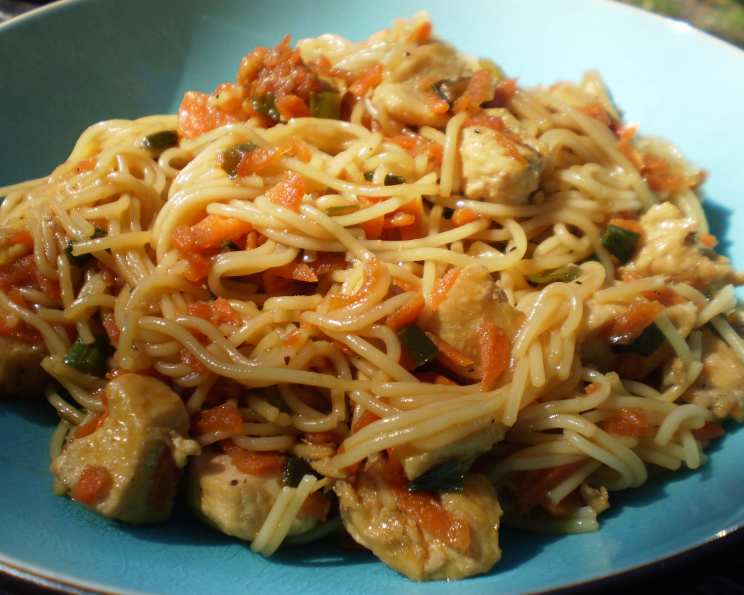
Rachael Ray’s Yakitori Noodle Bowls – Remixed: A Culinary Adventure
The scent of ginger sizzling in a pan immediately transports me back to my tiny apartment kitchen, a haven where I experimented endlessly with global flavors on a shoestring budget. One particular evening, while flipping through channels, I stumbled upon Rachael Ray whipping up a vibrant Yakitori Noodle Bowl. Intrigued, I mentally cataloged the ingredients, knowing I’d inevitably put my own spin on it using what I had on hand. It became a regular weeknight staple, a comforting reminder of culinary resourcefulness and a testament to how inspiration can strike anywhere.
Recipe Overview
- Prep Time: 15 minutes
- Cook Time: 20 minutes
- Total Time: 35 minutes
- Servings: 3-5
- Dietary Type: Adaptable (can be made gluten-free)
Ingredients
- 1 lb whole wheat spaghetti
- 1 lb boneless chicken breast, cut into bite-sized pieces
- 2 teaspoons fresh ginger, grated
- Salt
- Pepper
- 6-7 scallions (one bunch), cut into small pieces
- 1 cup carrot, grated
- 1/3 cup chicken stock
- 1/4 cup soy sauce
- 1/4 cup teriyaki sauce
- 1/2 tablespoon cornstarch
- 2 tablespoons sugar or 2 tablespoons Splenda granular
- Toasted sesame seeds (optional)
Equipment Needed
- Large pot
- Large skillet or wok
- Colander
- Measuring cups and spoons
- Grater
Instructions
-
Begin by cooking the whole wheat spaghetti according to the package directions. Remember to salt your pasta water generously – this is your first chance to season the dish!
-
While the pasta is cooking, heat a large skillet or wok over medium-high heat. Add a touch of oil if needed to prevent sticking. Introduce the bite-sized pieces of chicken breast. Season generously with salt and pepper.
-
Add the grated fresh ginger to the chicken. This is where the magic begins. The ginger will infuse the chicken with its warm, pungent aroma. Brown the chicken on all sides, ensuring it cooks through completely.
-
Once the chicken is nicely browned, add the chopped scallions and grated carrot to the skillet. Cook for just a moment or two, until the scallions begin to wilt and the carrots soften slightly. Don’t overcook them; you want them to retain some of their crispness.
-
Now, it’s time to build the sauce. Pour in the chicken stock, soy sauce, and teriyaki sauce. Stir everything together to combine.
-
In a small bowl, whisk together the cornstarch and sugar (or Splenda granular). This mixture acts as a thickening agent and adds a touch of sweetness to the sauce.
-
Pour the cornstarch mixture into the skillet with the chicken and vegetables. Bring the sauce to a boil, stirring constantly to prevent any lumps from forming.
-
Once the sauce reaches a boil, reduce the heat to low and simmer until the pasta is cooked al dente. This usually takes around 8-10 minutes. The sauce will thicken as it simmers, creating a luscious coating for the noodles.
-
Drain the cooked pasta thoroughly in a colander.
-
Add the drained pasta directly to the skillet with the chicken and sauce. Stir well to combine, ensuring that every strand of spaghetti is coated in the flavorful yakitori sauce.
-
Serve the Yakitori Noodle Bowls immediately. Garnish with toasted sesame seeds for added flavor and texture, if desired.
Expert Tips & Tricks
- Ginger Power: Don’t be shy with the fresh ginger! It’s a key component of the yakitori flavor profile. If you don’t have fresh ginger, you can use ground ginger, but the flavor won’t be quite as vibrant. Use about 1/2 teaspoon of ground ginger as a substitute.
- Chicken Perfection: Ensure the chicken is cooked through completely to avoid any food safety concerns. A meat thermometer inserted into the thickest part of the chicken should read 165°F (74°C).
- Noodle Nuance: While this recipe calls for whole wheat spaghetti, you can use any type of pasta you prefer. Soba noodles or udon noodles would also work beautifully. For a gluten-free option, use brown rice spaghetti or another gluten-free pasta alternative.
- Sauce Consistency: If the sauce is too thick, add a splash of chicken stock or water to thin it out. If it’s too thin, simmer for a few more minutes to allow it to reduce and thicken further.
- Veggie Boost: Feel free to add other vegetables to this dish, such as sliced bell peppers, mushrooms, or broccoli florets. Just add them to the skillet along with the scallions and carrots.
Serving & Storage Suggestions
Serve the Yakitori Noodle Bowls hot, straight from the skillet. Garnish with toasted sesame seeds and a sprinkle of chopped scallions for an extra touch of flavor and visual appeal.
Leftovers can be stored in an airtight container in the refrigerator for up to 3 days. To reheat, microwave until heated through, or reheat in a skillet over medium heat, adding a splash of chicken stock or water if needed to prevent sticking. I don’t recommend freezing these noodles as the texture of both the chicken and pasta can suffer.
Nutritional Information
| Nutrient | Amount per Serving | % Daily Value |
|---|---|---|
| Calories | 900.4 kcal | N/A |
| Calories from Fat | 149 g | N/A |
| Total Fat | 16.6 g | 25% |
| Saturated Fat | 4.5 g | 22% |
| Cholesterol | 97.7 mg | 32% |
| Sodium | 2440.8 mg | 101% |
| Total Carbohydrate | 136.2 g | 45% |
| Dietary Fiber | 2.2 g | 8% |
| Sugars | 15.3 g | N/A |
| Protein | 59.4 g | 118% |
Note: Nutritional information is an estimate and may vary based on specific ingredients and portion sizes.
Variations & Substitutions
- Gluten-Free Yakitori: Use gluten-free tamari instead of soy sauce and gluten-free noodles. Ensure your teriyaki sauce is also gluten-free.
- Vegetarian/Vegan Option: Substitute the chicken with firm tofu, cubed and pressed to remove excess water. Marinate the tofu in a mixture of soy sauce, ginger, and garlic before cooking. Omit the chicken stock, and use vegetable broth instead.
- Spicy Kick: Add a pinch of red pepper flakes to the sauce for a touch of heat.
- Sesame Infusion: Add a tablespoon of sesame oil to the skillet along with the ginger for an extra layer of sesame flavor.
- Seasonal Vegetables: Adapt the recipe based on what’s in season. In the fall, add butternut squash or sweet potatoes. In the spring, add asparagus or snap peas.
FAQs (Frequently Asked Questions)
Q: Can I make this ahead of time?
A: While it’s best served fresh, you can cook the chicken and sauce ahead of time and store it in the refrigerator. Cook the pasta just before serving to prevent it from becoming mushy.
Q: Can I use a different type of protein?
A: Absolutely! Shrimp, pork, or beef would all be delicious in this recipe. Adjust the cooking time accordingly.
Q: What can I use if I don’t have teriyaki sauce?
A: You can make a quick teriyaki sauce substitute by combining soy sauce, brown sugar, ginger, garlic, and a touch of rice vinegar. Simmer until slightly thickened.
Q: Can I reduce the amount of sodium in this recipe?
A: Yes, use low-sodium soy sauce and chicken stock. You can also reduce the amount of teriyaki sauce, as it tends to be high in sodium.
Q: What is the best way to reheat these noodle bowls?
A: The best way to reheat them is in a skillet over medium heat with a splash of chicken broth or water to prevent them from drying out. You can also microwave them, but be careful not to overcook them.
Final Thoughts
So there you have it: Rachael Ray’s Yakitori Noodle Bowls, remixed and ready for your own personal culinary touch. This dish is more than just a meal; it’s an invitation to experiment, improvise, and create something delicious with what you have on hand. Don’t be afraid to make it your own! I encourage you to give this recipe a try and share your feedback. Maybe pair it with a crisp cucumber salad or a refreshing glass of iced green tea for a complete and satisfying meal. Happy cooking!