
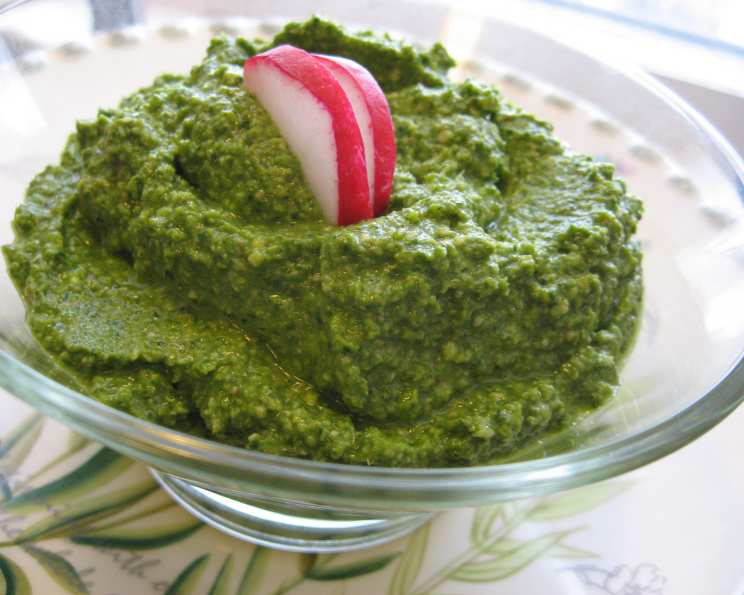
Radish Leaf Pesto: From Garden to Gourmet
I’ll never forget the first time I truly appreciated radish leaves. Growing up, they were always discarded, the bright red bulbs the only prize. Then, during a summer externship at a farm-to-table restaurant, I watched Chef Isabelle transform a mountain of discarded radish greens into a vibrant pesto. The peppery bite, the bright green color – it was a revelation! Suddenly, I saw the potential in these overlooked leaves, and now, years later, they’re a staple in my kitchen.
Recipe Overview
- Prep Time: 15 minutes
- Cook Time: 0 minutes
- Total Time: 15 minutes
- Servings: 6-8
- Yield: About 1 cup
- Dietary Type: Vegetarian, Gluten-Free (can be easily made vegan – see variations)
Ingredients
- 2-3 cups radish tops, roughly chopped (leaves)
- 2-3 garlic cloves, quartered
- 2 tablespoons olive oil
- 2 tablespoons lemon juice
- 1 teaspoon white sugar
- 3 tablespoons parmesan cheese, grated
- 2 tablespoons pine nuts
- Salt, to taste
- Pepper, to taste
Equipment Needed
- Food processor
Instructions
- Begin by thoroughly washing and drying your radish leaves. This is crucial to remove any dirt or grit. Pat them dry with a clean kitchen towel or spin them in a salad spinner.
- Add the washed and dried radish leaves, quartered garlic cloves, olive oil, and lemon juice to the bowl of your food processor.
- Pulse the ingredients until they form a thick paste. If the mixture seems too dry, add a little more olive oil, a tablespoon at a time, until you reach your desired consistency. Remember, you can always add more liquid, but you can’t easily take it away. Aim for a slightly chunky, but spreadable texture.
- Add the sugar, grated Parmesan cheese, and pine nuts to the food processor.
- Pulse again to combine all the ingredients. Be careful not to over-process, as this can make the pesto too smooth and pasty. You want to retain some texture.
- Season with salt and pepper to taste.
- Taste the pesto. If it’s still a bit bitter for your liking (radish leaves can have a peppery bite!), add another ½ teaspoon of sugar and pulse again. Taste and adjust the seasoning as needed. The balance of sweetness, acidity, and saltiness is key to a delicious pesto.
- Chill the pesto in the refrigerator for at least 30 minutes to allow the flavors to meld and fully develop.
Expert Tips & Tricks
- Choosing the Right Radish Leaves: Opt for fresh, crisp radish leaves that are vibrant green. Avoid any leaves that are wilted, yellowed, or discolored. The fresher the leaves, the better the flavor.
- Balancing the Bitterness: Radish leaves can be slightly bitter, so don’t be afraid to adjust the amount of sugar to your taste. Start with the recommended amount and add more as needed, a little at a time. Lemon juice also helps to balance the bitterness.
- Toast the Pine Nuts: Toasting the pine nuts before adding them to the pesto will enhance their flavor and add a subtle nutty aroma. To toast them, spread them on a baking sheet and bake at 350°F (175°C) for 5-7 minutes, or until lightly golden brown. Watch them carefully, as they can burn quickly.
- Use a High-Quality Olive Oil: The flavor of the olive oil will shine through in the pesto, so it’s worth using a good quality extra virgin olive oil.
- Don’t Over-Process: Over-processing the pesto can result in a paste that is too smooth and loses its texture. Pulse the ingredients until they are just combined.
- Make it Vegan: For a vegan version, simply omit the Parmesan cheese or substitute it with a vegan Parmesan cheese alternative. Nutritional yeast can also add a cheesy, umami flavor.
Serving & Storage Suggestions
Radish leaf pesto is incredibly versatile and can be used in a variety of ways.
- Serving: Serve it tossed with pasta, spread on sandwiches or crackers, as a topping for grilled fish or chicken, or as a dip for vegetables. It’s also delicious stirred into soups or scrambled eggs. A dollop of ricotta cheese on top of pesto-covered pasta adds a lovely creamy richness.
- Storage: Store leftover pesto in an airtight container in the refrigerator for up to 3 days. To prevent the pesto from oxidizing and turning brown, drizzle a thin layer of olive oil over the top before sealing the container.
- Freezing: For longer storage, freeze the pesto in ice cube trays. Once frozen, transfer the pesto cubes to a freezer bag. This makes it easy to thaw only the amount you need. Frozen pesto will keep for up to 3 months. Thaw it in the refrigerator overnight before using.
Nutritional Information
| Nutrient | Amount per Serving | % Daily Value |
|---|---|---|
| Calories | 74.8 kcal | N/A |
| Calories from Fat | 64 g | 86% |
| Total Fat | 7.2 g | 11% |
| Saturated Fat | 1.2 g | 5% |
| Cholesterol | 2.2 mg | 0% |
| Sodium | 38.6 mg | 1% |
| Total Carbohydrate | 1.9 g | 0% |
| Dietary Fiber | 0.1 g | 0% |
| Sugars | 1 g | 3% |
| Protein | 1.4 g | 2% |
Note: Nutritional information is an estimate and may vary depending on the specific ingredients used.
Variations & Substitutions
- Nut-Free Pesto: If you have a nut allergy, you can substitute the pine nuts with sunflower seeds or pumpkin seeds.
- Herb Variations: Experiment with adding other herbs to the pesto, such as basil, parsley, or mint.
- Spice it Up: Add a pinch of red pepper flakes for a little heat.
- Vegan Pesto: As mentioned before, omit the Parmesan cheese or use a vegan Parmesan substitute. Nutritional yeast adds a cheesy flavor.
- Arugula Pesto: For a more peppery flavor, combine radish leaves with arugula.
- Lemon Zest: Add a teaspoon of lemon zest for an extra burst of citrus flavor.
FAQs (Frequently Asked Questions)
Q: Can I use radish leaves that are a little wilted?
A: While it’s best to use fresh, crisp radish leaves, you can use slightly wilted leaves if they are still green and not discolored. Just make sure to wash them thoroughly.
Q: How long does radish leaf pesto last in the refrigerator?
A: Radish leaf pesto will last for up to 3 days in the refrigerator, stored in an airtight container.
Q: Can I freeze radish leaf pesto?
A: Yes, radish leaf pesto freezes well. Freeze it in ice cube trays for easy portioning.
Q: My pesto is too bitter. What can I do?
A: Add a little more sugar, a ½ teaspoon at a time, until the bitterness is balanced. You can also add a squeeze of lemon juice.
Q: Can I use a blender instead of a food processor?
A: While a food processor is ideal, you can use a blender. You may need to add a little more olive oil to help the ingredients blend smoothly.
Final Thoughts
So, the next time you’re at the farmers market or tending your garden, don’t toss those radish leaves! This vibrant pesto is a delicious and resourceful way to transform an often-discarded ingredient into a culinary delight. Experiment with the flavors, adjust the sweetness to your liking, and discover the peppery goodness of radish leaf pesto. I encourage you to try this recipe and share your creations! Perhaps pair it with some grilled chicken or spread it on a crusty baguette for a delightful appetizer. Enjoy!