
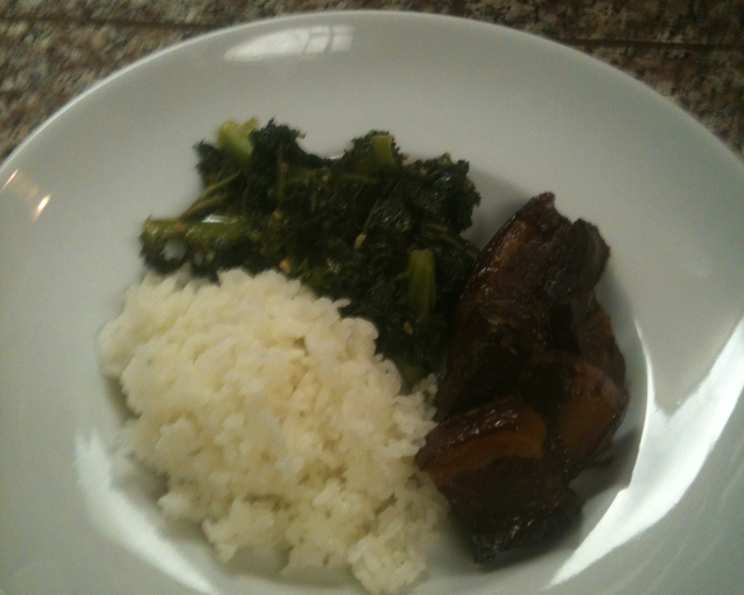
Rafute: The Soul of Okinawan Glazed Pork
I’ll never forget the first time I tasted Rafute. It was at a tiny, family-run izakaya tucked away on a side street in Naha, Okinawa. The aroma of sweet soy and sake hung in the air, a comforting promise of the feast to come. Then the Rafute arrived – glistening cubes of pork belly, impossibly tender, melting in my mouth with an explosion of savory-sweet flavor. It was more than just a dish; it was a taste of Okinawan history and hospitality, a moment I’ve tried to recreate in my own kitchen ever since.
Recipe Overview
- Prep Time: 20 minutes
- Cook Time: 3 hours 15 minutes
- Total Time: 3 hours 35 minutes
- Servings: 8
- Yield: Approx. 8 servings
- Dietary Type: Not suitable for all dietrary restrictions
Ingredients
- 3 lbs pork belly
- 1 clove garlic, crushed
- 2 inches ginger, sliced
- 1 cup bonito stock or 1 cup dashi stock (if unavailable, use reserved pork stock)
- 1 cup Bourbon or 1 cup Scotch whisky
- 1 cup sugar
- 1 cup shoyu (Japanese soy sauce)
- ½ cup mirin (Japanese rice wine)
- 1 teaspoon red food coloring (optional)
Equipment Needed
- Broiler pan
- Large pot
- Knife
- Cutting board
- Thick, wide, shallow pot (such as a Dutch oven)
Instructions
- Begin by placing the pork belly, skin side up, on the rack of a broiler pan. Broil until the skin is nicely browned. This step helps to render some of the fat and gives the pork a richer flavor. Keep a close eye on it to prevent burning!
- Remove the pork from the broiler and rinse it under warm running water. Use a knife to carefully scrape off any charred areas from the skin. This will remove any bitterness and ensure a clean flavor in the final dish.
- Place the whole piece of pork in a large pot and cover it completely with water. Bring the water to a boil, then reduce the heat and cook for 40 minutes. This initial boiling helps to tenderize the pork and remove impurities.
- Carefully remove the pork from the pot, being cautious as it will be hot. Reserve the broth – this will be used later if needed to prevent the sauce from drying out.
- Allow the pork to cool down enough to handle. Once cooled, slice it into ½-inch thick, 2-inch x 2-inch squares. This size is ideal for even cooking and glazing.
- In a thick, wide, shallow pot (like a Dutch oven), combine all the remaining ingredients except the mirin: the crushed garlic, sliced ginger, bonito or dashi stock, Bourbon or Scotch whisky, sugar, shoyu, and optional red food coloring. Bring this mixture to a boil.
- Gently lay the sliced pork pieces into the simmering sauce. Ensure that the pork is mostly submerged. Reduce the heat to low, cover the pot, and cook for about 1½ hours. The low and slow cooking is key to achieving that melt-in-your-mouth texture.
- During the cooking process, periodically check the pan to ensure it doesn’t dry out. If the sauce seems to be reducing too quickly, add a little of the reserved pork stock to maintain the liquid level.
- As the pork begins to tenderize, add the mirin to the pot. Continue to cook, uncovered, for a further half-hour (30 minutes), or until the pork is incredibly tender and evenly glazed with the sauce. The uncovered cooking allows the sauce to thicken and create that beautiful, glossy finish.
- Serve hot and enjoy.
Expert Tips & Tricks
- For an even deeper flavor, consider marinating the pork in a mixture of sake and soy sauce overnight before broiling.
- Don’t be afraid to adjust the sweetness of the glaze to your liking. If you prefer a less sweet dish, reduce the amount of sugar slightly.
- If you don’t have access to bonito or dashi stock, you can substitute chicken stock, though the flavor profile will be slightly different.
- To get an extra rich color and flavor, use dark soy sauce (koikuchi shoyu) in addition to regular soy sauce.
Serving & Storage Suggestions
Rafute is traditionally served in small portions alongside a bowl of steaming rice. It is rich and flavorful, so a little goes a long way. Garnish with thinly sliced scallions or a sprinkle of toasted sesame seeds for added visual appeal.
Leftovers can be stored in an airtight container in the refrigerator for up to 3-4 days. When reheating, do not add water or soup stock. Instead, add a splash of sake (or bourbon/whisky) to the pan to keep the pork tender and juicy. Rafute can also be frozen for up to 2 months. Thaw completely in the refrigerator before reheating.
Nutritional Information
| Nutrient | Amount per Serving | % Daily Value |
|---|---|---|
| Calories | 1043.1 kcal | N/A |
| Calories from Fat | 813 kcal | 78% |
| Total Fat | 90.3 g | 138% |
| Saturated Fat | 32.9 g | 164% |
| Cholesterol | 122.7 mg | 40% |
| Sodium | 1943 mg | 80% |
| Total Carbohydrate | 29.9 g | 9% |
| Dietary Fiber | 0.3 g | 1% |
| Sugars | 25.7 g | 102% |
| Protein | 18.2 g | 36% |
Note: Nutritional information is an estimate and can vary based on specific ingredients and portion sizes.
Variations & Substitutions
- For a spicier kick, add a small piece of dried chili pepper to the sauce during simmering.
- If you are avoiding alcohol, you can substitute the Bourbon or Scotch whisky with a non-alcoholic cooking sake or apple juice. However, the flavor will be slightly different.
- For a richer flavor, add a knob of ginger and a clove of garlic to the initial boiling water for the pork belly.
- You can use skinless pork belly, but the skin adds a unique texture and flavor.
FAQs (Frequently Asked Questions)
Q: Can I make this dish ahead of time?
A: Absolutely! Rafute actually tastes even better the next day as the flavors meld together. Make it a day or two in advance and store it in the refrigerator.
Q: What is bonito stock? Is it essential?
A: Bonito stock (dashi) is a traditional Japanese broth made from dried bonito flakes. It adds a savory umami flavor. If you can’t find it, you can use dashi stock, chicken stock, or even the reserved pork broth, though the flavor will be slightly different.
Q: How do I know when the pork is done?
A: The pork is done when it is fork-tender and easily pulls apart. It should be melt-in-your-mouth soft.
Q: Can I use a slow cooker or pressure cooker for this recipe?
A: Yes, you can adapt this recipe for a slow cooker or pressure cooker. Reduce the cooking time accordingly and monitor the liquid levels.
Q: The sauce is too sweet for my taste. What can I do?
A: Reduce the amount of sugar in the recipe or add a splash of rice vinegar or soy sauce to balance the sweetness.
Final Thoughts
Rafute is more than just a recipe; it’s a journey to the heart of Okinawan cuisine. With its rich flavors and incredibly tender texture, it’s a dish that’s sure to impress. Don’t be intimidated by the cooking time – the result is well worth the effort. Gather your ingredients, embrace the process, and savor the taste of tradition. I encourage you to experiment with different variations and find the flavors that resonate with you. And please, share your creations and feedback – I’d love to hear about your Rafute adventures! Consider pairing it with awamori (Okinawan liquor) or a crisp Japanese beer for the full Okinawan experience.