
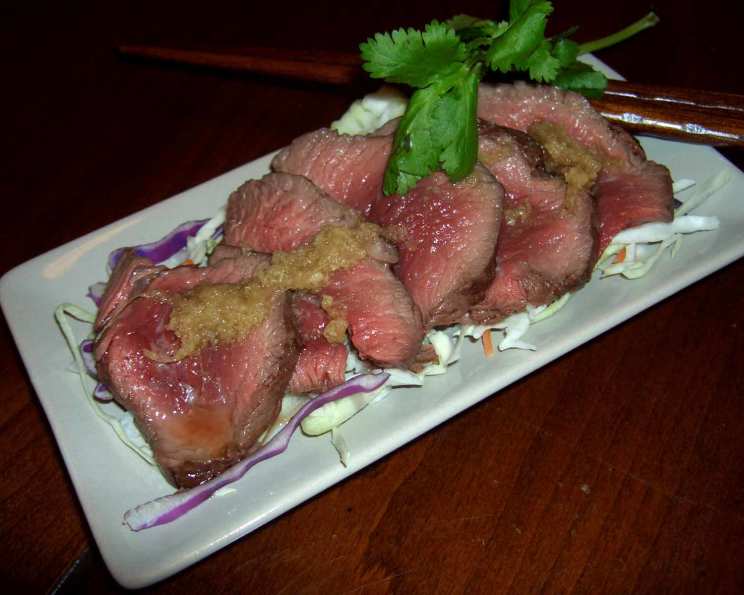
Rare Beef Vietnamese Style: A Culinary Adventure
The first time I tasted this dish was at a tiny, family-run restaurant in Ho Chi Minh City. The aroma of roasted rice powder mingled with the pungent scent of fish sauce hung heavy in the air. Each paper-thin slice of beef, barely kissed by heat, practically melted on my tongue, the simple sauce amplifying the meat’s rich, almost primal flavor. It wasn’t just a meal; it was an experience – a testament to the beauty of simple ingredients treated with respect and precision. It’s a taste I’ve been chasing ever since, and now I’m thrilled to share my version with you.
Recipe Overview
- Prep Time: 20 minutes
- Cook Time: 5 minutes
- Total Time: 25 minutes
- Servings: 4
- Yield: 4 servings
- Dietary Type: Gluten-Free (when served without rice)
Ingredients
- 1 lb beef tenderloin
- 2 teaspoons fresh ginger, grated
- 2 tablespoons fish sauce
- ¼ cup rice, roasted and pulverized (optional)
Equipment Needed
- Grill or oven broiler
- Heavy skillet
- Blender or food processor
- Sharp knife
- Bowls
- Paper towels
- Plastic wrap
Instructions
-
Begin by selecting the finest piece of beef tenderloin you can find. The quality of the meat is paramount for this dish, so choose a cut with good marbling and a vibrant color.
-
Allow the beef tenderloin to come to room temperature. This is crucial for even cooking. Place the covered beef on the counter for about 15-20 minutes. This short period allows the meat to relax, resulting in a more tender and juicy final product.
-
Prepare an ice water bath. Fill a bowl with cold water and add several ice cubes. This will be used to immediately stop the cooking process after searing.
-
Preheat your grill or oven broiler to high heat. A high temperature is essential for achieving a quick sear without overcooking the inside of the beef. If using a grill, ensure the grates are clean and lightly oiled to prevent sticking.
-
Sear the outside of the beef tenderloin, all around, until a light brown crust forms. The searing process should be brief; the goal is to create a flavorful exterior while keeping the inside rare. If you prefer your meat more cooked, use a meat thermometer to reach your desired doneness. Remember, 130°F is ideal for rare, and 140°F for medium-rare. I prefer to keep the inside as rare as possible, focusing solely on searing the outside.
-
Immediately after searing, remove the beef tenderloin from the heat and plunge it into the ice water bath for a couple of seconds. This abrupt change in temperature halts the cooking process and prevents the meat from becoming overcooked.
-
Remove the beef from the ice water and thoroughly dry it with paper towels. Patting it dry ensures the meat is ready for slicing and prevents any excess moisture from diluting the flavor of the sauce.
-
Wrap the beef tenderloin tightly in plastic wrap and refrigerate until ready to serve. This allows the meat to firm up slightly, making it easier to slice thinly. Chilling also helps to develop the flavors further. You can refrigerate it for up to a few hours.
-
Sharpen your knife. Precision is key when slicing the beef. A sharp knife will allow you to create even, paper-thin slices.
-
Slice the beef thinly against the grain. This ensures maximum tenderness.
-
Prepare the dipping sauce by mixing the grated fresh ginger and fish sauce in a small bowl. Adjust the ratio to your liking, adding more ginger for a spicier kick or more fish sauce for a saltier, umami-rich flavor.
-
If using, sprinkle the roasted rice powder over the sliced beef. The rice powder adds a subtle nutty flavor and a pleasant textural contrast. Serve the sliced beef with the dipping sauce alongside, ready for dipping.
-
Serve with steamed white rice. This is optional, but the rice makes for a well-rounded meal.
-
To Roast Rice (Optional): Heat a heavy skillet over medium heat. Add dry grains of rice and reduce heat to low. Stir frequently to roast the rice until evenly brown, releasing its aroma. Once the rice is medium brown, remove it from the skillet and grind it in a blender or food processor until a fine powder is achieved. In the old days, this was done with a mortar and pestle.
Expert Tips & Tricks
- Don’t overcook the beef: This dish shines when the beef is truly rare. Err on the side of undercooking rather than overcooking.
- Slice against the grain: This makes the beef more tender and easier to chew.
- Use high-quality fish sauce: The flavor of the fish sauce will significantly impact the final dish. Choose a reputable brand for the best results.
- Toast the rice carefully: Burned rice will have a bitter taste. Keep a close eye on it and stir frequently to ensure even toasting.
- Make the sauce ahead of time: The dipping sauce can be prepared a few hours in advance to allow the flavors to meld.
Serving & Storage Suggestions
Serve the rare beef immediately after slicing. Arrange the thin slices artfully on a platter and sprinkle with the roasted rice powder, if using. Offer the dipping sauce on the side, allowing diners to customize their experience.
Leftovers are best consumed within 24 hours. Store sliced beef and sauce separately in airtight containers in the refrigerator. Note that the beef will continue to cook slightly even in the refrigerator, so it’s best to eat it sooner rather than later. Freezing is not recommended, as it can affect the texture of the beef.
Nutritional Information
| Nutrient | Amount per Serving | % Daily Value |
|---|---|---|
| Calories | 350 kcal | 18% |
| Total Fat | 25 g | 38% |
| Saturated Fat | 10 g | 50% |
| Cholesterol | 100 mg | 33% |
| Sodium | 800 mg | 33% |
| Total Carbohydrate | 1 g | 0% |
| Dietary Fiber | 0 g | 0% |
| Sugars | 0.5 g | 1% |
| Protein | 30 g | 60% |
Note: Nutritional information is an estimate and may vary based on specific ingredients and preparation methods.
Variations & Substitutions
- Spicy kick: Add a finely chopped chili pepper to the dipping sauce for extra heat.
- Herbaceous twist: Garnish with fresh cilantro or mint for a burst of freshness.
- Gluten-free: Ensure your fish sauce is gluten-free and serve without rice.
- Vegetarian option: Substitute the beef with marinated and pan-seared portobello mushrooms.
- Lime Juice: Add a splash of lime juice to the dipping sauce to brighten the flavors.
FAQs (Frequently Asked Questions)
Q: Can I use a different cut of beef?
A: While beef tenderloin is preferred for its tenderness, you could use a sirloin steak as a substitute. Ensure it’s a high-quality cut and slice it very thinly against the grain.
Q: Can I roast the rice in the oven?
A: Yes, you can roast the rice in the oven at 350°F (175°C) for about 15-20 minutes, stirring occasionally until golden brown.
Q: How long can I store the sliced beef in the refrigerator?
A: It’s best to consume the sliced beef within 24 hours to ensure optimal freshness and prevent overcooking.
Q: What if I don’t have access to fish sauce?
A: Fish sauce is a key ingredient, but you can substitute it with a mixture of soy sauce and a small amount of anchovy paste, although the flavor will be different.
Q: Is it safe to eat rare beef?
A: While rare beef is generally safe to consume, it’s crucial to use high-quality beef from a reputable source. Individuals with compromised immune systems should cook the beef to a higher internal temperature.
Final Thoughts
This Rare Beef Vietnamese Style recipe is more than just a dish; it’s a celebration of simple ingredients and bold flavors. Don’t be intimidated by the simplicity – the key lies in the quality of the ingredients and the precision of the technique. I encourage you to give it a try, experiment with the variations, and let me know what you think! Pair it with a crisp Vietnamese beer or a refreshing cucumber salad for a complete and unforgettable culinary experience. Bon appétit!