
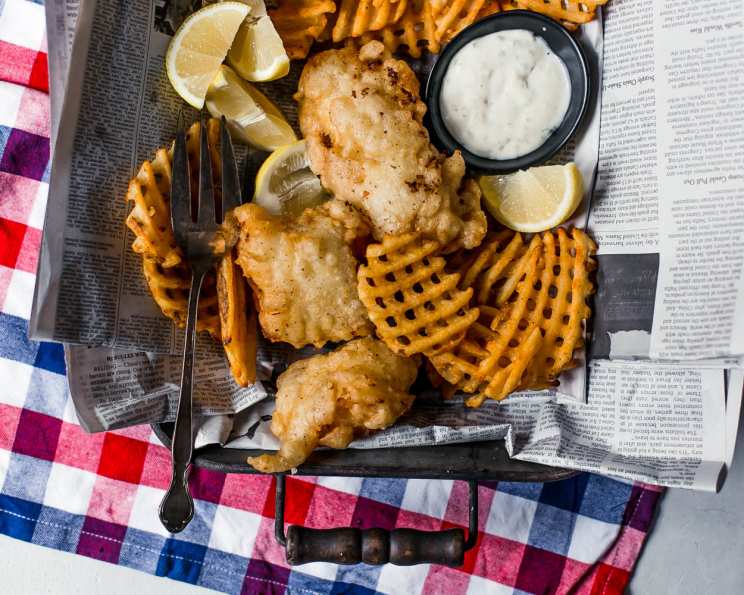
Real English Fish and Chips With Yorkshire Beer Batter
The smell of frying fish, the sizzle of chips hitting hot oil, and the anticipation of that first bite – these memories transport me straight back to childhood holidays in Whitby. Huddled in a cozy pub, the salty sea air whipping outside, nothing tasted quite as perfect as fish and chips wrapped in newspaper. The slight greasiness on your fingers, the vinegary tang, the fluffy cod encased in crispy batter…it was pure, unadulterated comfort. It’s a taste of home, no matter where you are.
Recipe Overview
- Prep Time: 20 minutes
- Cook Time: 25 minutes
- Total Time: 45 minutes
- Servings: 4
- Dietary Type: Not Gluten-Free
Ingredients
- 4 cod fish fillets or 4 haddock fillets
- 6 ounces plain flour, plus extra for dusting
- 1 teaspoon bicarbonate of soda
- 1 (8 fluid ounce) bottle British beer, small
- ½ lemon, juice of
- Salt & Pepper
- 3 lbs potatoes, peeled & chipped
- Good quality cooking fat or oil, for deep frying
Equipment Needed
- Deep fat fryer or large, heavy-bottomed pot
- Slotted spoon or frying spider
- Large mixing bowl
- Whisk
- Plates lined with newspaper and greaseproof paper
- Oven and baking tray (optional, for keeping food warm)
Instructions
-
Heat your chosen cooking fat or oil in a chip pan or automatic deep fat fryer. If using a deep fat fryer, set the temperature to 190°C (375°F) for the second frying of the chips.
-
Peel the potatoes and cut them into chunky-sized chips. Rinse the chips thoroughly under cold water to remove excess starch. This step is crucial for achieving crispy chips.
-
Thoroughly dry the chips using paper towels or a clean tea towel. Excess moisture will lower the oil temperature and result in soggy chips.
-
Fry the chips in the hot oil for about 3 minutes, until they are soft but not coloured. This is the first frying, which cooks the inside of the chip.
-
Drain the chips thoroughly using a slotted spoon or frying spider, and shake them well to remove excess oil. Set the chips aside.
-
Place some flour onto a plate. This is for dredging the fish, which helps the batter adhere.
-
Dredge the fish fillets in the flour thoroughly, ensuring they are completely coated. This step is VERY important as it prevents the batter from sliding off during frying. Leave the fish fillets in the flour while you prepare the batter.
-
In a large roomy bowl, combine the 6 ounces of plain flour, 1 teaspoon of bicarbonate of soda, salt, and pepper.
-
Gradually add the 8 fluid ounces of British beer to the dry ingredients, stopping when you achieve a thick, coating-type batter. You might not need to use the entire bottle. The batter should be thick enough to cling to the fish.
-
Whisk the batter thoroughly until it is smooth and there are no lumps. A few small lumps are okay, but avoid large ones.
-
Add the juice of ½ a lemon (or a splash of malt vinegar if desired) to the batter. This adds a subtle tang that complements the richness of the fish and chips.
-
Mix the batter thoroughly again.
-
Prepare your plates, newspaper, or whatever you plan to serve the fish and chips on. Have everything ready before you start frying, as the process moves quickly.
-
Adjust the deep fat fryer temperature to 160°C (320°F) for frying the fish.
-
Take one fish fillet at a time and, holding it by the tail or thin end, swirl it around in the batter until it is well coated. Ensure the entire fillet is covered in batter.
-
Immediately plunge the batter-coated fish fillet into the hot oil. Be careful not to overcrowd the fryer, as this will lower the oil temperature.
-
As soon as the batter has crisped up and set around the fish, add the other fillets one at a time, taking out the first ones as they cook. The cooking time will vary depending on the thickness of the fillets, but it usually takes about 6 to 10 minutes. The fish is done when the batter is golden brown and crispy, and the fish flakes easily with a fork.
-
Place the cooked fish fillets onto a tray and keep them warm in the oven at a low temperature (around 100°C/212°F) while you finish frying the chips.
-
Turn up the heat setting on your deep fat fryer to 190°C (375°F).
-
Cook the chips for a second time until they are golden brown and crisp. This second frying is essential for achieving that perfect crispy exterior.
-
Serve the fish and chips immediately on plates or newspaper with salt and vinegar (malt vinegar is traditional).
Expert Tips & Tricks
- Potato Choice: As mentioned previously, certain potato varieties are better for making chips. King Edwards, Desiree, Majestic, Maris Piper, and Romano potatoes are all excellent choices.
- Double Frying is Key: Don’t skip the double frying process for the chips. The first fry cooks the inside, while the second fry crisps the outside to perfection.
- Batter Consistency: The batter should be thick enough to coat the fish without being too heavy. Adjust the amount of beer accordingly.
- Oil Temperature: Maintaining the correct oil temperature is crucial for both the fish and the chips. Use a thermometer to ensure accuracy.
- Don’t Overcrowd: Fry the fish and chips in batches to prevent overcrowding the fryer, which can lower the oil temperature and result in soggy results.
Serving & Storage Suggestions
Serve your freshly fried fish and chips immediately for the best taste and texture. Traditionally, they are served wrapped in newspaper with a generous sprinkling of salt and a dousing of malt vinegar. A side of mushy peas or pickled onions is also a classic accompaniment.
Leftover fish and chips are best stored in the refrigerator in an airtight container. They will keep for 1-2 days. To reheat, bake them in a preheated oven at 180°C (350°F) until heated through and crispy. Microwaving is not recommended as it will make them soggy. Freezing is also not ideal, as the texture will suffer.
Nutritional Information
| Nutrient | Amount per Serving | % Daily Value |
|---|---|---|
| Calories | 750 kcal | 38% |
| Total Fat | 40g | 62% |
| Saturated Fat | 8g | 40% |
| Cholesterol | 120mg | 40% |
| Sodium | 600mg | 25% |
| Total Carbohydrate | 80g | 27% |
| Dietary Fiber | 5g | 20% |
| Sugars | 3g | – |
| Protein | 35g | 70% |
Note: Nutritional information is an estimate and may vary based on specific ingredients and cooking methods.
Variations & Substitutions
- Gluten-Free Batter: Substitute the plain flour with a gluten-free flour blend for a gluten-free version. You may need to adjust the amount of beer to achieve the desired consistency.
- Different Fish: While cod and haddock are traditional choices, you can also use other white fish fillets, such as plaice or pollock.
- Spice it Up: Add a pinch of cayenne pepper or chili flakes to the batter for a touch of heat.
- Herb Infusion: Mix finely chopped fresh herbs, such as parsley or thyme, into the batter for added flavor.
FAQs (Frequently Asked Questions)
Q: Can I use a different type of beer for the batter?
A: While British beer is traditional, you can experiment with other types of beer. A lager or pale ale will also work well. Avoid using overly hoppy or dark beers, as they can overpower the flavor of the fish.
Q: Why is it important to dredge the fish in flour before battering?
A: Dredging the fish in flour creates a dry surface that the batter can adhere to. This helps prevent the batter from sliding off during frying and ensures a crispy coating.
Q: How can I tell if the fish is cooked through?
A: The fish is cooked through when the batter is golden brown and crispy, and the fish flakes easily with a fork. The internal temperature of the fish should reach 145°F (63°C).
Q: Can I make the batter ahead of time?
A: While some recipes suggest making the batter ahead of time, it’s best to make it just before frying for the best results. The bicarbonate of soda will react with the beer, creating a light and airy batter.
Q: What’s the best way to keep the fish and chips warm while I’m frying everything?
A: Place the cooked fish and chips on a wire rack set over a baking sheet in a preheated oven at a low temperature (around 100°C/212°F). This will help keep them warm and crispy without making them soggy.
Final Thoughts
There’s something truly special about the simple pleasure of classic English fish and chips. The crispy batter, the flaky fish, the perfectly golden chips – it’s a dish that brings comfort and nostalgia with every bite. So, gather your ingredients, fire up the fryer, and prepare to indulge in a taste of home. Don’t be afraid to experiment with variations and find what you like best, and most importantly, don’t forget the salt and vinegar! Now, go forth and fry! I hope you give this a try and share any feedback you might have.