
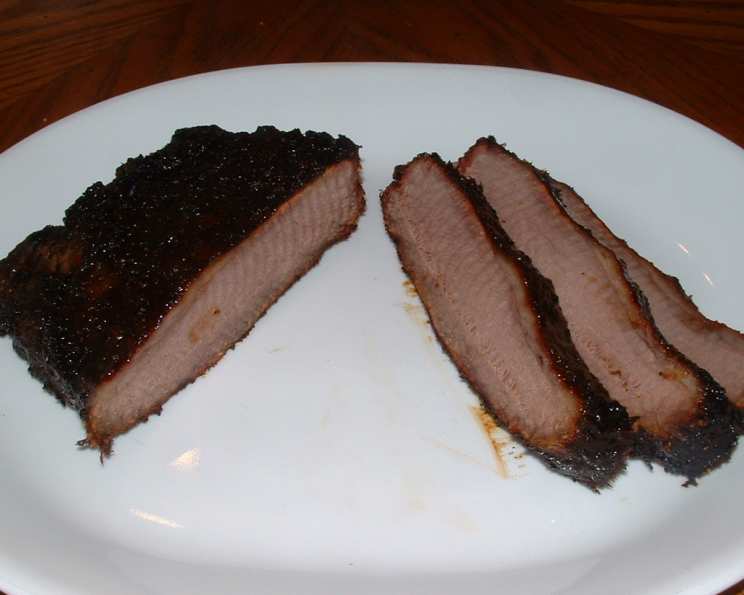
Real Texas Brisket (Smoked) (Southwest)
The scent of smoked brisket is more than just an aroma; it’s a time machine. One whiff, and I’m instantly transported back to my grandfather’s ranch in Texas, where the annual family barbecue was a sacred event. PaPaw, a man of few words but immense culinary skill, would preside over his ancient smoker, coaxing out the most tender, flavorful brisket imaginable. The low hum of the smoker, the crackle of the wood, the eager chatter of family – those were the sounds and smells of pure happiness, all embodied in that magnificent cut of beef. This recipe aims to capture that essence, that feeling of home, and share it with you.
Recipe Overview
- Prep Time: 30 minutes + overnight marinating
- Cook Time: 8 hours – 12 hours
- Total Time: 8 hours 30 minutes – 12 hours 30 minutes (including marinating)
- Servings: 12-16
- Yield: Varies depending on brisket size
- Dietary Type: Gluten-Free, Dairy-Free
Ingredients
- 8 lbs beef brisket (trimmed)
- 1/4 cup lemon juice
Rub:
- 2 tablespoons lemon pepper
- 1 tablespoon dried oregano
- 3 teaspoons celery salt
- 1 teaspoon garlic salt
- 1 teaspoon seasoning salt
Mop:
- 1/4 cup lemon juice
- 1 cup Worcestershire sauce
Equipment Needed
- Wood smoker (hickory or pecan recommended)
- Bowl
- Plastic wrap
- Small bowl
- Aluminum foil
- Meat thermometer
- Sharp knife
Instructions
-
Begin by trimming the brisket, leaving about a 1/2-inch layer of fat on top. This fat cap will render during smoking, basting the meat and keeping it moist.
-
Identify the grain of the meat. This is crucial for slicing later. Make a test slice across the grain at one corner of the brisket. This way, after the brisket develops its dark crust, you’ll be able to easily see which way to slice it for maximum tenderness.
-
Brush the brisket with 1/4 cup lemon juice. Bottled juice works just fine for this step.
-
In a bowl, combine the rub ingredients: lemon pepper, dried oregano, celery salt, garlic salt, and seasoning salt.
-
Rub the brisket thoroughly with half of this mixture, ensuring all surfaces are well-coated.
-
Cover the brisket with plastic wrap and chill overnight in the refrigerator. This allows the flavors to penetrate the meat deeply.
-
The next day, remove the brisket from the refrigerator and let it come to room temperature before cooking. Placing a cold piece of meat directly into a smoker is a recipe for disaster – the meat will become bitter. This can take 1-2 hours depending on your ambient temperature.
-
Prepare your smoker according to the manufacturer’s directions. Aim to heat the smoker to 225°F (107°C) at the cooking level. A smoker that uses wood (not electric) and allows for precise temperature control is ideal. A kettle BBQ pit (like a Weber) using indirect heat might work, but they tend to run too hot. A pit smoker with a separate firebox is best.
-
Place the brisket in the smoker, fat side up.
-
Maintain the temperature as close to 200°F (93°C) as you can for the first 2-3 hours by adjusting the air intake and adding small pieces of wood every 30 minutes. Don’t adjust the out vent, it should always remain fully open.
-
Monitor the smoke. You’re cooking properly when there is very little smoke coming out of the smoker, and the hot air coming out of the top vent is clear for the first foot, then it turns to a grayish-white smoke. If thick smoke is billowing out of every opening, the smoke is too cold, and the airflow is too low – your brisket will taste like tar. You can let the temperature creep up to 225°F (107°C), but not much over that.
-
While the brisket is smoking, prepare the mop sauce. In a small bowl, combine the Worcestershire sauce and remaining lemon juice and rub mixture.
-
Mop the sauce onto the brisket every hour as you turn the meat. Be sure to turn the meat over and also rotate it to ensure even cooking. This should be the only time you open the cooking area.
-
Smoke for 1 1/4 to 1 1/2 hours per pound, until the internal temperature reaches 190°F (88°C). Use a reliable meat thermometer to check the temperature. If you cook it much past that, your brisket will shred instead of slice.
-
Remove the brisket from the smoker and wrap it tightly in aluminum foil.
-
Let the meat rest for about 1 hour. This allows the juices to redistribute throughout the meat, resulting in a more tender and flavorful final product. This is a critical step; don’t skip it!
-
After resting, carefully cut the point (the pyramid-shaped portion) off, following a natural fat layer between the point and the flat. This allows you to slice each section according to its grain.
-
Trim off any excess fat from both the point and the flat.
-
Slice the brisket across the grain, using the starter slice you made at the beginning as a guide. Aim for slices that are about 1/4 inch thick.
-
If a portion of the brisket is falling apart rather than slicing, don’t despair. Save the shredded portions and the burnt ends. They will make the best BBQ beef sandwiches later when chopped and mixed with BBQ sauce.
Expert Tips & Tricks
- Wood Choice: While hickory and pecan are classic choices, experiment with different woods to find your preferred flavor profile. Fruit woods like apple or cherry can add a subtle sweetness.
- Water Pan: Place a water pan in your smoker to help maintain humidity and prevent the brisket from drying out.
- Doneness Test: The brisket is done when a probe slides into the meat with very little resistance. It should feel like you’re inserting it into softened butter.
- Bark Development: The “bark” is the flavorful crust that forms on the outside of the brisket during smoking. To encourage bark development, avoid wrapping the brisket too early.
- Resting is Key: The longer you rest the brisket, the better. If you have time, you can rest it for up to 3 hours in a cooler filled with towels to maintain its temperature.
- Spice Level: Adjust the amount of lemon pepper based on your preference. For a bolder flavor, increase the amount slightly.
- Adjust Lemon Juice: If you feel like the lemon flavor is too much, feel free to substitute some of the lemon juice with water.
Serving & Storage Suggestions
Serve the sliced brisket hot off the cutting board, accompanied by your favorite BBQ sides such as coleslaw, potato salad, and baked beans. Consider serving with pickles, onions, and your favorite BBQ sauce.
Leftovers can be stored in an airtight container in the refrigerator for up to 3-4 days. For longer storage, freeze the brisket in individual portions. To reheat, thaw in the refrigerator overnight and gently warm in a low oven (250°F / 121°C) or in a skillet with a little beef broth to prevent drying.
Nutritional Information
Note: Nutritional information is an estimate and may vary based on specific ingredients and portion sizes.
| Nutrient | Amount per Serving | % Daily Value |
|---|---|---|
| Calories | 962 kcal | N/A |
| Calories from Fat | 722 g | 75% |
| Total Fat | 80.3 g | 123% |
| Saturated Fat | 32.3 g | 161% |
| Cholesterol | 220.8 mg | 73% |
| Sodium | 418.3 mg | 17% |
| Total Carbohydrate | 5.5 g | 1% |
| Dietary Fiber | 0.1 g | 0% |
| Sugars | 2.5 g | 10% |
| Protein | 51.3 g | 102% |
Variations & Substitutions
- Spicy Brisket: Add a pinch of cayenne pepper or red pepper flakes to the rub for a spicy kick.
- Coffee Rub: Incorporate finely ground coffee into the rub for a unique, robust flavor.
- Mustard Binder: Substitute yellow mustard for lemon juice as a binder for the rub. This adds a tangy flavor and helps the rub adhere to the meat.
- Different Wood: Experiment with different types of wood for smoking, such as mesquite, apple, or cherry, to alter the flavor profile.
- Beer Mop: Use beer instead of Worcestershire sauce in the mop sauce for a malty flavor.
FAQs (Frequently Asked Questions)
Q: Why is it important to let the brisket rest after smoking?
A: Resting allows the juices to redistribute throughout the meat, resulting in a more tender and flavorful brisket. If you skip this step, the juices will run out when you slice it, leaving you with dry meat.
Q: How do I prevent my brisket from drying out during smoking?
A: Maintain a consistent temperature in your smoker, use a water pan to add moisture, and avoid opening the smoker too frequently. Wrapping the brisket in foil towards the end of the smoking process can also help.
Q: What is the ideal internal temperature for smoked brisket?
A: The ideal internal temperature for smoked brisket is 190°F (88°C). At this temperature, the collagen in the meat has broken down, resulting in a tender and juicy final product.
Q: Can I use an electric smoker for this recipe?
A: While you can use an electric smoker, a wood smoker is recommended for the best flavor. Electric smokers often struggle to impart the same smoky flavor as a wood smoker.
Q: What if my brisket is tough even after cooking it to the correct temperature?
A: This could be due to undercooking or not allowing the brisket to rest long enough. If it’s still tough, try wrapping it in foil and continuing to cook it at a low temperature until it reaches the desired tenderness.
Final Thoughts
Making real Texas brisket is a labor of love, a journey that requires patience, attention to detail, and a deep appreciation for the art of barbecue. But the reward – the look on people’s faces when they taste that first, succulent bite – is well worth the effort. Gather your friends and family, fire up the smoker, and embark on this culinary adventure. Don’t be afraid to experiment and make it your own. And most importantly, savor every moment of the process. This isn’t just about cooking; it’s about creating memories and sharing the joy of good food with the people you love. Serve it with a side of creamy mac and cheese and ice-cold sweet tea. Enjoy!