
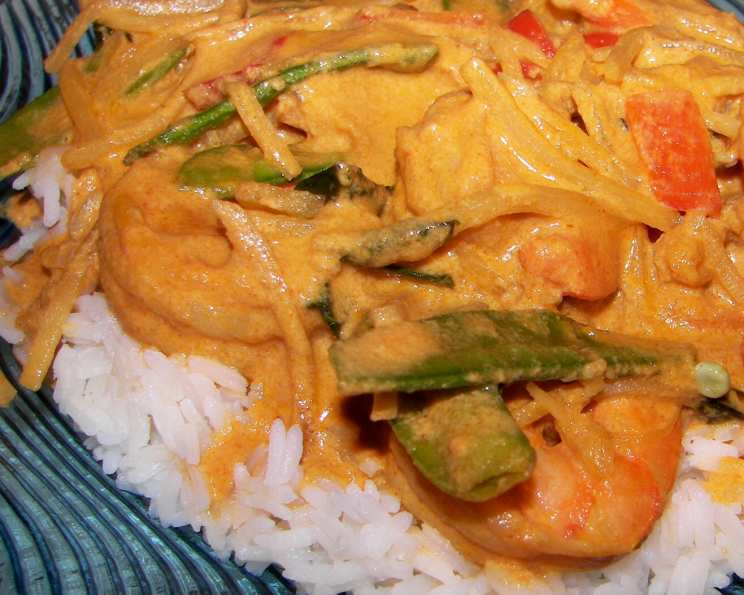
Red Curry Shrimp: A Taste of Thailand in Your Kitchen
There’s a small, unassuming Thai restaurant tucked away on a side street near my old apartment. During particularly hectic weeks, its red curry shrimp became my culinary refuge. The fragrant aroma that wafted out as I pushed open the door, the vibrant colors of the dish itself, and that first burst of sweet, spicy, creamy flavor – it was pure comfort. I’ve spent years trying to recreate that same feeling at home, and this recipe captures the essence of that beloved dish, bringing the warmth and vibrancy of Thai cuisine to my own table.
Recipe Overview
- Prep Time: 10 minutes
- Cook Time: 25 minutes
- Total Time: 35 minutes
- Servings: 3-4
- Dietary Type: Dairy-Free
Ingredients
- 14 ounces coconut milk
- 2 tablespoons red curry paste
- 1 tablespoon brown sugar
- 1 lb shrimp, peeled and deveined
- ½ cup snap peas
- ½ cup bamboo shoots
- ½ cup red bell pepper, sliced
- ¼ cup Thai basil, fresh (optional)
- 2 tablespoons fish sauce
Equipment Needed
- Large skillet
- Measuring cups and spoons
- Stirring spoon or spatula
Instructions
- In a large skillet, bring the 14 ounces of coconut milk to a simmer over medium heat. Watch carefully to prevent scorching.
- Stir in the 2 tablespoons of red curry paste and 1 tablespoon of brown sugar until completely dissolved into the coconut milk. This ensures a smooth and even distribution of flavor throughout the curry.
- Bring the mixture to a gentle boil, then immediately reduce the heat to low.
- Allow the curry to simmer for 5 minutes, stirring occasionally, allowing the flavors to meld and deepen. The coconut milk will slightly thicken, creating a richer sauce.
- Add the 1 lb of shrimp (peeled and deveined), ½ cup of snap peas, ½ cup of bamboo shoots, and ½ cup of sliced red bell pepper to the simmering curry.
- Cook for approximately 3-5 minutes, or until the shrimp turns pink and opaque, indicating that it is cooked through. The snap peas and red bell pepper should be tender-crisp, retaining a slight bite. Avoid overcooking the shrimp, as it can become rubbery.
- Stir in the optional ¼ cup of fresh Thai basil (if using) and 2 tablespoons of fish sauce. The Thai basil adds a fresh, aromatic note, while the fish sauce provides a salty, umami depth to the curry.
- Serve immediately over jasmine rice.
Expert Tips & Tricks
- Blooming the Curry Paste: For a richer, more complex flavor, consider “blooming” the curry paste. Before adding the coconut milk, sauté the red curry paste in a tablespoon of coconut oil over medium heat for 1-2 minutes. This releases the essential oils and intensifies the flavor.
- Fresh vs. Canned Bamboo Shoots: Fresh bamboo shoots require more preparation, including boiling to remove bitterness. Canned bamboo shoots are a convenient alternative and readily available.
- Shrimp Selection: Use high-quality shrimp for the best flavor and texture. Look for shrimp that is firm, plump, and free of any discoloration or strong odors. Frozen shrimp can be used, but be sure to thaw it completely before cooking.
- Spice Level Adjustment: Adjust the amount of red curry paste to your preference. Start with 1.5 tablespoons for a milder curry and increase to 2 or more for a spicier dish.
- Thickening the Sauce: If you prefer a thicker sauce, simmer the curry for a few minutes longer without the shrimp and vegetables, allowing it to reduce. You can also add a cornstarch slurry (1 tablespoon cornstarch mixed with 2 tablespoons cold water) at the end of cooking.
Serving & Storage Suggestions
Serve the red curry shrimp hot, ideally over a bed of fluffy jasmine rice. Garnish with additional fresh Thai basil leaves, a sprinkle of chopped peanuts, or a squeeze of lime juice for an extra burst of flavor.
Leftovers can be stored in an airtight container in the refrigerator for up to 3 days. To reheat, gently warm the curry in a saucepan over low heat, stirring occasionally, until heated through. Avoid overheating, as this can cause the shrimp to become rubbery. You can also microwave it, but do so in short intervals to prevent overcooking. Freezing is not recommended, as the texture of the shrimp and vegetables may be affected.
Nutritional Information
| Nutrient | Amount per Serving | % Daily Value |
|---|---|---|
| Calories | 455.2 kcal | N/A |
| Calories from Fat | 236 g | 52% |
| Total Fat | 26.3 g | 40% |
| Saturated Fat | 22.2 g | 110% |
| Cholesterol | 294.5 mg | 98% |
| Sodium | 1338.1 mg | 55% |
| Total Carbohydrate | 20.6 g | 6% |
| Dietary Fiber | 4.7 g | 18% |
| Sugars | 15.4 g | 61% |
| Protein | 37.1 g | 74% |
Note: Nutritional information is an estimate and may vary based on specific ingredients and portion sizes.
Variations & Substitutions
- Vegetarian Option: Replace the shrimp with firm tofu or extra vegetables like broccoli, mushrooms, or zucchini.
- Protein Variety: Chicken, beef, or pork can be substituted for the shrimp. Adjust cooking time accordingly.
- Coconut Milk Alternatives: For a lighter curry, use light coconut milk. You can also try coconut cream for an even richer, more decadent sauce.
- Vegetable Swaps: Feel free to use your favorite vegetables in place of the snap peas, bamboo shoots, and red bell pepper. Carrots, green beans, and eggplant are all excellent choices.
- Spice Boost: Add a pinch of red pepper flakes or a finely chopped chili pepper to the curry for an extra kick of heat.
- Gluten-Free: Ensure that your red curry paste and fish sauce are gluten-free. Many brands offer gluten-free versions.
FAQs (Frequently Asked Questions)
Q: Can I make this red curry shrimp ahead of time?
A: While the curry sauce can be made ahead of time, it’s best to add the shrimp and vegetables just before serving to prevent them from becoming overcooked.
Q: Is red curry shrimp spicy?
A: The spice level depends on the amount of red curry paste used. Start with a smaller amount and add more to taste.
Q: Can I use dried basil instead of fresh Thai basil?
A: While fresh Thai basil is preferred for its distinct flavor, dried basil can be used in a pinch. Use about 1 teaspoon of dried basil in place of ¼ cup of fresh basil.
Q: How do I know when the shrimp is cooked through?
A: The shrimp is cooked through when it turns pink and opaque. Avoid overcooking, as this can make it rubbery.
Q: What is fish sauce, and can I substitute it?
A: Fish sauce is a fermented fish sauce that adds a salty, umami flavor to the curry. If you don’t have fish sauce, you can substitute it with soy sauce or tamari for a similar savory flavor.
Final Thoughts
This red curry shrimp recipe is a testament to the power of simple ingredients combined with careful technique. It’s a dish that’s as satisfying to make as it is to eat, bringing a vibrant taste of Thailand to your kitchen. Don’t hesitate to experiment with the variations and substitutions to create your own unique version. And most importantly, don’t be afraid to share your culinary creation with loved ones – good food is always best enjoyed together!