
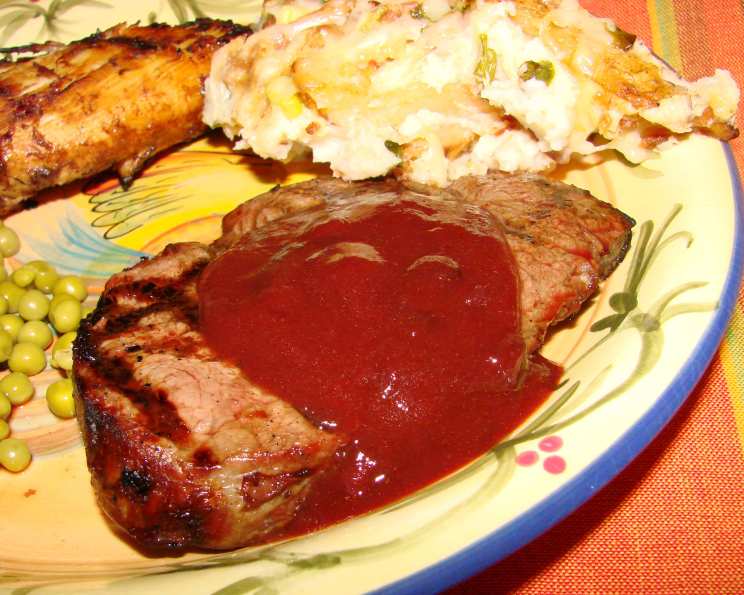
Elevating Steak Night: A Luscious Red Wine Pan Sauce Recipe
I still remember the first time I truly appreciated the transformative power of a pan sauce. It was a chilly autumn evening, and I was attempting to recreate a dish I’d had at a small Parisian bistro. The steak itself was perfectly cooked, but it was the shimmering, deeply flavored sauce that elevated the entire experience. The rich, ruby-red liquid, clinging enticingly to the tender beef, hinted at dark berries, savory herbs, and the comforting warmth of a good red wine. From that moment on, I knew that a well-made pan sauce was the secret weapon in any steak lover’s arsenal. This recipe aims to bring that same magic to your kitchen.
Recipe Overview
- Prep Time: 5 minutes
- Cook Time: 5 minutes
- Total Time: 10 minutes
- Yields: 1 cup
- Dietary Type: Gluten-Free (check soy sauce label)
Ingredients
- ⅓ cup ketchup
- 1 tablespoon vinegar (cider, red, or white wine)
- 1 tablespoon soy sauce
- ½ teaspoon ground cumin
- ⅛ teaspoon cayenne
- ⅛ teaspoon salt
- ⅛ teaspoon pepper
- 1 tablespoon olive oil
- 1 small shallot, finely chopped
- 1 garlic clove, finely chopped
- ⅓ cup red wine
Equipment Needed
- Small Bowl
- Skillet
- Whisk
Instructions
- In a small bowl, whisk together the ketchup, vinegar, soy sauce, ground cumin, cayenne, salt, and pepper. Set this mixture aside; this is your flavor powerhouse, ready to infuse the sauce with depth.
- Place a skillet over medium-high heat. Once the skillet is hot, add the olive oil. Allow the oil to heat up for a few seconds until it shimmers.
- Add the finely chopped shallot and garlic clove to the hot oil. Sauté for approximately 1 minute, stirring frequently, until the shallot becomes translucent and the garlic releases its fragrant aroma. Be careful not to burn the garlic, as this will impart a bitter taste to the sauce.
- Pour the red wine into the skillet. Increase the heat slightly to bring the wine to a simmer. Let it simmer for about 2 minutes, allowing the alcohol to evaporate and the wine to reduce slightly. This step concentrates the wine’s flavor, creating a richer base for the sauce.
- Remove the skillet from the heat. This is important to prevent the ketchup mixture from scorching or separating when added.
- Whisk in the ketchup mixture. Make sure to incorporate it thoroughly into the wine and shallot mixture, ensuring a smooth and homogenous sauce.
- Serve immediately with your favorite steak.
Expert Tips & Tricks
- Deglaze the pan: After cooking your steak, don’t discard those flavorful browned bits (fond) clinging to the pan! Before adding the olive oil, use a splash of red wine or beef broth to scrape up the fond. These flavorful bits will add an extra layer of richness to your sauce.
- Adjust the sweetness: If you prefer a less sweet sauce, reduce the amount of ketchup slightly or add a squeeze of lemon juice to balance the flavors.
- Infuse with herbs: For an even more complex flavor profile, consider adding a sprig of fresh rosemary or thyme to the skillet while the wine is simmering. Remove the herbs before serving.
- Make it ahead: You can prepare the ketchup mixture a day in advance and store it in the refrigerator. This will save you time when you’re ready to cook the sauce.
- Thicken the sauce: If you prefer a thicker sauce, whisk in a cornstarch slurry (1 teaspoon cornstarch mixed with 1 tablespoon cold water) during the final minute of cooking.
Serving & Storage Suggestions
This red wine pan sauce is best served immediately with a freshly grilled or pan-seared steak. Spoon a generous amount of sauce over the steak and garnish with fresh parsley or thyme, if desired.
Leftover sauce can be stored in an airtight container in the refrigerator for up to 3 days. Reheat gently in a saucepan over low heat, stirring occasionally, until warmed through. You may need to add a splash of water or red wine to thin the sauce if it has thickened during storage.
Nutritional Information
Please note that the nutritional information is an estimate and may vary based on specific ingredients and portion sizes.
| Nutrient | Amount per Serving | % Daily Value |
|---|---|---|
| Calories | 100 kcal | 5% |
| Total Fat | 5g | 8% |
| Saturated Fat | 1g | 5% |
| Cholesterol | 0mg | 0% |
| Sodium | 500mg | 22% |
| Total Carbohydrate | 12g | 4% |
| Dietary Fiber | 0g | 0% |
| Sugars | 8g | – |
| Protein | 1g | 2% |
Variations & Substitutions
- Balsamic Glaze Twist: Drizzle a touch of balsamic glaze over the finished steak and sauce for a sweet and tangy counterpoint to the savory flavors.
- Spicy Kick: Add a pinch of red pepper flakes or a dash of your favorite hot sauce to the ketchup mixture for an extra layer of heat.
- Mushroom Infusion: Sauté sliced mushrooms along with the shallots and garlic for an earthy and savory dimension.
- Beef Broth Boost: Substitute a portion of the red wine with beef broth for a deeper, more intense beef flavor.
- Gluten-Free Option: Ensure your soy sauce is gluten-free (tamari is a good substitute).
FAQs (Frequently Asked Questions)
Q: Can I use a different type of wine?
A: Yes, you can substitute the red wine with other varieties such as Merlot, Cabernet Sauvignon, or Pinot Noir. Choose a wine that you enjoy drinking, as its flavor will be reflected in the sauce.
Q: Can I make this sauce without shallots?
A: Yes, you can substitute the shallot with a small onion, finely chopped. The flavor will be slightly different, but still delicious.
Q: The sauce is too thin. How can I thicken it?
A: Whisk together 1 teaspoon of cornstarch with 1 tablespoon of cold water to create a slurry. Gradually whisk the slurry into the sauce while it’s simmering over low heat until it reaches your desired consistency.
Q: Can I use dried herbs instead of fresh?
A: While fresh herbs are preferred for their vibrant flavor, you can use dried herbs in a pinch. Use about 1/3 teaspoon of dried herbs for every 1 tablespoon of fresh herbs. Add the dried herbs to the skillet along with the shallots and garlic.
Q: What kind of vinegar is best for this sauce?
A: Cider vinegar and red wine vinegar are excellent choices, as they add a subtle tanginess that complements the other flavors. White wine vinegar can also be used, but it has a slightly more acidic flavor.
Final Thoughts
I hope this recipe inspires you to create your own restaurant-worthy steak at home. Don’t be afraid to experiment with different variations and ingredient substitutions to create a sauce that perfectly suits your taste. Whether you’re cooking for a special occasion or simply treating yourself to a delicious weeknight meal, this red wine pan sauce is sure to elevate your steak to the next level. So, gather your ingredients, fire up the stove, and get ready to experience the magic of a perfectly crafted pan sauce. And, as always, I’d love to hear about your culinary creations and any personal touches you add to this recipe. Happy cooking!