
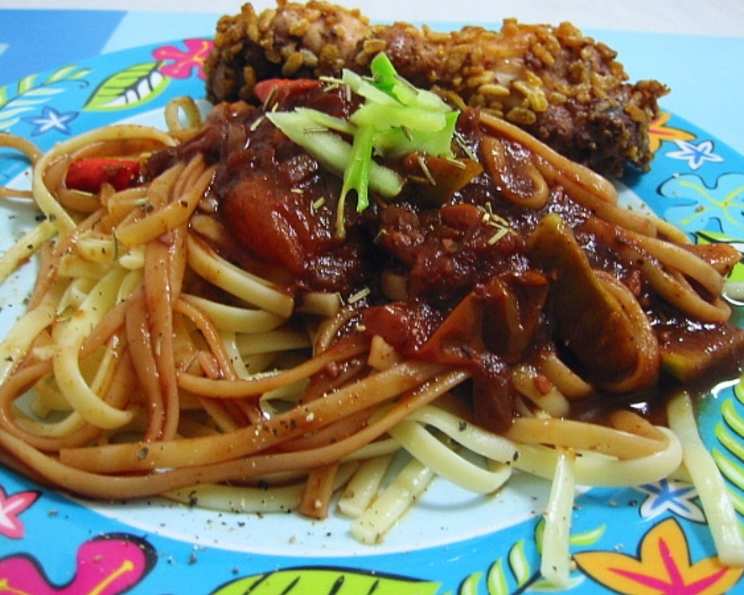
Red Wine & Rosemary Sauce over Linguine
The scent of rosemary always transports me back to my grandmother’s sun-drenched kitchen in Tuscany. She had a sprawling herb garden just outside the back door, and rosemary was her signature. Its earthy fragrance infused everything she cooked, from roasted chicken to simple pasta sauces. This recipe, with its bold red wine and fragrant rosemary, captures a bit of that rustic magic, reminding me of slow, shared meals and the warmth of family.
Recipe Overview
- Prep Time: 10 minutes
- Cook Time: 30 minutes
- Total Time: 40 minutes
- Servings: 4
- Dietary Type: Vegetarian
Ingredients
- 1 tablespoon extra virgin olive oil
- 1 cup onion, diced finely
- 4 cloves fresh garlic, minced
- ¾ cup good quality red wine, such as valpolicella or ¾ cup shiraz wine (NOT cooking wine)
- 2 tablespoons honey
- 2 teaspoons dried basil
- 1 teaspoon dried rosemary, crumbled
- ½ teaspoon salt
- ¼ teaspoon crushed red pepper flakes (optional)
- 1 (28 ounce) can crushed tomatoes
- 1 (6 ounce) can no-added-salt tomato paste
- 1 (10 ounce) box linguine, cooked and drained
Equipment Needed
- Deep saucepan
- Measuring cups and spoons
- Small bowl
- Wooden spoon or spatula
Instructions
-
Before you begin, measure out all of the herbs & seasonings (dried basil, dried rosemary, salt, and crushed red pepper flakes, if using) into a small bowl and set near the stove. This ensures you’re ready to add them at the right moment without scrambling.
-
Heat a deep saucepan over medium heat. Make sure the pan is large enough to accommodate all the ingredients later on.
-
Add the olive oil and minced garlic to the hot pan. Sauté for about 30 seconds, being careful not to burn the garlic. It should be fragrant but not browned. Burnt garlic can impart a bitter taste to the entire sauce.
-
Add the diced onions and sauté for about 3 minutes, stirring constantly to prevent burning. You want the onions to become translucent and softened, releasing their natural sweetness.
-
Pour in the red wine and allow it to deglaze the pan, scraping up any flavorful bits stuck to the bottom. Let the wine simmer for about a minute to allow some of the alcohol to evaporate.
-
Add the honey, crushed tomatoes, tomato paste, and the bowl of herbs & seasonings you prepared earlier. Stir well to combine all the ingredients thoroughly.
-
Bring the sauce to just a simmer – meaning it’s just starting to bubble gently under the surface, but not boiling vigorously.
-
Reduce the heat to low to maintain a simmer. Cook the sauce for 20 minutes uncovered, or until it has thickened to your desired consistency. Lower the heat further if needed to prevent it from boiling.
-
You may wish to set a lid partially over the pot to help minimize splatters during simmering. Stir the sauce occasionally to prevent sticking and ensure even cooking.
-
Serve the sauce immediately over hot cooked linguine. Garnish with fresh Parmesan shavings and a sprig of fresh rosemary, if desired.
Expert Tips & Tricks
- Wine Selection: The quality of the red wine will significantly impact the flavor of the sauce. Avoid “cooking wine,” which often contains added salt and preservatives. Opt for a dry, fruit-forward wine like Valpolicella or Shiraz. If you’re not a wine drinker, choose a bottle you’d enjoy drinking with the meal.
- Herb Infusion: For a more intense rosemary flavor, you can steep a fresh rosemary sprig in the warm olive oil for a few minutes before adding the garlic and onions. Remove the sprig before proceeding.
- Sweetness Adjustment: Taste the sauce before serving and adjust the sweetness if needed. If it’s too acidic, add a little more honey or a pinch of sugar.
- Thickening Assistance: If the sauce isn’t thickening to your liking, you can stir in a teaspoon of cornstarch mixed with a tablespoon of cold water. Add this slurry slowly, stirring constantly, until the sauce reaches the desired consistency.
- Make-Ahead Marvel: This sauce can be made ahead of time and stored in the refrigerator for up to 3 days. The flavors will meld and deepen over time, making it even more delicious.
Serving & Storage Suggestions
Serve the Red Wine & Rosemary Sauce hot over freshly cooked linguine. A simple green salad and crusty bread make a perfect accompaniment. As mentioned, a sprinkle of fresh Parmesan shavings and a sprig of rosemary add an elegant touch.
Leftover sauce can be stored in an airtight container in the refrigerator for up to 3 days. For longer storage, freeze the sauce in freezer-safe bags or containers for up to 2 months.
To reheat, thaw the sauce in the refrigerator overnight (if frozen). Gently warm it in a saucepan over low heat, stirring occasionally, until heated through. Add a splash of water or broth if the sauce has become too thick.
Nutritional Information
| Nutrient | Amount per Serving | % Daily Value |
|---|---|---|
| Calories | 484 kcal | N/A |
| Total Fat | 5 g | 8% |
| Saturated Fat | 1 g | 5% |
| Cholesterol | 0 mg | 0% |
| Sodium | 603 mg | 25% |
| Total Carbohydrate | 91 g | 30% |
| Dietary Fiber | 9 g | 35% |
| Sugars | 18 g | N/A |
| Protein | 15 g | 30% |
Note: Nutritional information is an estimate and may vary based on specific ingredients and portion sizes.
Variations & Substitutions
- Gluten-Free: Use gluten-free linguine or another gluten-free pasta alternative.
- Vegan: Ensure the wine used is vegan-friendly, as some wines are clarified using animal products. Substitute the honey with maple syrup or agave nectar.
- Spicy: Increase the amount of crushed red pepper flakes or add a pinch of cayenne pepper for a spicier sauce.
- Vegetable Boost: Add diced vegetables such as bell peppers, zucchini, or mushrooms to the sauce along with the onions for a heartier meal.
- Fresh Herbs: Substitute the dried basil and rosemary with fresh herbs for a brighter flavor. Use about 2 tablespoons of chopped fresh basil and 1 tablespoon of chopped fresh rosemary. Add them towards the end of the cooking time to preserve their flavor.
FAQs (Frequently Asked Questions)
Q: Can I use a different type of wine?
A: Yes, you can experiment with other dry red wines like Merlot or Chianti. Avoid sweet wines or cooking wines.
Q: Can I use fresh tomatoes instead of canned?
A: Absolutely! Use about 2 pounds of fresh tomatoes, peeled, seeded, and crushed. You may need to adjust the cooking time to allow the sauce to thicken.
Q: Can I add meat to this sauce?
A: Yes, this sauce pairs well with browned Italian sausage, ground beef, or shredded cooked chicken. Add the meat after the onions have softened.
Q: How can I make this sauce less acidic?
A: Add a pinch of baking soda to the sauce while it’s simmering. This will help neutralize the acidity of the tomatoes.
Q: Can I freeze the cooked pasta with the sauce?
A: While it’s possible, the texture of the pasta may change slightly after freezing and thawing. It’s generally best to freeze the sauce separately and cook the pasta fresh when you’re ready to eat.
Final Thoughts
This Red Wine & Rosemary Sauce is more than just a recipe; it’s an invitation to slow down, savor the moment, and connect with the simple pleasures of cooking. Don’t be afraid to experiment with the ingredients and make it your own. Gather your loved ones, pour a glass of wine, and enjoy the comforting aroma of this delicious and easy-to-make pasta dish. I hope this recipe brings as much joy to your table as it has to mine. Bon appétit!