
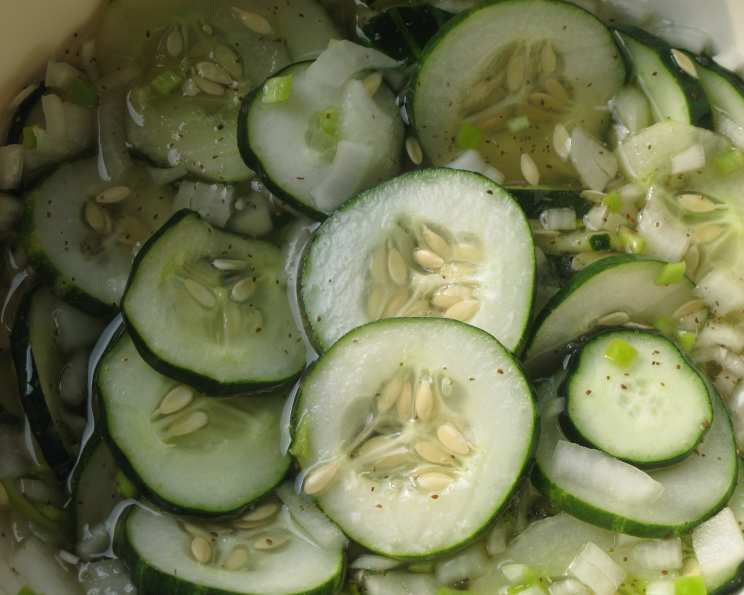
Crunchy, Tangy Refrigerator Pickles: A Family Tradition
The scent of vinegar, sugar, and celery seed always takes me back to my childhood summers. My grandmother, a woman whose garden was a riot of color and overflowing with bounty, would always have a jar of these refrigerator pickles ready in her fridge. They were the perfect accompaniment to our countless picnics, a sweet and tangy counterpoint to the grilled hot dogs and potato salad. I remember sneaking slices straight from the jar, the satisfying crunch echoing in the sun-drenched kitchen. These pickles are more than just a recipe; they’re a taste of sunshine and happy memories.
Recipe Overview
- Prep Time: 20 minutes
- Cook Time: 5 minutes
- Total Time: 25 minutes (plus refrigeration time)
- Yields: 6 cups
- Dietary Type: Vegetarian, Gluten-Free
Ingredients
- 6 cups sliced cucumbers
- 1 cup sliced onion
- 1 green pepper, chopped
- 1 cup vinegar (white or apple cider vinegar work well)
- 2 cups sugar
- 1 tablespoon salt
- 1 tablespoon celery seed
Equipment Needed
- Large saucepan
- Large bowl
- Knife
- Cutting board
- Measuring cups and spoons
- Jars or airtight containers for storage
Instructions
- First, prepare your vegetables. Thoroughly wash and slice the cucumbers. Aim for a thickness of about 1/8 inch. You can use a mandoline for even slices, but a sharp knife works just as well.
- Next, slice the onion into thin rings.
- Chop the green pepper into bite-sized pieces. Remove the seeds and membranes before chopping.
- In a large bowl, combine the sliced cucumbers, sliced onion, and chopped green pepper. Mix gently to combine.
- In a large saucepan, combine the vinegar, sugar, salt, and celery seed.
- Heat the mixture over medium heat, stirring constantly until the sugar and salt are completely dissolved. This usually takes about 3-5 minutes. Do not boil.
- Once the sugar and salt are dissolved, pour the hot vinegar mixture over the cucumber mixture in the bowl.
- Stir gently to ensure all the vegetables are coated with the brine.
- Transfer the pickle mixture to jars or airtight containers. Leave about 1/2 inch of headspace at the top of each jar.
- Let the jars cool slightly before sealing tightly with lids.
- Store the pickles in the refrigerator. These pickles are best after they have had at least 24 hours to marinate in the refrigerator, but they can be eaten after a few hours.
Expert Tips & Tricks
- Use fresh, firm cucumbers: Avoid using cucumbers that are soft or have blemishes.
- Customize the sweetness: If you prefer a less sweet pickle, reduce the amount of sugar by 1/4 cup.
- Spice it up: For a spicy kick, add a pinch of red pepper flakes to the vinegar mixture.
- Don’t overcook the brine: Heating the vinegar mixture is only to dissolve the sugar and salt. Boiling it can affect the texture of the pickles.
- Pack the vegetables tightly: When transferring the pickle mixture to the jars, pack the vegetables tightly to ensure they are submerged in the brine.
- Experiment with different vegetables: Try adding other vegetables like carrots, cauliflower, or bell peppers to the pickle mixture.
Serving & Storage Suggestions
Refrigerator pickles are incredibly versatile. They are delicious straight from the jar as a snack, or they can be served as a side dish with sandwiches, burgers, or grilled meats. They are also a great addition to charcuterie boards or cheese plates.
These pickles should be stored in the refrigerator. They will keep for several months, as long as they are properly stored in airtight containers and kept refrigerated. The flavor may intensify over time. While these are refrigerator pickles and not canned, the high acidity of the brine helps to preserve them. However, always check for signs of spoilage (such as mold or an off odor) before consuming. These pickles are not suitable for freezing, as the freezing process will alter the texture of the cucumbers.
Nutritional Information
| Nutrient | Amount per Serving | % Daily Value* |
|---|---|---|
| Calories | 210 kcal | 11% |
| Total Fat | 0 g | 0% |
| Saturated Fat | 0 g | 0% |
| Cholesterol | 0 mg | 0% |
| Sodium | 800 mg | 35% |
| Total Carbohydrate | 54 g | 19% |
| Dietary Fiber | 1 g | 4% |
| Sugars | 48 g | |
| Protein | 0 g | 0% |
*Percent Daily Values are based on a 2,000 calorie diet.
Variations & Substitutions
- Dill Refrigerator Pickles: Add 1-2 tablespoons of fresh dill to the cucumber mixture for a classic dill pickle flavor.
- Spicy Refrigerator Pickles: Add a jalapeño pepper, thinly sliced, to the cucumber mixture.
- Sweet and Sour Refrigerator Pickles: Use a combination of white vinegar and apple cider vinegar for a more complex flavor. You can also add a pinch of ground ginger or a star anise to the brine.
- Sugar-Free Refrigerator Pickles: Use a sugar substitute like stevia or erythritol in place of the sugar. Be sure to adjust the amount to taste, as sugar substitutes can be much sweeter than regular sugar.
- Bread and Butter Pickles: Add 1 teaspoon of turmeric and 1/2 teaspoon of mustard seed to the brine.
FAQs (Frequently Asked Questions)
Q: How long do refrigerator pickles last?
A: Refrigerator pickles typically last for several months in the refrigerator, as long as they are stored in airtight containers.
Q: Do I need to sterilize the jars before making refrigerator pickles?
A: No, sterilizing the jars is not necessary for refrigerator pickles, as they are not being canned. However, make sure the jars are clean.
Q: Can I use different types of cucumbers?
A: Yes, you can use different types of cucumbers, such as Kirby cucumbers or English cucumbers. However, avoid using cucumbers that are too seedy.
Q: Can I adjust the amount of sugar in the recipe?
A: Yes, you can adjust the amount of sugar to your liking. If you prefer a less sweet pickle, reduce the amount of sugar by 1/4 cup.
Q: Why are my pickles soft?
A: Soft pickles can be caused by using cucumbers that are not fresh or firm, or by overcooking the brine.
Final Thoughts
Making these refrigerator pickles is a delightful journey back to simpler times, a way to connect with family traditions and create new memories. Don’t be afraid to experiment with different flavors and ingredients to create your own unique twist on this classic recipe. Whether you’re serving them at a summer barbecue or enjoying them as a snack, these pickles are sure to bring a smile to your face. I encourage you to gather your ingredients, put on some good music, and embark on this pickling adventure. And please, share your creations and any exciting variations you come up with! They pair wonderfully with a crisp, refreshing lager on a warm day. Happy pickling!