
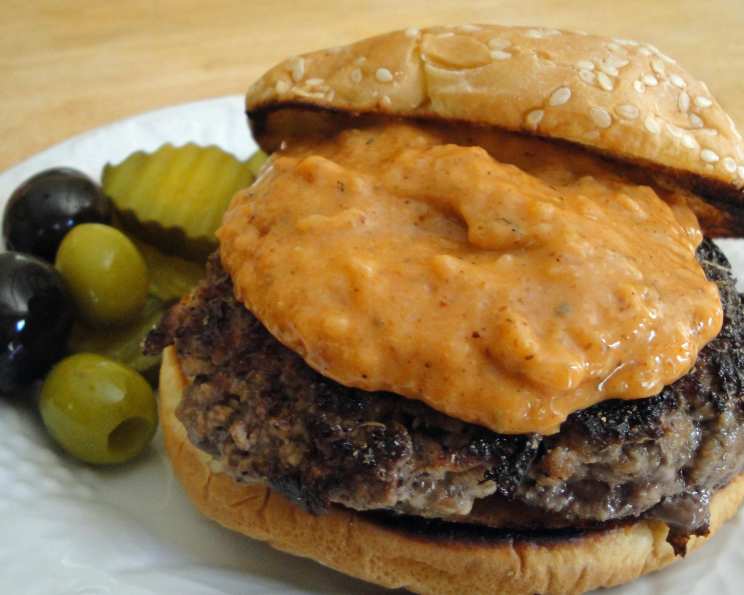
Creole Remoulade: A Taste of New Orleans
My first encounter with remoulade was nothing short of a culinary awakening. It was a hot, humid afternoon in the French Quarter, and I ducked into a tiny, unassuming oyster bar seeking refuge from the sun. I ordered a half-dozen raw oysters, and the bartender, with a knowing smile, placed a small ramekin of vibrant, rust-colored sauce beside them. One taste, and I was hooked. The creamy, tangy, spicy concoction elevated the oysters to another level, a symphony of flavors that danced on my palate. It was then I knew I had to recreate this magic, this taste of New Orleans, in my own kitchen.
Recipe Overview
- Prep Time: 15 minutes
- Cook Time: 0 minutes
- Total Time: 15 minutes (plus 1 hour chilling)
- Servings: About 2 cups
- Yield: 2 cups
- Dietary Type: Varies depending on mustard – check label for Gluten-Free
Ingredients
- ¾ cup vegetable oil
- ½ cup green onion, chopped (both green and white parts)
- ½ cup yellow onion, chopped
- ¼ cup lemon juice (freshly squeezed)
- ½ cup celery, finely chopped
- 3 tablespoons mustard (Creole mustard or other whole grain mustard recommended)
- 3 tablespoons ketchup
- 4 tablespoons fresh flat-leaf parsley, chopped
- 2 tablespoons garlic, chopped
- 2 tablespoons prepared horseradish
- 1 teaspoon kosher salt
- ¼ – ½ teaspoon cayenne (depending on desired heat level)
- ¼ teaspoon fresh ground black pepper
Equipment Needed
- Blender or Food Processor
- Airtight container
Instructions
-
Combine all of the ingredients – the vegetable oil, green onion, yellow onion, lemon juice, celery, mustard, ketchup, parsley, garlic, horseradish, kosher salt, cayenne, and black pepper – in a blender or food processor.
-
Process the mixture until smooth, approximately 30 seconds. You may need to scrape down the sides of the blender or food processor a few times to ensure all ingredients are fully incorporated.
-
Spoon the remoulade sauce into an airtight container.
-
Refrigerate for at least 1 hour before serving. This allows the flavors to meld and the sauce to thicken slightly. The sauce will keep in the refrigerator for up to 1 week.
Expert Tips & Tricks
-
Adjust the heat: The amount of cayenne pepper is crucial and depends entirely on your preference. Start with ¼ teaspoon and taste. If you want more heat, gradually add more until you reach your desired level. Remember, the flavors will intensify as the sauce sits.
-
Mustard Matters: Opt for Creole mustard if you can find it; its coarse texture and zesty flavor contribute significantly to the sauce’s character. If Creole mustard isn’t available, a good quality whole grain mustard is an excellent substitute. Avoid using yellow mustard, as its flavor profile is too mild for this recipe.
-
Fresh is Best: While dried herbs can work in a pinch, fresh parsley is essential for the bright, vibrant flavor of remoulade. Similarly, freshly squeezed lemon juice will provide a much more vibrant and nuanced acidity than bottled juice.
-
Texture Control: The processing time will affect the final texture of the sauce. For a completely smooth sauce, process for the full 30 seconds, scraping down the sides as needed. If you prefer a slightly chunkier texture, pulse the mixture a few times instead of processing it continuously.
-
Make Ahead: Remoulade is a fantastic make-ahead condiment. In fact, the flavors only improve with time. Prepare it a day or two in advance to allow the ingredients to fully meld.
-
If it’s too thick: If your remoulade turns out too thick, add vegetable oil, one tablespoon at a time, until you reach the desired consistency. Be careful not to add too much, as it can make the sauce oily.
Serving & Storage Suggestions
Remoulade sauce is incredibly versatile. It’s traditionally served with fried seafood, especially fried shrimp, oysters, or catfish. It also makes an excellent topping for po’boys and burgers. Consider using it as a dipping sauce for crudités or as a dressing for coleslaw.
To store, keep the remoulade in an airtight container in the refrigerator. It will last for up to 1 week. While technically safe to consume after a week, the flavor and texture will begin to degrade.
This sauce is best served chilled. It is not recommended to freeze remoulade, as the texture will change significantly upon thawing. The emulsion will likely break, resulting in a watery, separated sauce.
Nutritional Information
| Nutrient | Amount per Serving (approx. 2 tablespoons) | % Daily Value* |
|---|---|---|
| Calories | 100 kcal | 5% |
| Total Fat | 9g | 14% |
| Saturated Fat | 1g | 5% |
| Cholesterol | 0mg | 0% |
| Sodium | 182mg | 8% |
| Total Carbohydrate | 3g | 1% |
| Dietary Fiber | 0.5g | 2% |
| Sugars | 1.5g | |
| Protein | 0.5g | 1% |
*Percent Daily Values are based on a 2,000 calorie diet. Your daily values may be higher or lower depending on your calorie needs.
Variations & Substitutions
-
Spicier Remoulade: For an extra kick, add a pinch of ground chipotle pepper or a dash of your favorite hot sauce along with the cayenne.
-
Creamier Remoulade: For a richer, creamier texture, add 1/4 cup of mayonnaise to the blender along with the other ingredients. This will create a more traditional, mayonnaise-based remoulade.
-
Vegan Remoulade: Ensure your mustard and horseradish are vegan-friendly. Substitute the ketchup with a sugar-free ketchup alternative or a homemade ketchup using agave or maple syrup.
-
Herb Variations: Experiment with different herbs. Try adding a tablespoon of chopped fresh tarragon or chives for a unique flavor profile.
-
No Horseradish: If you don’t like horseradish, increase the amount of mustard and add a pinch of ground white pepper.
FAQs (Frequently Asked Questions)
Q: Can I make remoulade without a blender or food processor?
A: While a blender or food processor is recommended for the smoothest texture, you can finely chop all the ingredients by hand and whisk them together in a bowl. The resulting sauce will be chunkier but still flavorful.
Q: How long does remoulade last in the fridge?
A: Remoulade will keep in the refrigerator for up to 1 week, stored in an airtight container.
Q: Can I freeze remoulade?
A: Freezing is not recommended, as the texture of the sauce will change and the emulsion may break upon thawing.
Q: Is remoulade gluten-free?
A: Remoulade can be gluten-free, but it depends on the ingredients used. Check the labels of your mustard and ketchup to ensure they are gluten-free.
Q: What is the difference between Creole remoulade and other types of remoulade?
A: Creole remoulade typically includes Creole mustard, which gives it a distinct flavor and coarser texture. It also tends to be spicier than other versions.
Final Thoughts
Now that you’re armed with this recipe, I encourage you to create your own taste of New Orleans in your kitchen. This Creole Remoulade is more than just a sauce; it’s a gateway to the vibrant flavors and rich culinary traditions of Louisiana. Don’t be afraid to experiment with the ingredients and adjust the spice level to your liking. Whether you’re serving it with crispy fried shrimp, topping a juicy burger, or simply using it as a flavorful dip, I hope this remoulade brings a little bit of the Big Easy to your table. And please, share your creations and feedback – I’d love to know how you’re making this recipe your own!