
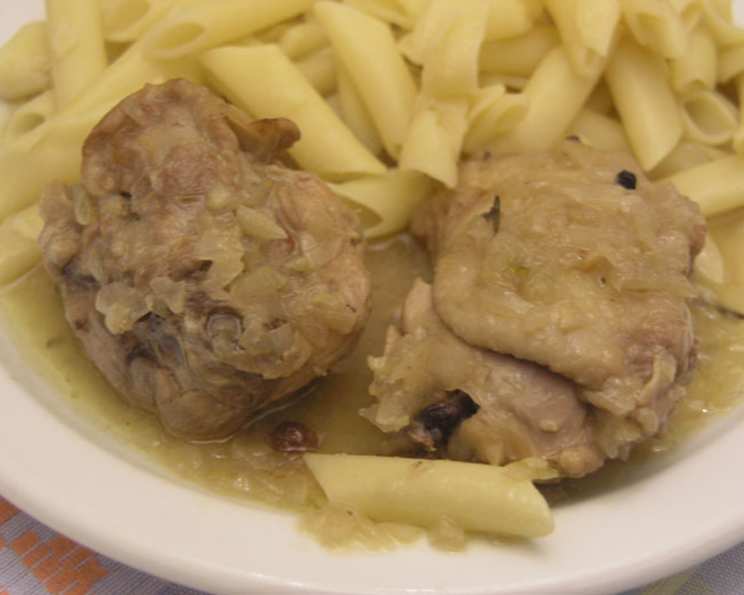
Renaissance Time Chicken: A Culinary Journey to Hvar
My grandmother, a woman whose kitchen was a portal to a thousand memories, had a well-worn Croatian cookbook, its pages stained with the vibrant hues of countless meals. One recipe, tucked away in the “Island Specialties” section, always intrigued me: a simple chicken dish, redolent with wine, herbs, and the briny kiss of capers. It spoke of a time before tomatoes, before potatoes, before culinary influences stretched across continents. This Renaissance Time Chicken is more than just a recipe; it’s a taste of history, a fragrant whisper from the island of Hvar.
Recipe Overview
- Prep Time: 20 minutes
- Cook Time: 45-50 minutes
- Total Time: 1 hour 5-10 minutes
- Servings: 4
- Yields: 4 portions
- Dietary Type: Dairy-Free
Ingredients
- 1800 g chicken, cut into pieces or one whole chicken cut into pieces
- 400 g onions, finely minced
- 1 cup olive oil
- 15 g salt
- 15 g black peppercorns, roughly grounded
- 15 g capers
- 4 g cloves or 5 whole cloves
- 5 g garlic (or 1 larger garlic clove), roughly minced
- 1 1/2 cups dry white wine (preferably Malvasia)
- 1/4 teaspoon ground cinnamon
- 5 g fresh rosemary
- 1 bay leaf
- 20 g raisins
- 3 cups water (you may not need all of it)
Equipment Needed
- Large Pot or Dutch Oven
- Knife
- Cutting Board
- Measuring Cups and Spoons
Instructions
-
Begin by preparing the chicken. Cut the chicken into manageable pieces if you are using a whole chicken, or ensure your pre-cut pieces are of uniform size for even cooking. Generously salt the chicken pieces and set them aside.
-
Next, prepare the onions. Mince the onions finely. The smaller the pieces, the better they will melt into the sauce, creating a rich and flavorful base.
-
In a large pot or Dutch oven, add the olive oil and heat over medium heat. Once the oil is shimmering, add the minced onions and sauté until they become translucent and softened, but not browned. This usually takes about 5-7 minutes. Stir frequently to prevent sticking.
-
Add the chicken pieces to the pot with the softened onions. Sauté the chicken until it turns white on all sides. This process helps to seal in the juices and create a beautiful golden color.
-
Now it’s time to infuse the dish with the flavors of the Renaissance. Add the roughly grounded black peppercorns, capers, cloves, roughly minced garlic, cinnamon, rosemary, and bay leaf to the pot. Stir well to ensure the spices are evenly distributed.
-
Pour in the dry white wine, preferably a Malvasia if available. The wine will deglaze the pot, lifting up any browned bits from the bottom and adding depth of flavor to the sauce.
-
Cover the pot and let the chicken cook for 30 minutes over medium-low heat, allowing the flavors to meld and the chicken to tenderize.
-
After 30 minutes, add the raisins to the pot. The raisins will plump up and release their sweetness, adding a delightful contrast to the savory flavors of the dish.
-
Continue to cook for another 15 to 20 minutes, or until the chicken is cooked through and tender. If the sauce becomes too thick during cooking, you can add a little water to reach your desired consistency. Remember, you may not need all 3 cups of water. Taste the sauce and adjust the salt if necessary.
-
Once the chicken is cooked through, remove from the heat and allow the dish to rest for a few minutes before serving. This allows the flavors to further meld and the sauce to thicken slightly.
Expert Tips & Tricks
- For a richer flavor, marinate the chicken in the wine and spices for at least 2 hours, or even overnight, before cooking.
- If you don’t have fresh rosemary on hand, you can substitute with 1 teaspoon of dried rosemary.
- To avoid a bitter taste, be careful not to burn the garlic while sautéing.
- If you prefer a thicker sauce, you can remove the chicken from the pot after it is cooked and simmer the sauce over medium heat until it reduces to your desired consistency.
- For a more intense flavor, use bone-in, skin-on chicken pieces.
Serving & Storage Suggestions
Renaissance Time Chicken is best served hot, accompanied by simple sides that complement its rich flavors. Consider serving it with a bed of fluffy rice, flour noodles, pasta (penne, rigatoni, or spaghetti), or simply with crusty bread to soak up the delicious sauce.
Leftovers can be stored in an airtight container in the refrigerator for up to 3 days. To reheat, gently warm the chicken in a saucepan over medium heat, or microwave until heated through. You may need to add a splash of water or wine to prevent the chicken from drying out. The chicken can also be frozen for up to 2 months. Thaw overnight in the refrigerator before reheating.
Nutritional Information
| Nutrient | Amount per Serving | % Daily Value |
|---|---|---|
| Calories | 1592.8 kcal | N/A |
| Total Fat | 122.2 g | 188% |
| Saturated Fat | 27 g | 134% |
| Cholesterol | 337.5 mg | 112% |
| Sodium | 1895.6 mg | 78% |
| Total Carbohydrate | 20.5 g | 6% |
| Dietary Fiber | 2.5 g | 9% |
| Sugars | 10.1 g | 40% |
| Protein | 85.2 g | 170% |
Variations & Substitutions
- For a vegetarian option, substitute the chicken with firm tofu or hearty vegetables like mushrooms, eggplant, and zucchini.
- If you don’t have Malvasia wine, you can use any other dry white wine or even chicken broth.
- For a spicier kick, add a pinch of red pepper flakes to the pot along with the other spices.
- Instead of raisins, try using dried cranberries or chopped dried apricots for a different flavor profile.
- To make it even more authentic to its roots, consider using wild herbs that are native to the Croatian islands, such as thyme or oregano.
FAQs (Frequently Asked Questions)
Q: Can I use chicken breasts instead of chicken pieces?
A: Yes, you can use chicken breasts, but be mindful not to overcook them. Reduce the cooking time slightly to prevent them from becoming dry.
Q: What can I substitute for capers if I don’t like them?
A: If you’re not a fan of capers, you can omit them altogether or substitute with a small amount of chopped green olives for a similar briny flavor.
Q: How do I know when the chicken is fully cooked?
A: The chicken is fully cooked when its internal temperature reaches 165°F (74°C). You can check this with a meat thermometer inserted into the thickest part of the chicken.
Q: Can I make this dish ahead of time?
A: Yes, this dish can be made ahead of time and reheated. In fact, the flavors often meld and improve overnight.
Q: What other side dishes would pair well with this chicken?
A: Besides rice, pasta, or bread, consider serving it with roasted vegetables like asparagus, carrots, or bell peppers. A simple green salad would also be a refreshing contrast to the richness of the dish.
Final Thoughts
Renaissance Time Chicken is a testament to the power of simple ingredients and time-honored techniques. It’s an invitation to connect with the culinary traditions of the Croatian islands, to savor the flavors of the past, and to create new memories in your own kitchen. I encourage you to try this recipe, to adapt it to your own tastes, and to share it with those you love. Let me know how it turns out, and what pairings you discover. Bon appétit, or as they say in Croatia, dobar tek!