
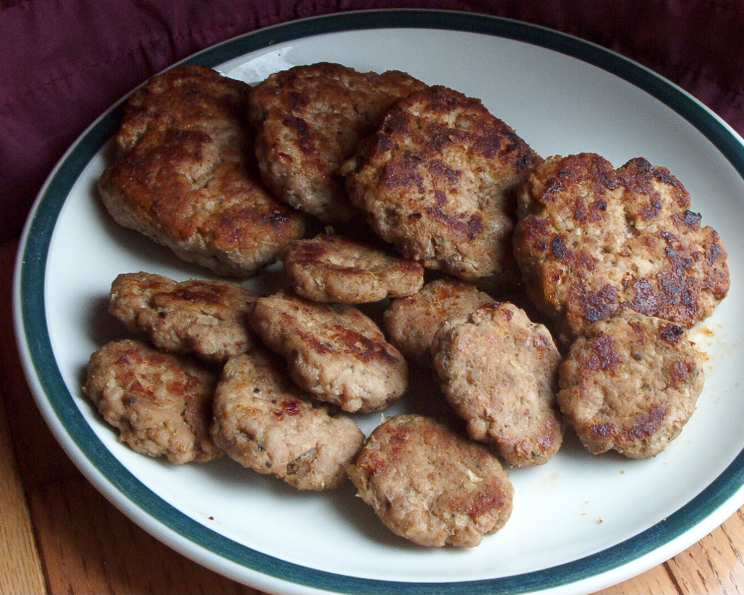
Renal-Friendly Homemade Sausage Patties
I can still remember the aroma that filled my grandmother’s kitchen every Saturday morning. It wasn’t just the coffee brewing or the toast browning; it was the distinct, savory scent of her homemade sausage. She always made a big batch, and the entire family would gather around the table, eager to devour those delicious patties. While my own dietary needs have changed over the years, the memory of that taste, and the warmth of those family breakfasts, has stayed with me, inspiring me to recreate those flavors in a renal-friendly way.
Recipe Overview
- Prep Time: 20 minutes
- Cook Time: 10 minutes
- Total Time: 30 minutes
- Servings: 16
- Yield: 16 patties
- Dietary Type: Renal-Friendly, Low Sodium
Ingredients
- 1/2 cup onion, finely chopped
- 2 tablespoons olive oil
- 2 teaspoons dried sage
- 1 teaspoon fresh ground black pepper
- 1 tablespoon sugar or 1 tablespoon brown sugar
- 1/8 teaspoon crushed red pepper flakes
- 1 pinch ground cloves
- 1 teaspoon fresh thyme, finely chopped
- 1 large egg yolk
- 2 lbs ground lean pork
Equipment Needed
- Large skillet
- Small bowl
- Large bowl
Instructions
- Begin by cooking the onion in the olive oil over moderately low heat. Stir occasionally, allowing the onions to soften and brown gently. This process should take approximately 8-10 minutes. The goal is to coax out the natural sweetness of the onion without burning it.
- Once the onions are softened and slightly browned, remove the skillet from the heat and allow the onion mixture to cool for about 10 minutes. This cooling period is essential to prevent the heat from cooking the egg yolk later in the recipe.
- While the onions are cooling, prepare the spice blend. In a small bowl, combine the dried sage, black pepper, crushed red pepper flakes, sugar (or brown sugar), ground cloves, and fresh thyme. Mix well to ensure even distribution of the spices.
- In a large bowl, place the ground lean pork, egg yolk, and the cooled onion mixture.
- Add the mixed spices to the bowl with the pork, egg yolk, and onion.
- Using your hands or a sturdy spoon, thoroughly mix all ingredients until they are evenly combined. Be careful not to overmix, as this can result in tough sausage patties. The goal is to incorporate everything without compacting the meat.
- Divide the sausage mixture into 16 equal portions, approximately 2 ounces each. Form each portion into a patty shape. Ensure the patties are uniform in size and thickness for even cooking.
- Heat a large skillet over medium-high heat. Once the skillet is hot, carefully place the sausage patties in the skillet, ensuring not to overcrowd the pan. Work in batches if necessary.
- Pan fry the patties for approximately 5 minutes on each side, or until the internal temperature reaches 160 degrees Fahrenheit. Use a meat thermometer to ensure accurate doneness. A properly cooked sausage patty will be browned on the outside and cooked through without being dry.
- Remove the cooked patties from the skillet and place them on a plate lined with paper towels to absorb any excess grease.
Expert Tips & Tricks
- For extra flavor: Try browning the sausage patties in a cast-iron skillet. The cast iron will give them a beautiful, crispy crust.
- Make-ahead tip: The sausage mixture can be prepared a day in advance. Store it covered in the refrigerator, and form the patties just before cooking.
- Spice level: Adjust the amount of crushed red pepper flakes to suit your personal spice preference. A pinch adds a subtle warmth, while a larger amount will provide a more noticeable kick.
- Fat content: Using lean ground pork is essential for this renal-friendly recipe. However, if you prefer a slightly richer flavor, you can use a blend of lean and regular ground pork, just be mindful of the increased fat content.
- Doneness check: If you don’t have a meat thermometer, you can check for doneness by cutting into the center of a patty. The juices should run clear, and the meat should be opaque, not pink.
Serving & Storage Suggestions
Serve these renal-friendly sausage patties hot, alongside your favorite breakfast dishes such as scrambled eggs, whole-wheat toast, or a side of fresh fruit. For a more substantial meal, consider serving them on whole-grain English muffins with a slice of tomato and a sprinkle of herbs.
Leftover sausage patties can be stored in an airtight container in the refrigerator for up to 3-4 days. For longer storage, freeze the cooked patties in a single layer on a baking sheet until solid, then transfer them to a freezer bag or container. Frozen patties can be stored for up to 2-3 months.
To reheat, thaw the patties in the refrigerator overnight or use the microwave. Reheat them in a skillet over medium heat until warmed through, or in the microwave in short intervals to prevent drying out.
Nutritional Information
| Nutrient | Amount per Serving | % Daily Value (approximate) |
|---|---|---|
| Calories | 173 kcal | N/A |
| Calories from Fat | N/A | N/A |
| Total Fat | 14 g | N/A |
| Saturated Fat | 4.8 g | N/A |
| Cholesterol | 54 mg | N/A |
| Sodium | 33 mg | N/A |
| Total Carbohydrate | 1.5 g | N/A |
| Dietary Fiber | 0.1 g | N/A |
| Sugars | 1 g | N/A |
| Protein | 10 g | N/A |
Note: Nutritional information is an estimate and may vary based on specific ingredients used.
Variations & Substitutions
- Turkey Sausage: Substitute the ground lean pork with ground turkey for a leaner alternative. The flavor profile will be slightly different, but it’s still a delicious option.
- Herb Variations: Experiment with different herbs such as rosemary, marjoram, or oregano for a unique flavor twist.
- Sweetener: Instead of sugar or brown sugar, consider using a sugar substitute that is suitable for your dietary needs.
- Spicy Sausage: Add a pinch of cayenne pepper for extra heat, if your diet allows for it.
- Vegetarian Option: While this recipe is based on ground pork, exploring plant-based meat substitutes could yield a similar patty experience. Be mindful of sodium content in prepared substitutes, though.
FAQs (Frequently Asked Questions)
Q: Why is this recipe considered renal-friendly?
A: This recipe focuses on using lean protein and limiting sodium, which are important considerations for individuals following a renal diet. Always consult with your doctor or a registered dietitian to ensure this recipe fits your specific dietary needs.
Q: Can I use a different type of oil instead of olive oil?
A: Yes, you can substitute olive oil with another healthy oil such as avocado oil or coconut oil. Be sure to choose an oil with a high smoke point.
Q: How can I prevent the sausage patties from sticking to the skillet?
A: Make sure the skillet is properly preheated before adding the sausage patties. You can also use a non-stick skillet or add a small amount of oil to the pan.
Q: Can I bake these sausage patties instead of pan-frying them?
A: Yes, you can bake them! Preheat your oven to 375°F (190°C) and bake the patties on a baking sheet lined with parchment paper for about 20-25 minutes, or until the internal temperature reaches 160°F (71°C).
Q: Are these sausage patties suitable for freezing?
A: Yes, these sausage patties freeze very well. Allow them to cool completely before freezing them in a single layer on a baking sheet. Once frozen, transfer them to a freezer bag or container for longer storage.
Final Thoughts
Creating these renal-friendly sausage patties brings me back to those cherished Saturday mornings in my grandmother’s kitchen. It’s a reminder that even with dietary restrictions, we can still enjoy delicious, comforting foods that evoke fond memories. I encourage you to try this recipe and adapt it to your own preferences and needs. Don’t be afraid to experiment with different spices and herbs to create your unique flavor profile. And most importantly, share your creations with loved ones and enjoy the simple pleasure of a homemade meal.