
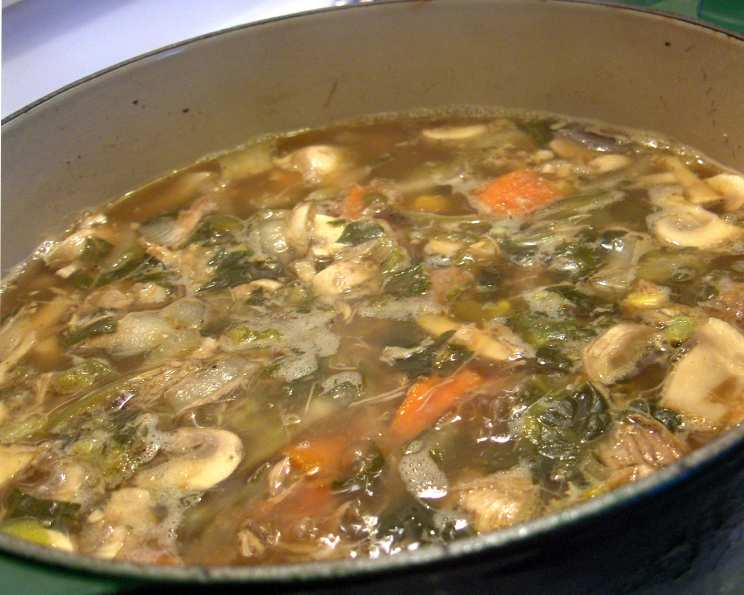
Rescued Turkey Stock: A Chef’s Guide to Liquid Gold
The scent of roasting turkey always brings me back to my grandmother’s kitchen. It wasn’t just the turkey itself, plump and golden brown, but the days that followed, when the real magic happened. While most families were tossing the carcass, Nana was busy transforming it into something even more precious: a rich, flavorful stock that formed the foundation for countless soups, stews, and gravies. The warmth of her kitchen, filled with the low simmer of the stockpot and the promise of delicious meals to come, is a memory I cherish and strive to recreate every Thanksgiving.
Recipe Overview
- Prep Time: 20 minutes
- Cook Time: 3-4 hours
- Total Time: 3 hours 20 minutes – 4 hours 20 minutes
- Yields: Approximately 8 cups
- Dietary Type: Generally Gluten-Free, Dairy-Free
Ingredients
- 1 turkey carcass, stripped of most meat
- 16 cups cold water
- 2 large celery ribs, sliced
- 2 large carrots, scraped and sliced
- 2 onions, quartered (do NOT peel)
- 10 sprigs fresh flat leaf parsley (or more, if you wish)
- 1 tablespoon peppercorns
- 2 teaspoons dried thyme
Equipment Needed
- Large stockpot
- Large bowl
- Fine-mesh sieve or cheesecloth
Instructions
-
The Rescuing: Start with a turkey carcass that has been mostly stripped of its meat. If you are hosting Thanksgiving, great! If you are a guest, volunteer to take the carcass home. Don’t be afraid to ask for it!
-
Salvaging the Treasures: Examine the carcass and begin to strip off any remaining meat clinging to the bones. This is a hands-on process. Place the rescued meat in a separate container and set aside. This meat is the perfect starter for your turkey soup!
-
Breaking it Down: As you remove the meat, break up the bones of the carcass. Place the broken bones, along with any turkey skin and other inedible bits, into a large stockpot. The more surface area of the bones exposed, the richer the flavor of your stock.
-
Submerging in Cold Water: Once the pot is full of bones, pour 16 cups of cold water over them. Ensure the bones are fully submerged. Turn the heat to high and bring the water to a boil.
-
Prepping the Aromatics: While the water is heating, wash and prepare the vegetables and parsley. Slice the celery and carrots, and quarter the onions, leaving the skins ON for a richer color.
-
Simmering for Flavor: When the stock reaches a boil, add the sliced celery, carrots, and quartered onions to the pot. Add 10 sprigs of parsley, 1 tablespoon of peppercorns, and 2 teaspoons of dried thyme. Reduce the heat to a low, gently bubbling simmer, where the bubbles barely break the surface.
-
Patiently Simmering: Allow the stock to simmer for 3 to 4 hours, stirring occasionally. The longer it simmers, the more flavor will be extracted from the bones and vegetables.
-
Reducing for Intensity: Ideally, let the stock reduce down until you have only about 7 or 8 cups of liquid. This concentrates the flavor, resulting in a much richer stock. If you are short on time, you can simmer it until you have about 12 cups of stock, but the flavor will be less intense.
-
Straining the Stock: Once you feel the stock has simmered long enough, strain it through a fine-meshed sieve into a large bowl. If your sieve is not fine enough, line it with cheesecloth to remove any small particles. Discard the bones and vegetables; all their goodness has now been infused into the stock.
-
Chilling for Clarity: Refrigerate the strained stock, covered, for several hours or preferably overnight. This allows the fat to solidify on the surface, making it easy to remove.
-
Defatting and Storing: Before using the stock, skim off the solidified fat from the top. You can either make soup immediately or freeze the stock for later use.
Expert Tips & Tricks
-
Don’t Peel the Onions: Leaving the onion skins on will give your stock a beautiful amber color and add a subtle depth of flavor.
-
Roast the Carcass First (Optional): For an even deeper, richer flavor, roast the turkey carcass in the oven at 350°F (175°C) for about 30 minutes before adding it to the stockpot.
-
Don’t Over-Salt: Avoid adding salt to the stock while it simmers. You can always season your soup or sauce later, but it’s difficult to remove salt if you add too much early on.
-
Use a Slow Cooker: If you prefer, you can make turkey stock in a slow cooker. Simply combine all the ingredients in the slow cooker, cover with water, and cook on low for 8-10 hours.
-
Add Other Vegetables: Feel free to add other vegetables to your stock, such as leeks, parsnips, or mushrooms.
Serving & Storage Suggestions
Rescued Turkey Stock is the perfect base for soups, stews, sauces, and gravies. Use it in place of water or broth in any recipe to add depth and flavor.
Store leftover stock in the refrigerator for up to 3-4 days. For longer storage, freeze the stock in airtight containers or freezer bags for up to 3 months. For easy portioning, freeze the stock in ice cube trays.
Nutritional Information
| Nutrient | Amount per Serving | % Daily Value |
|---|---|---|
| Calories | 25 kcal | 1% |
| Total Fat | 0.2 g | 0% |
| Saturated Fat | 0.1 g | 0% |
| Cholesterol | 0 mg | 0% |
| Sodium | 41.6 mg | 1% |
| Total Carbohydrate | 5.8 g | 1% |
| Dietary Fiber | 1.7 g | 6% |
| Sugars | 2.3 g | 9% |
| Protein | 0.8 g | 1% |
Nutritional information is an estimate and may vary based on specific ingredients and preparation methods.
Variations & Substitutions
-
Vegetarian Stock: If you don’t have a turkey carcass, you can make a flavorful vegetable stock using a variety of vegetables and herbs.
-
Chicken Stock: Use a chicken carcass instead of a turkey carcass to make chicken stock.
-
Spicy Stock: Add a dried chili pepper or a pinch of red pepper flakes to the stock for a spicy kick.
-
Herbed Stock: Experiment with different herbs, such as rosemary, sage, or oregano, to create a unique flavor profile.
FAQs (Frequently Asked Questions)
Q: Can I use a frozen turkey carcass to make stock?
A: Yes, you can use a frozen turkey carcass. Just make sure to thaw it completely before using it.
Q: Do I have to skim the fat off the stock?
A: Skimming the fat off the stock is optional, but it will result in a clearer, lighter stock. The fat can also be used for cooking, adding a rich turkey flavor to other dishes.
Q: How long does turkey stock last in the freezer?
A: Turkey stock can be stored in the freezer for up to 3 months. Be sure to use airtight containers or freezer bags to prevent freezer burn.
Q: Can I add salt to the stock while it simmers?
A: It’s best to avoid adding salt to the stock while it simmers, as it’s difficult to remove salt if you add too much. You can always season your soup or sauce later.
Q: What can I do with the leftover bones and vegetables after straining the stock?
A: Discard the bones and vegetables after straining the stock, as they have already given up all their flavor.
Final Thoughts
Don’t let that precious turkey carcass go to waste! Rescuing it to create a flavorful stock is a simple way to extend your Thanksgiving feast and enjoy the delicious taste of turkey long after the holiday is over. This recipe is a blueprint, feel free to adapt it to your taste and use whatever you have on hand. Try it, experiment, and let me know what delicious creations you come up with using your homemade rescued turkey stock!