
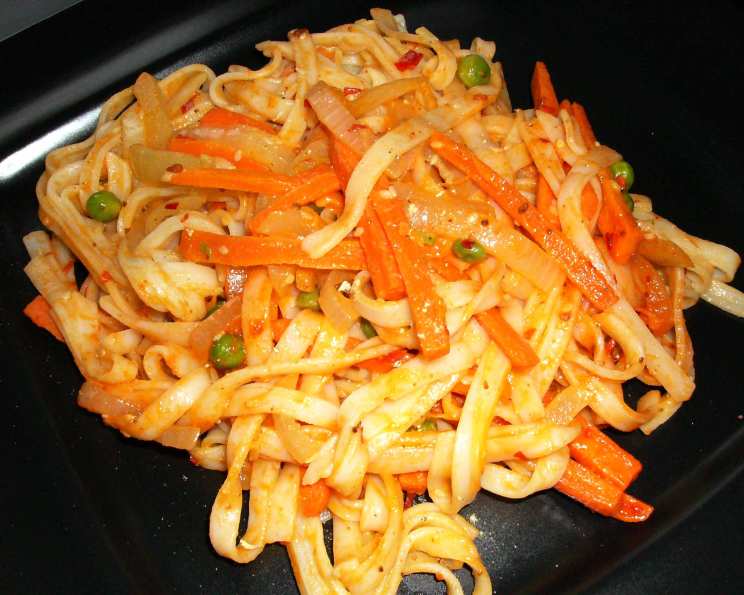
Rice Noodles with Tahini Sauce and Mixed Veggies: A Culinary Adventure
The aroma of sesame oil and the vibrant colors of perfectly sautéed vegetables… it instantly transports me back to my tiny apartment in culinary school. Late nights fueled by ramen were the norm, but sometimes, when I was feeling particularly inspired (or just tired of instant noodles), I’d whip up a quick and healthy stir-fry using whatever odds and ends I had in my fridge. This recipe for rice noodles with tahini sauce and mixed veggies is a grown-up, infinitely more delicious version of those student days – a testament to how simple ingredients, when combined with creativity, can create something truly special.
Recipe Overview
- Prep Time: 15 minutes
- Cook Time: 20 minutes
- Total Time: 35 minutes
- Servings: 3
- Dietary Type: Vegan
Ingredients
- 250 g rice noodles (I prefer Thai-style, thin noodles made only from rice flour and water)
- 2 large onions
- 6 carrots
- 60 g frozen peas (adjust to your liking)
- 2 tablespoons sesame seeds
- 2 tablespoons tahini
- 1 tablespoon butter (vegan butter for a vegan option)
- 1 tablespoon sesame oil
- Gomashio, for sprinkling (optional)
Equipment Needed
- Large pan or wok
- Pot or kettle for boiling water
- Large bowl or dish
Instructions
-
Begin by preparing your vegetables. Wash, peel, and cut the carrots into small strips or matchsticks. Peel the onions and slice them thinly.
-
Next, heat the pan. In a large pan or wok, heat the butter (or vegan butter) and sesame oil over medium heat. The combination of butter and sesame oil provides a rich, nutty base for the vegetables.
-
Add the onions, sesame seeds, and carrots to the pan. Sauté them for several minutes, stirring occasionally, until the onions become translucent and the carrots begin to soften. The sesame seeds will toast, releasing their fragrant aroma.
-
Add the frozen peas to the pan along with 2-3 tablespoons of water. This small amount of water will help create a bit of steam, ensuring the vegetables cook evenly and retain their moisture.
-
Cover the pan and simmer for about 10 minutes, or until the vegetables are tender but not mushy. You want them to have a slight bite to them. Stir occasionally to prevent sticking.
-
While the vegetables are simmering, prepare the rice noodles. Place the rice noodles in a large bowl or dish.
-
Pour boiling water over the rice noodles to fully submerge them. Allow them to steep until they are tender, usually around 3 minutes (check the package instructions, as cooking times may vary). It is crucial to avoid overcooking the noodles, as they can become gummy.
-
Once the vegetables are tender, season them with tahini and salt to taste. Stir well to ensure the tahini is evenly distributed and coats all the vegetables.
-
Drain the cooked rice noodles thoroughly.
-
Add the drained noodles to the pan with the vegetables and sauce. Toss gently to combine, ensuring the noodles are evenly coated with the tahini sauce and mixed with the vegetables.
-
Serve immediately, sprinkled with gomashio (sesame salt) if desired, or with your favorite Asian herbs such as cilantro or Thai basil.
Expert Tips & Tricks
- Don’t overcrowd the pan: If you’re making a large batch, sauté the vegetables in smaller portions to ensure they cook evenly and develop a nice color.
- Toast your sesame seeds: For a deeper, more intense sesame flavor, toast the sesame seeds in a dry pan over medium heat for a few minutes before adding them to the vegetables. Watch them closely, as they can burn quickly.
- Adjust the sauce to your liking: Feel free to add a splash of soy sauce or a squeeze of lime juice to the tahini sauce for extra flavor.
- Noodle Know-How: The type of rice noodle matters. Thin Thai-style noodles cook very quickly and are best for this dish. Wider noodles may require a longer soaking time.
Serving & Storage Suggestions
This dish is best served immediately while the noodles are still warm and the vegetables are crisp-tender. Leftovers can be stored in an airtight container in the refrigerator for up to 2 days. Reheat gently in a pan or microwave, adding a splash of water if needed to prevent the noodles from drying out. While it’s best enjoyed fresh, this dish can be made a day ahead; just toss with a little extra sesame oil before reheating.
Nutritional Information
| Nutrient | Amount per Serving | % Daily Value |
|---|---|---|
| Calories | 576.1 kcal | N/A |
| Calories from Fat | 153 g | 27% |
| Total Fat | 17.1 g | 26% |
| Saturated Fat | 4.4 g | 21% |
| Cholesterol | 10.2 mg | 3% |
| Sodium | 296.6 mg | 12% |
| Total Carbohydrate | 97.9 g | 32% |
| Dietary Fiber | 8.6 g | 34% |
| Sugars | 10.9 g | N/A |
| Protein | 8.8 g | 17% |
Note: Nutritional information is an estimate and may vary depending on specific ingredients and portion sizes.
Variations & Substitutions
- Gluten-Free: This recipe is naturally gluten-free if you use rice noodles made only from rice flour and water. Always check the label to ensure there are no added wheat-based ingredients.
- Protein Boost: Add some tofu, tempeh, or edamame to the stir-fry for a more substantial meal.
- Vegetable Variations: Feel free to use any vegetables you have on hand. Broccoli, bell peppers, snow peas, and bok choy all work well in this dish.
- Nut-Free: If you have a nut allergy, replace the tahini with sunflower seed butter.
FAQs (Frequently Asked Questions)
Q: Can I use a different type of noodle?
A: While rice noodles are the star of this dish, you can experiment with other types of noodles such as soba noodles or udon noodles. Keep in mind that cooking times may vary.
Q: How do I prevent the noodles from sticking together?
A: To prevent the noodles from sticking, be sure to rinse them thoroughly after cooking and toss them with a little sesame oil before adding them to the vegetables.
Q: Can I make this dish ahead of time?
A: Yes, you can prepare the vegetables and sauce ahead of time and store them in the refrigerator. When you’re ready to eat, cook the noodles and combine everything together.
Q: Is this dish spicy?
A: This recipe is not spicy, but you can add a pinch of red pepper flakes or a drizzle of sriracha to the sauce for a bit of heat.
Q: Can I freeze leftovers?
A: While you can freeze the leftovers, the texture of the noodles may change upon thawing, becoming a bit softer. If you do freeze it, consume within 1-2 months.
Final Thoughts
This recipe for rice noodles with tahini sauce and mixed veggies is more than just a quick and easy meal; it’s a celebration of fresh ingredients, bold flavors, and the joy of creating something delicious in your own kitchen. I encourage you to try this recipe, experiment with different vegetables and seasonings, and make it your own. Don’t be afraid to get creative and have fun! And if you do, please share your creations and feedback – I would love to hear about your culinary adventures! This dish pairs wonderfully with a crisp, dry white wine or a refreshing iced green tea.