
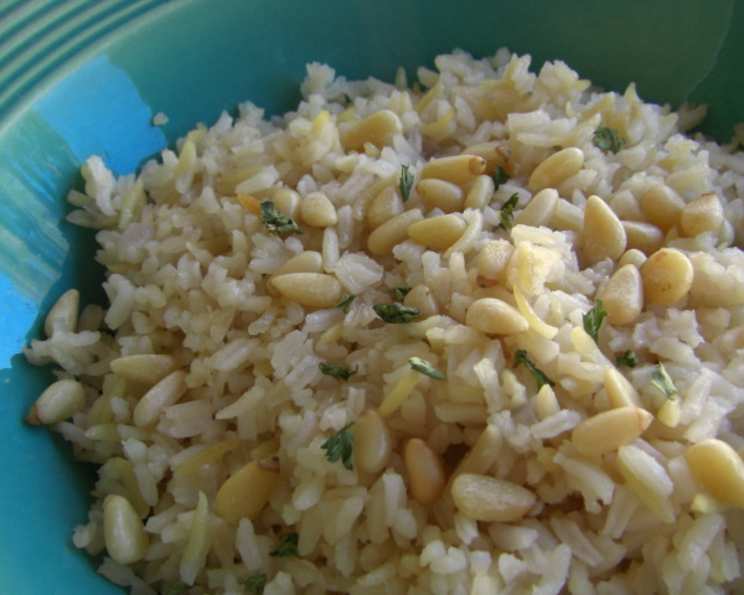
Elevating the Everyday: My Journey With Rice Pilaf
The aroma of toasted pine nuts always transports me back to my grandmother’s kitchen. She wasn’t a fancy cook, but she possessed an innate ability to transform simple ingredients into something truly special. Her rice pilaf, studded with those golden, nutty jewels, was a staple at our family gatherings. It wasn’t just a side dish; it was a symbol of comfort, warmth, and the enduring power of simple, well-prepared food. I remember sneaking extra spoonfuls when nobody was looking, savoring the delicate balance of flavors. Now, decades later, I find myself recreating her pilaf, adding my own touch while honoring the original spirit of this humble yet elegant dish.
Recipe Overview
- Prep Time: 5 minutes
- Cook Time: 25 minutes
- Total Time: 30 minutes
- Servings: 4
- Dietary Type: Vegetarian
Ingredients
- 1 tablespoon olive oil
- 1 small onion, finely chopped
- 1 cup long-grain white rice
- 1 1/2 cups chicken broth (Vegetable broth for vegetarian option)
- 1/2 cup pine nuts
- Salt and pepper to taste
Equipment Needed
- Small saucepan with lid
- Fork
Instructions
- Begin by heating the olive oil in a small saucepan over medium-high heat. Ensure the pan is sufficiently heated before adding the oil for even cooking.
- Add the finely chopped onion to the heated oil. Sauté the onion until it becomes soft and translucent, approximately 5 minutes. Stir frequently to prevent browning. A well-sautéed onion provides a foundational sweetness to the pilaf.
- Stir in the uncooked long-grain white rice. Ensure the rice is evenly distributed in the pan. Stir for about a minute to lightly toast the rice grains. This step enhances the nutty flavor of the final dish.
- Pour in the chicken broth (or vegetable broth). Increase the heat and bring the mixture to a boil. Watch closely, as it can rapidly boil over.
- Once boiling, immediately reduce the heat to low, cover the saucepan tightly with a lid, and simmer gently for approximately 20 minutes, or until the rice is fully cooked and all the liquid has been absorbed. It is crucial to maintain a low simmer and avoid lifting the lid during this cooking process. Lifting the lid will release steam and may result in unevenly cooked rice.
- Remove the saucepan from the heat and let it stand, covered, for 5 minutes. This allows the rice to fully absorb any remaining moisture and ensures a fluffy texture.
- Remove the lid and gently fluff the rice with a fork. Be careful not to mash the grains.
- Add the pine nuts to the fluffed rice and gently stir to combine. Toast the pine nuts separately beforehand in a dry pan to enhance their flavor if desired. Watch them carefully as they burn easily.
- Season the rice pilaf generously with salt and pepper to taste. Adjust the seasoning according to your personal preferences.
- Serve hot.
Expert Tips & Tricks
- Toast the Pine Nuts: For a deeper, nuttier flavor, toast the pine nuts in a dry skillet over medium heat until golden brown. Keep a close eye on them, as they burn easily. Allow them to cool slightly before adding them to the rice.
- Use High-Quality Broth: The flavor of the broth significantly impacts the final dish. Opt for a good-quality chicken or vegetable broth, or even homemade broth if you have it on hand.
- Rinse the Rice: While not strictly necessary for long-grain rice, rinsing it beforehand can remove excess starch and result in a fluffier pilaf.
- Don’t Peek: Resist the urge to lift the lid while the rice is simmering. This traps the steam and ensures even cooking.
- Infuse with Aromatics: Sauté a clove of minced garlic or a bay leaf along with the onion for added depth of flavor. Remember to remove the bay leaf before serving.
Serving & Storage Suggestions
This rice pilaf with pine nuts is a versatile side dish that pairs beautifully with a variety of main courses. It complements roasted chicken, grilled fish, or vegetarian dishes like stuffed bell peppers or lentil loaf.
To store leftovers, allow the pilaf to cool completely before transferring it to an airtight container. It can be stored in the refrigerator for up to 3-4 days. To reheat, microwave it gently with a tablespoon of water or broth to prevent it from drying out. You can also reheat it in a skillet over low heat, stirring occasionally.
Rice pilaf can also be frozen for longer storage. Place cooled pilaf in a freezer-safe container or bag. When ready to use, thaw in the refrigerator overnight and reheat as described above. Frozen rice pilaf is best used within 2-3 months.
Nutritional Information
(Approximate values per serving)
| Nutrient | Amount per Serving | % Daily Value |
|---|---|---|
| Calories | 334 kcal | 17% |
| Total Fat | 15.7g | 24% |
| Saturated Fat | 1.5g | 8% |
| Cholesterol | 0mg | 0% |
| Sodium | 289.4mg | 12% |
| Total Carbohydrate | 41.3g | 14% |
| Dietary Fiber | 1.5g | 6% |
| Sugars | 1.7g | 4% |
| Protein | 7.6g | 15% |
Variations & Substitutions
- Herbs: Add chopped fresh herbs like parsley, dill, or chives after the rice is cooked for a burst of freshness.
- Dried Fruit: Incorporate dried cranberries, apricots, or currants for a touch of sweetness and chewiness.
- Nuts: Experiment with different nuts like almonds, walnuts, or pistachios instead of pine nuts.
- Spices: Enhance the flavor with a pinch of saffron, turmeric, or cumin.
- Vegetables: Add diced carrots, celery, or peas along with the onion for a more substantial pilaf.
- Broth Substitution: For a richer flavor, use bone broth in place of regular chicken or vegetable broth.
FAQs (Frequently Asked Questions)
Q: Can I use brown rice instead of white rice?
A: Yes, but you’ll need to adjust the cooking time and liquid amount. Brown rice typically requires more liquid and a longer simmering time (around 45-50 minutes).
Q: How do I prevent the rice from sticking to the bottom of the pan?
A: Ensure you are using a heavy-bottomed saucepan and maintaining a low simmer. Avoid lifting the lid during cooking, and let the rice rest, covered, for 5 minutes after cooking.
Q: Can I make this pilaf ahead of time?
A: Absolutely! Prepare the pilaf up to a day in advance and store it in the refrigerator. Reheat gently before serving.
Q: What if I don’t have pine nuts?
A: You can substitute other nuts, like slivered almonds or chopped walnuts. You can also omit the nuts altogether for a simpler dish.
Q: Can I use water instead of broth?
A: While you can, using broth adds much more flavor to the pilaf. If you use water, consider adding a bouillon cube or some herbs and spices to enhance the taste.
Final Thoughts
I hope this recipe inspires you to create your own version of this timeless classic. Don’t be afraid to experiment with different ingredients and flavors to make it your own. This rice pilaf with pine nuts is more than just a side dish; it’s a celebration of simplicity, flavor, and the joy of cooking. Share your creations with friends and family, and let me know what variations you come up with! Enjoy every flavorful bite!