
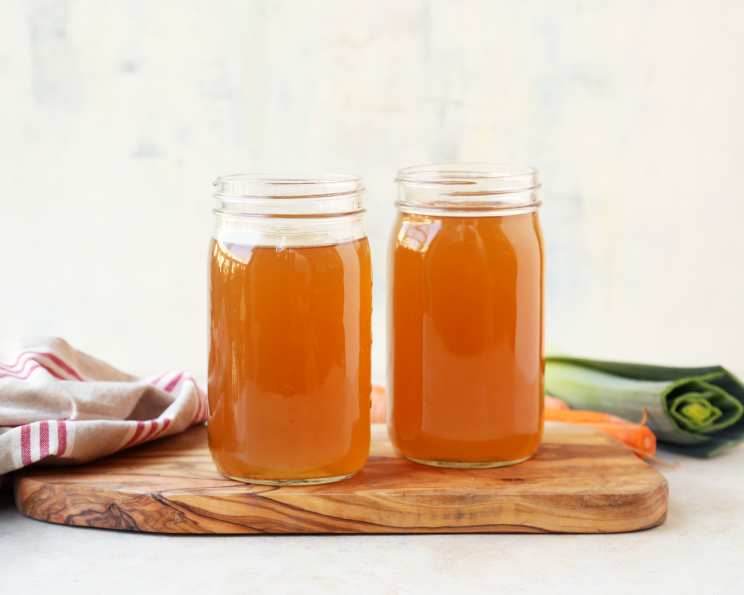
The Soulful Secret of Rich Vegetable Stock
I’ll never forget the first time I truly understood the transformative power of homemade vegetable stock. I was a young cook, working late in a bustling restaurant, when the head chef, a gruff but brilliant mentor, pulled me aside. He pointed to a mountain of vegetable scraps – onion skins, carrot tops, celery ends – destined for the bin. “Waste not, want not,” he growled, then proceeded to guide me through the slow, simmering alchemy of turning those humble remnants into liquid gold. The depth of flavor we coaxed out of those cast-offs was astonishing, and from that day on, I’ve never looked at vegetable trimmings the same way. It was a lesson in resourcefulness, flavor, and the hidden potential within the simplest of ingredients.
Recipe Overview
- Prep Time: 15 minutes
- Cook Time: 3 hours 15 minutes
- Total Time: 3 hours 30 minutes
- Yields: 8 cups
- Dietary Type: Vegan
Ingredients
- 2-3 lbs vegetable peels (enough to fill a 1-gallon zippy bag), excluding sulfurous vegetables like broccoli, cauliflower, and cabbage
- 12 cups water
- 1 bay leaf
- 6-8 peppercorns
- 1 teaspoon salt
Equipment Needed
- Large stew pot or stock pot
- Colander
- Sieve
- Fine mesh sieve or permanent coffee filter
- Measuring cups
- Plastic cups (for portioning)
- Freezer bags
- Parchment or wax paper
Instructions
-
Don’t worry about the exact weight of your vegetable trimmings. The important thing is to fill a 1-gallon freezer bag. I recommend keeping a gallon freezer bag in your freezer and dumping your veggie trimmings into it after each meal you cook. In about a week or two, the bag should be full and ready to use for making stock.
-
Empty the gallon bag of vegetable trimmings into a large stew pot or stock pot, along with the bay leaf and peppercorns. Add 8 cups of water and note the water level. You will use this as your refill point after each reduction. Then, add the remaining 4 cups of water and the salt. Resist the urge to stir at this stage.
-
Bring the mixture to a simmer over high heat, then reduce the heat to maintain a gentle simmer.
-
It’s crucial to never stir the stock. If you do, your stock may become cloudy. Instead, use the back of a wooden spoon to gently push the vegetables down into the liquid occasionally. By refraining from stirring, you’ll achieve a crystal-clear and beautiful stock. Don’t worry if it does cloud up; it will still be delicious, just not as visually appealing.
-
Allow the liquid to reduce by 4 cups. Then, add another 4 cups of water and continue to simmer. Repeat this process two more times, for a total of three reductions. This is essential to concentrate the flavors and create a truly rich stock.
-
After the final reduction, remove the pot from the heat and strain the stock through a colander. Squeeze out as much liquid as possible from the vegetables before discarding them. Every last drop holds precious flavor.
-
Strain the stock through a sieve to remove any larger particles. Then, strain it again through a fine-mesh sieve or a permanent coffee filter for an even clearer result.
-
Pour the stock into plastic cups in 8-ounce portions for convenient freezing. Let them cool completely at room temperature before freezing. Cooling too quickly can lead to clouding.
-
Once the stock is frozen solid, pop each “cube” out of its cup, wrap it in parchment or wax paper, and store all the stock cubes in a large gallon freezer bag. This prevents freezer burn and makes it easy to grab individual portions as needed.
-
To reconstitute the stock, melt an 8-ounce portion of the frozen stock, add an equal amount of water, and a teaspoon of salt. Stir well to dissolve the salt. The stock will keep in the refrigerator for up to a week.
Expert Tips & Tricks
- Don’t be afraid to experiment with your vegetable trimmings. Just avoid overly strong or bitter vegetables like broccoli stems or artichoke leaves, which can overpower the flavor.
- For a deeper, more caramelized flavor, you can roast your vegetable trimmings in the oven at 400°F (200°C) for about 20-30 minutes before adding them to the pot.
- If your stock does become cloudy, don’t fret! It won’t affect the taste. However, if you want to clarify it, you can use an egg white raft technique. Whisk an egg white with a tablespoon of cold water and gently stir it into the simmering stock. As the egg white cooks, it will attract the impurities, forming a raft on the surface. Carefully remove the raft with a slotted spoon.
- Don’t over-salt the stock. Remember, you can always add more salt later when you use the stock in a recipe.
Serving & Storage Suggestions
This rich vegetable stock is a versatile ingredient that can be used in countless ways. Use it as a base for soups, stews, and sauces. Cook grains like rice, quinoa, or couscous in it for extra flavor. Deglaze pans with it to create flavorful pan sauces. You can even use it as a substitute for water in savory baking recipes.
The stock will keep in the refrigerator for up to a week. For longer storage, freeze it in individual portions as described above. Frozen stock will last for several months.
To reheat frozen stock, simply melt it in a saucepan over low heat. You can also thaw it in the refrigerator overnight.
Nutritional Information
| Nutrient | Amount per Serving | % Daily Value |
|---|---|---|
| Calories | 0.2 kcal | N/A |
| Total Fat | 0 g | 0% |
| Saturated Fat | 0 g | 0% |
| Cholesterol | 0 mg | 0% |
| Sodium | 301.4 mg | 12% |
| Total Carbohydrate | 0.1 g | 0% |
| Dietary Fiber | 0 g | 0% |
| Sugars | 0 g | 0% |
| Protein | 0 g | 0% |
Variations & Substitutions
- Mushroom Stock: Add dried shiitake mushrooms or mushroom trimmings for an intensely savory and umami-rich stock.
- Herb-Infused Stock: Add fresh herbs like thyme, rosemary, or parsley stems during the last hour of simmering for a fragrant stock.
- Spicy Stock: Add a chili pepper or a few red pepper flakes for a subtle kick.
- Tomato Stock: Add tomato cores or overripe tomatoes for a slightly acidic and flavorful stock.
FAQs (Frequently Asked Questions)
Q: What vegetables should I avoid using in vegetable stock?
A: It’s best to avoid sulfurous vegetables like broccoli, cauliflower, and cabbage, as they can make the stock bitter. Also, avoid overly starchy vegetables like potatoes, as they can make the stock cloudy.
Q: Can I use vegetable scraps that have already been cooked?
A: It’s generally best to use raw vegetable scraps for stock, as cooked vegetables may have lost some of their flavor and nutrients.
Q: How do I know when the stock has reduced enough?
A: The key is to observe the water level. After each reduction, the liquid should have reduced by about 4 cups.
Q: Can I add meat bones to this recipe to make a mixed stock?
A: While you can add meat bones, this recipe is designed to be purely vegetable-based. Adding bones will change the flavor profile and dietary designation.
Q: How long can I store the vegetable scraps in the freezer before making stock?
A: Vegetable scraps can be stored in the freezer for up to a month without significantly affecting the flavor of the stock. Make sure they are properly sealed to prevent freezer burn.
Final Thoughts
Making your own rich vegetable stock is a deeply rewarding experience. Not only does it reduce food waste and save you money, but it also allows you to create a flavorful and nutritious base for your favorite dishes. So, gather your vegetable trimmings, embrace the slow simmer, and taste the difference that homemade stock can make. Don’t hesitate to experiment with different vegetable combinations and herbs to create a stock that perfectly suits your taste. And remember, the best stock is the one you make with love and intention!