
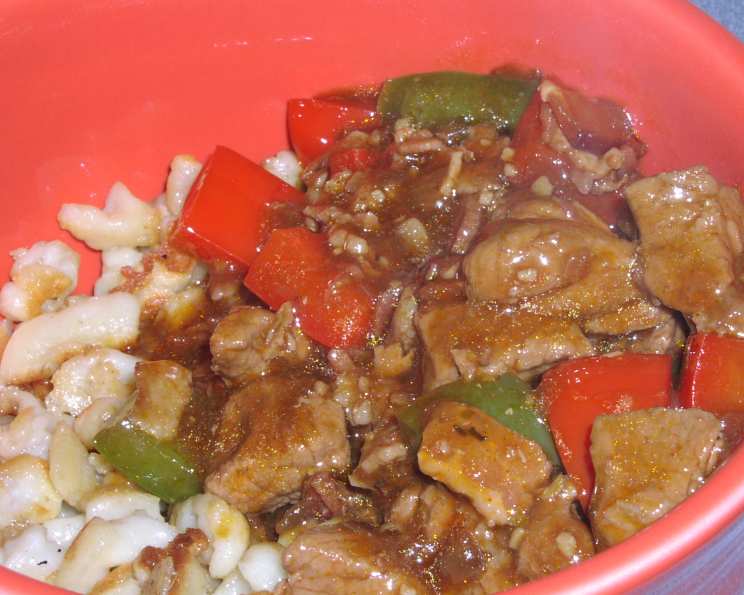
Hearty Rindergulasch: A Taste of German Comfort
The aroma alone transports me back to a cozy kitchen in Heidelberg, Germany. Frau Schmidt, my neighbor during my study abroad year, used to make a Rindergulasch so rich and flavorful, it could warm you from the inside out on the chilliest of autumn evenings. The tender chunks of beef, simmered in a deeply savory broth, served over fluffy spaetzle… it was the taste of home away from home, and a memory I cherish. Now, I bring that cherished flavor to your kitchen with this authentic recipe.
Recipe Overview
- Prep Time: 20 minutes
- Cook Time: 1 hour 25 minutes
- Total Time: 1 hour 45 minutes
- Servings: 4
- Yield: About 6 cups
- Dietary Type: Potentially Gluten-Free (if served with gluten-free noodles/spaetzle)
Ingredients
- 1 lb onion, diced
- 3 cloves fresh garlic, peeled and finely chopped
- 1/4 lb thick bacon, finely chopped
- 2 1/8 lbs beef shoulder, cut into bite-sized chunks as for stew (trim any visible fat)
- 2 tablespoons bacon grease or 2 tablespoons lard
- 2 teaspoons sweet Hungarian paprika
- 3 tablespoons tomato paste
- 5 1/8 cups beef broth
- 1 lemon, zest of, finely grated
- 1 red bell pepper, cut into bite-sized chunks
- 1 green bell pepper, cut into bite-sized chunks
- 1 bunch fresh marjoram, stemmed and finely chopped
- Salt, to taste
- Black pepper, to taste
- Fresh cooked egg noodles or spaetzle noodles, to serve over
Equipment Needed
- Large Stewpot or Dutch Oven
- Cutting Board
- Chef’s Knife
- Zester
- Measuring Cups and Spoons
Instructions
- In a large stewpot or Dutch oven, heat the bacon grease or lard over medium-high heat until melted and shimmering.
- Add the beef chunks in small portions, ensuring not to overcrowd the pot. Brown the beef on all sides, creating a rich crust, but do not cook it all the way through. Remove each batch as it browns and transfer it to a covered dish to set aside. Overcrowding the pot will steam the beef instead of browning it.
- In the same pot, add the bacon, onion, and garlic. Sauté for 5-10 minutes, or until the vegetables begin to wilt and brown, releasing their fragrant aromas. Be careful not to burn the garlic. Reduce heat if necessary.
- Return the beef to the pot with the sautéed vegetables. Sprinkle the sweet Hungarian paprika over the meat and vegetables, ensuring everything is evenly coated. This will bloom the paprika, releasing its full flavor.
- Whisk in the tomato paste, stirring constantly until it is thoroughly blended with the other ingredients, about 1-2 minutes. This step helps to caramelize the tomato paste, adding depth to the flavor of the goulash.
- Add a small amount of the beef broth to the pot, just enough to deglaze the bottom, and bring to a boil, stirring constantly to scrape up any browned bits stuck to the pot. These browned bits are packed with flavor and will enrich the goulash.
- Repeat the previous step, adding a little more broth and bringing it to a boil while stirring.
- Pour in the remaining beef broth and add the lemon zest. Stir to combine all the ingredients.
- Reduce the heat to low, cover the pot tightly, and let the goulash stew for approximately 80 minutes, or until the beef is very tender and easily shreds with a fork. Stir occasionally to prevent sticking.
- In the last 5 minutes of cooking time, add the diced red bell pepper, diced green bell pepper, and the chopped fresh marjoram to the goulash. These additions add a fresh, vibrant flavor and color to the dish.
- Taste the goulash and adjust the seasoning with salt and black pepper to your preference. Remember that flavors will continue to meld as the goulash sits, so err on the side of under-seasoning initially.
- Serve the Rindergulasch hot, ladled generously over bowls of freshly cooked egg noodles or spaetzle.
Expert Tips & Tricks
- Browning the Beef: Don’t skip the step of browning the beef in batches. This creates a deep, rich flavor that is essential to the goulash.
- Paprika Power: Using sweet Hungarian paprika is key for an authentic flavor. Smoked paprika can also be added in small amounts for a smoky variation.
- Low and Slow: Stewing the beef at a low temperature for an extended period is crucial for tenderizing the meat and developing the flavors.
- Vegetable Variation: Feel free to add other vegetables, such as carrots or parsnips, for added depth of flavor.
- Thickening: If you prefer a thicker goulash, you can mix a tablespoon of cornstarch with a tablespoon of cold water to form a slurry. Stir the slurry into the goulash during the last 15 minutes of cooking.
- Wine Addition: For a deeper, richer flavor, add 1/2 cup of dry red wine along with the beef broth.
Serving & Storage Suggestions
Serve the Rindergulasch hot, ladled over buttered egg noodles or spaetzle, garnished with a sprig of fresh marjoram. A dollop of sour cream can also be added for extra richness.
Leftovers can be stored in an airtight container in the refrigerator for up to 3-4 days. For longer storage, the goulash can be frozen for up to 3 months. Thaw it in the refrigerator overnight before reheating. Reheat gently on the stovetop over medium-low heat, stirring occasionally, until heated through. You may need to add a little beef broth or water if the goulash has thickened too much during storage.
Nutritional Information
| Nutrient | Amount per Serving | % Daily Value |
|---|---|---|
| Calories | 450 kcal | 23% |
| Total Fat | 25g | 38% |
| Saturated Fat | 10g | 50% |
| Cholesterol | 75mg | 25% |
| Sodium | 800mg | 33% |
| Total Carbohydrate | 25g | 8% |
| Dietary Fiber | 5g | 20% |
| Sugars | 10g | N/A |
| Protein | 30g | 60% |
Note: Nutritional information is an estimate and can vary based on specific ingredients and portion sizes.
Variations & Substitutions
- Spicy Goulash: Add a pinch of cayenne pepper or a small, finely chopped chili pepper along with the paprika for a spicy kick.
- Beer Goulash: Replace half of the beef broth with a dark beer, such as a bock or stout, for a malty flavor.
- Mushroom Goulash: Add sliced mushrooms, such as cremini or shiitake, along with the onions and garlic.
- Gluten-Free: Serve with gluten-free noodles or spaetzle made from gluten-free flour.
- Slow Cooker: Brown the beef and sauté the vegetables as directed, then transfer everything to a slow cooker. Add the remaining ingredients and cook on low for 6-8 hours or on high for 3-4 hours, or until the beef is tender.
FAQs (Frequently Asked Questions)
Q: Can I use a different cut of beef?
A: While beef shoulder is ideal for its rich flavor and ability to become tender during long simmering, chuck roast can also be used as a substitute.
Q: Can I make this ahead of time?
A: Absolutely! In fact, Rindergulasch often tastes even better the next day, as the flavors have more time to meld together.
Q: Do I have to use fresh marjoram?
A: While fresh marjoram provides the best flavor, dried marjoram can be used as a substitute. Use about 1 tablespoon of dried marjoram in place of the fresh.
Q: Can I freeze the goulash?
A: Yes, Rindergulasch freezes well. Allow it to cool completely before transferring it to an airtight container and freezing for up to 3 months.
Q: What’s the best way to reheat frozen goulash?
A: Thaw the goulash in the refrigerator overnight before reheating. Reheat gently on the stovetop over medium-low heat, stirring occasionally, until heated through. You may need to add a little beef broth or water if the goulash has thickened too much during storage.
Final Thoughts
Rindergulasch is more than just a recipe; it’s a journey into the heart of German comfort food. Don’t be intimidated by the slightly longer cooking time – the result is well worth the effort. Gather your ingredients, follow the steps, and let the rich aromas fill your kitchen. And feel free to adjust this recipe to your liking. After all, the best dishes are the ones made with love. Enjoy!