
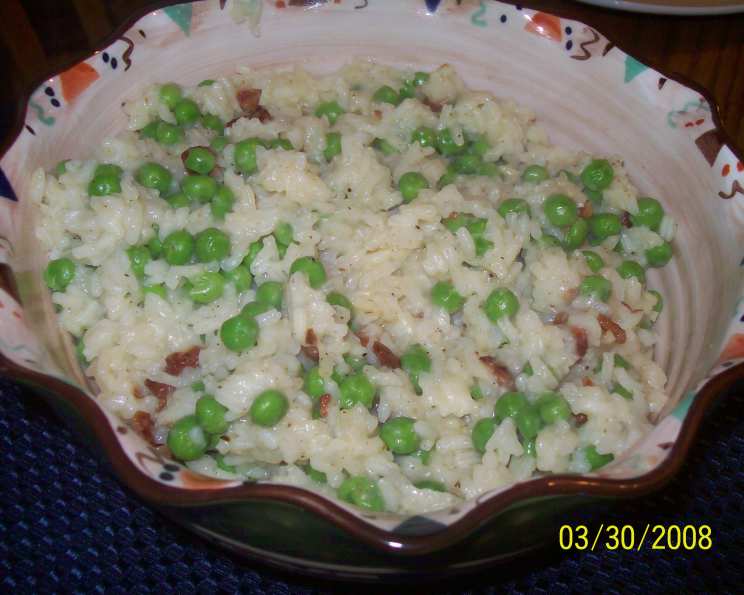
Risi e Bisi: A Venetian Springtime Classic
The first time I tasted Risi e Bisi, I was sitting at a small trattoria overlooking the canals of Venice. It was springtime, the air was thick with the scent of blossoming wisteria, and the gentle rocking of gondolas serenaded my lunch. The dish arrived looking deceptively simple – a creamy, verdant pool of rice dotted with bright green peas. One spoonful, and I was transported. The subtle sweetness of the peas, the savory depth of the broth, and the creamy texture of the rice created a symphony of flavors that perfectly captured the essence of the season. It was more than just a meal; it was an experience, a memory etched in my culinary heart, one I’ve strived to recreate ever since.
Recipe Overview
- Prep Time: 5 minutes
- Cook Time: 30 minutes
- Total Time: 35 minutes
- Servings: 4
- Dietary Type: Adaptable
Ingredients
- 2 teaspoons chicken bouillon granules
- 1 tablespoon butter
- 1 cup uncooked long-grain white rice
- 2 tablespoons butter
- 1 (10 ounce) package frozen peas, thawed
- 3 tablespoons grated parmesan cheese
- 1 1⁄4 teaspoons salt
- 1⁄8 teaspoon pepper
- 4 slices bacon, cooked and crumbled
Equipment Needed
- Saucepan
- Measuring cups and spoons
Instructions
- Begin by creating a flavorful broth. In a saucepan, combine the chicken bouillon granules and 1 tablespoon of butter with 2 cups of water. Bring the mixture to a boil over medium-high heat.
- Once boiling, reduce the heat to low, stir in the 1 cup of uncooked long-grain white rice, and cover the saucepan. Simmer for approximately 20 minutes, or until the rice has absorbed most of the liquid and is nearly cooked through. Avoid lifting the lid too often, as this will release steam and lengthen the cooking time.
- After 20 minutes, add the 2 tablespoons of butter, the thawed 1 (10 ounce) package of frozen peas, 1 1/4 teaspoons of salt, and 1/8 teaspoon of pepper to the rice. If the mixture appears dry, add a little more water (about 1/4 cup at a time) to maintain a creamy consistency.
- Increase the heat to medium and cook for about 10 minutes, stirring occasionally, until the peas and rice are completely cooked and most of the water has been absorbed, leaving a slightly soupy consistency. The dish should be creamy, not dry.
- Stir in the 4 slices of cooked and crumbled bacon and the 3 tablespoons of grated Parmesan cheese. Mix lightly to combine all ingredients and cook for another minute or so, just until everything is heated through. Be careful not to overcook at this stage, as the peas can become mushy.
- Serve immediately, garnished with extra Parmesan cheese if desired.
Expert Tips & Tricks
- Fresh Peas are Best (When Available): While frozen peas are convenient and work well, using fresh peas in season will elevate the dish to another level. Simply blanch them briefly before adding them to the rice.
- Use Arborio Rice (For a Creamier Result): For a richer, creamier Risi e Bisi, substitute the long-grain white rice with Arborio rice, the type used for risotto. This will release more starch during cooking, resulting in a more luxurious texture. Remember to adjust the cooking time accordingly, as Arborio rice may require a slightly longer simmering period.
- Make Your Own Broth: While bouillon granules are a quick and easy option, homemade chicken broth will significantly enhance the flavor of this dish. If you have the time, consider simmering chicken bones with vegetables and herbs to create a rich, flavorful stock.
- Crisp the Bacon Separately: For optimal texture, consider cooking the bacon until crispy and then setting it aside. Add it to the Risi e Bisi just before serving to prevent it from becoming soggy.
- Don’t Overcook the Peas: Overcooked peas can become mushy and lose their vibrant green color. Add them towards the end of the cooking process and cook them just until they are tender and heated through.
- Vegetarian Adaptation: For a vegetarian version, omit the bacon and use vegetable broth instead of chicken broth.
Serving & Storage Suggestions
Risi e Bisi is best served immediately while it’s still warm and creamy. Garnish each serving with a sprinkle of freshly grated Parmesan cheese and a drizzle of extra virgin olive oil for a touch of elegance. This dish pairs beautifully with a crisp white wine like Pinot Grigio or Sauvignon Blanc.
Leftovers can be stored in an airtight container in the refrigerator for up to 2 days. To reheat, gently warm the Risi e Bisi in a saucepan over low heat, adding a splash of water or broth if needed to restore its creamy consistency. You can also microwave it in short intervals, stirring in between, until heated through. The texture may be slightly softer after reheating. I wouldn’t recommend freezing it due to the rice changing texture.
Nutritional Information
(Note: Nutritional information is an estimate and may vary based on specific ingredients and portion sizes.)
| Nutrient | Amount per Serving | % Daily Value |
|---|---|---|
| Calories | 422.6 kcal | N/A |
| Calories from Fat | 185 g | 44% |
| Total Fat | 20.6 g | 31% |
| Saturated Fat | 9.7 g | 48% |
| Cholesterol | 41.7 mg | 13% |
| Sodium | 1301.8 mg | 54% |
| Total Carbohydrate | 47.2 g | 15% |
| Dietary Fiber | 3.6 g | 14% |
| Sugars | 4.1 g | N/A |
| Protein | 11.3 g | 22% |
Variations & Substitutions
- Vegan Risi e Bisi: To make this dish vegan, substitute the butter with olive oil or vegan butter, the chicken bouillon granules with vegetable bouillon, the Parmesan cheese with nutritional yeast, and omit the bacon.
- Seafood Risi e Bisi: Add cooked shrimp or scallops during the last few minutes of cooking for a delicious seafood twist.
- Spring Vegetable Medley: Incorporate other seasonal spring vegetables, such as asparagus tips or fava beans, along with the peas.
- Lemon Risi e Bisi: Add a squeeze of fresh lemon juice and some lemon zest to brighten the flavors of the dish.
- Herbed Risi e Bisi: Incorporate fresh herbs like mint, parsley, or chives for added freshness and aroma.
FAQs (Frequently Asked Questions)
Q: Can I use brown rice instead of white rice?
A: While you can use brown rice, it will significantly alter the texture and cooking time. Brown rice requires more liquid and a longer cooking time, so the final dish will be less creamy.
Q: Can I make this ahead of time?
A: Risi e Bisi is best served immediately. Making it ahead of time can cause the rice to become mushy. If you need to prep in advance, cook the rice separately and add the peas and other ingredients just before serving.
Q: What if I don’t have chicken bouillon granules?
A: You can substitute with chicken broth (either homemade or store-bought). Adjust the salt accordingly.
Q: Can I use a different type of cheese?
A: While Parmesan cheese is traditional, you can experiment with other hard cheeses like Pecorino Romano or Grana Padano.
Q: How do I prevent the rice from sticking to the bottom of the pan?
A: Use a heavy-bottomed saucepan and stir the rice occasionally during cooking to prevent it from sticking. Also, ensure that there is enough liquid in the pan.
Final Thoughts
Risi e Bisi is more than just a recipe; it’s a celebration of springtime flavors and a testament to the beauty of simple Italian cooking. I encourage you to try this dish and experience the magic for yourself. Feel free to experiment with different variations and substitutions to create your own unique interpretation. Whether you’re a seasoned chef or a novice cook, this recipe is sure to impress. Share your creations and feedback, and consider pairing it with a vibrant green salad and a glass of chilled white wine for a truly memorable meal. Buon appetito!