
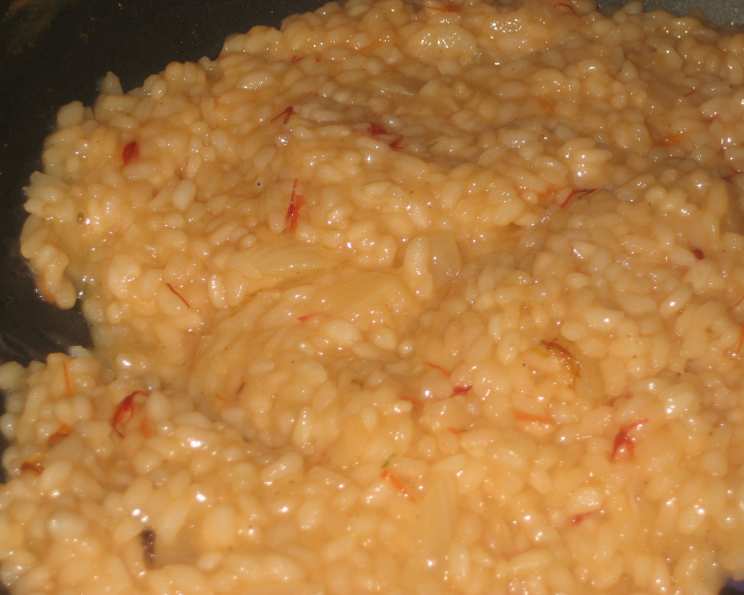
Risotto Milanese: A Golden Bowl of Comfort
The first time I tasted Risotto Milanese, I was a wide-eyed culinary student traveling through Italy. The saffron-infused aroma wafted through the air, a siren song leading me to a small trattoria in Milan. One bite of that creamy, golden rice, rich with Parmesan and subtly sweet onion, and I was hooked. It wasn’t just a dish; it was an experience, a comforting hug in a bowl that transported me to the heart of Italian culinary tradition. To this day, the memory of that first bite fuels my passion for cooking and reminds me of the simple beauty of well-prepared ingredients.
Recipe Overview
- Prep Time: 15 minutes
- Cook Time: 40 minutes
- Total Time: 55 minutes
- Servings: 4
- Yield: 4 servings
- Dietary Type: Gluten-Free
Ingredients
- 2/3 cup dry white wine
- 1 teaspoon saffron threads (about 25)
- 4 tablespoons unsalted butter
- 2 tablespoons olive oil
- 1 medium-large onion, cut into 1/2-inch dice
- 4 cups chicken broth, preferably homemade (or as needed)
- 2 cups Italian short-grain rice (such as Arborio or Tesori)
- Salt & freshly ground black pepper to taste
- 1/4 cup freshly ground Parmesan cheese
Equipment Needed
- Small skillet
- Large saucepan
- Small saucepan
Instructions
- Begin by infusing the saffron. In a small skillet, heat the dry white wine to a simmer. Let it simmer for about 1 minute.
- Stir in the saffron threads and remove the skillet from the heat. Allow the saffron to steep in the warm wine; this will bloom the flavor and color. Set aside.
- In a large saucepan, melt 2 tablespoons of unsalted butter together with the olive oil over low heat. The oil will prevent the butter from browning too quickly.
- Once the butter foams, add the diced onion to the saucepan. Cook the onion, stirring occasionally, until it becomes tender and golden, approximately 15 minutes. This slow, gentle cooking is key to developing the onion’s sweetness.
- While the onion is cooking, prepare the chicken broth. Pour the broth into a small saucepan and heat it until it is hot but not boiling. Keep the broth hot over very low heat for the duration of the risotto preparation. Using hot broth is crucial for even cooking of the rice.
- Add the Italian short-grain rice to the saucepan with the softened onions. Increase the heat to medium and cook the rice, stirring constantly, until the edges of the grains become transparent. This should take about 5 minutes. Toasting the rice lightly helps it absorb the broth evenly.
- Pour enough of the hot chicken broth into the rice to cover it by about 1/4 inch. Adjust the heat to maintain a lively simmer – not a steady boil, but a gentle bubbling.
- Simmer the rice, stirring constantly, until the liquid is absorbed and you can see the bottom of the pan as you stir. This should take approximately 5 minutes.
- Continue adding more hot chicken broth to cover the rice by 1/4 inch each time, and continue to simmer, stirring constantly, until the liquid is absorbed. Repeat this process until the rice is tender but still slightly firm to the bite at the center – al dente. This whole process, from the time the first liquid is added, should take around 20 minutes.
- Season the risotto to taste with salt and freshly ground black pepper halfway through the cooking process. This allows the flavors to meld properly.
- Stir the saffron-infused wine into the risotto. The risotto should have a creamy consistency; if it seems too dry, add more chicken broth until the desired consistency is achieved.
- Remove the saucepan from the heat and stir in the remaining 2 tablespoons of unsalted butter and the freshly ground Parmesan cheese.
- Taste the risotto and adjust the seasonings as needed. Serve hot immediately.
Expert Tips & Tricks
- Use high-quality ingredients: The flavor of Risotto Milanese is heavily reliant on the quality of its components, especially the saffron, butter, and Parmesan. Splurge on the best you can afford.
- Don’t rinse the rice: Unlike other rice dishes, risotto requires the starch from the rice to be released, creating the creamy texture. Rinsing the rice beforehand will prevent this.
- Warm plates: Serving the risotto on warm plates will help maintain its temperature and prevent it from becoming starchy too quickly.
- Make your own broth: Homemade chicken broth will add a depth of flavor that store-bought broth simply cannot match.
- Proper stirring: Constant stirring is crucial for releasing the rice’s starch and achieving the desired creamy texture. Don’t be afraid to put in a little elbow grease!
Serving & Storage Suggestions
Risotto Milanese is best served immediately while it is still hot and creamy. Garnish with a sprinkle of freshly grated Parmesan cheese and a few strands of saffron for visual appeal.
Leftover risotto can be stored in an airtight container in the refrigerator for up to 2 days. To reheat, add a splash of broth or water to the risotto and gently heat it over low heat, stirring frequently, until warmed through. You can also reheat it in the microwave in short intervals, stirring in between, to prevent it from drying out.
Risotto does not freeze well as the texture tends to become grainy upon thawing.
Nutritional Information
| Nutrient | Amount per Serving | % Daily Value |
|---|---|---|
| Calories | 629 kcal | N/A |
| Total Fat | 22 g | 33% |
| Saturated Fat | 9.8 g | 49% |
| Cholesterol | 36 mg | 12% |
| Sodium | 848 mg | 35% |
| Total Carbohydrate | 84 g | 28% |
| Dietary Fiber | 3.3 g | 13% |
| Sugars | 2.3 g | N/A |
| Protein | 14.3 g | 28% |
Variations & Substitutions
- Vegetarian Risotto Milanese: Substitute vegetable broth for chicken broth.
- Seafood Risotto Milanese: Add shrimp, scallops, or mussels during the last few minutes of cooking.
- Mushroom Risotto Milanese: Sauté sliced mushrooms with the onions for an earthy flavor.
- Different Cheeses: Experiment with different hard cheeses like Pecorino Romano or Grana Padano in place of Parmesan.
FAQs (Frequently Asked Questions)
Q: What kind of rice is best for risotto?
A: Italian short-grain rice varieties like Arborio, Carnaroli, or Vialone Nano are ideal because they have a high starch content, which contributes to the creamy texture.
Q: Can I use saffron powder instead of saffron threads?
A: While you can use saffron powder, the flavor and color will not be as intense as using saffron threads. If using powder, start with a small pinch and adjust to taste.
Q: How do I know when the risotto is done?
A: The rice should be tender but still slightly firm to the bite (al dente) at the center. The consistency should be creamy and the rice should be able to flow slightly on the plate.
Q: Why is it important to use hot broth?
A: Using hot broth helps maintain the temperature of the rice, allowing it to cook evenly and release its starch properly. Cold broth can shock the rice and prevent it from cooking evenly.
Q: Can I make risotto ahead of time?
A: Risotto is best served immediately, but you can prepare it up to a point and finish it just before serving. Cook the risotto until it is almost done, then spread it out on a baking sheet to cool quickly. Store in the refrigerator and add the final broth, butter, and Parmesan when ready to serve.
Final Thoughts
Risotto Milanese is more than just a recipe; it’s an invitation to slow down, savor the moment, and connect with the rich culinary heritage of Italy. I encourage you to try this recipe and experience the simple joy of transforming humble ingredients into a truly unforgettable dish. Don’t be afraid to experiment with variations and substitutions to make it your own. Serve it alongside a crisp white wine like Pinot Grigio, and enjoy the golden comfort of this classic Italian masterpiece. Buon appetito!