
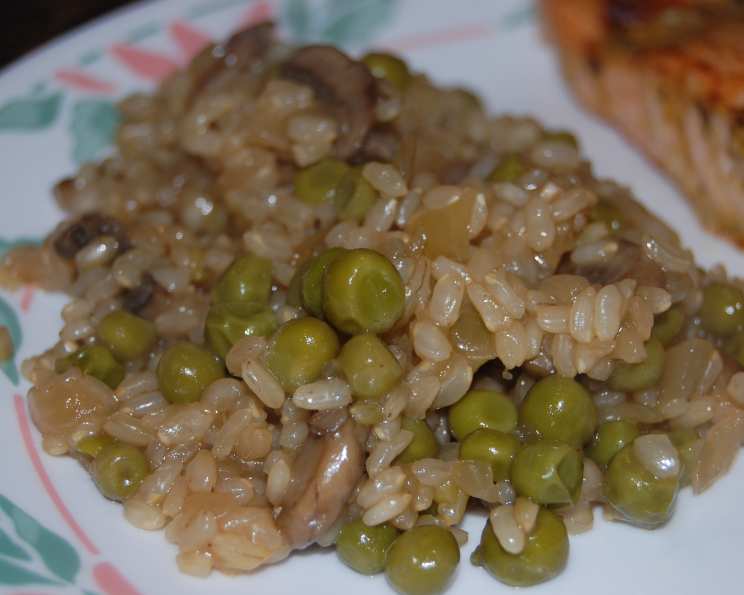
Risotto With Peas: A Taste of Spring
I remember the first time I tasted perfect risotto. It was at a tiny trattoria in Florence, tucked away on a side street. The chef, a Nonna with flour dusting her apron, presented me with a steaming bowl of creamy risotto studded with vibrant green peas. The subtle sweetness of the peas, the richness of the cheese, and the al dente bite of the rice – it was a revelation, a taste of pure Italian sunshine. I’ve been chasing that perfect bite ever since, and this recipe, though simple, comes incredibly close.
Recipe Overview
- Prep Time: 10 minutes
- Cook Time: 35-40 minutes
- Total Time: 45-50 minutes
- Servings: 6
- Yield: About 8 cups
- Dietary Type: Vegetarian (can be made vegan)
Ingredients
- 1 medium sweet onion, finely chopped
- 1 clove garlic, minced
- 1 tablespoon olive oil
- 1 1⁄2 cups arborio rice
- 3 1⁄3 cups chicken broth (vegetable broth for vegan)
- 1 1⁄2 cups frozen peas
- 1⁄2 cup grated parmigiano-reggiano cheese (nutritional yeast for vegan)
- 3 tablespoons dry white wine
- Salt and pepper to taste
Equipment Needed
- 3 1/2 quart sauté pan
- Wooden spoon or spatula
Instructions
- Begin by heating the olive oil in a 3-1/2 quart sauté pan over medium heat. The pan should be large enough to accommodate the rice as it expands.
- Add the finely chopped onion and minced garlic to the heated oil.
- Cook, stirring frequently, until the onion becomes soft and translucent, but not browned. This should take approximately 4-5 minutes. Avoid browning the garlic, as it can become bitter.
- Add the arborio rice to the pan.
- Cook, stirring constantly, until the rice grains look opaque. This process usually takes about 2-3 minutes. Toasting the rice slightly helps to develop its nutty flavor and maintain its texture during cooking.
- Pour in the chicken broth, white wine, and frozen peas.
- Stir well to combine all the ingredients.
- Increase the heat to medium-high, cover the pan, and bring the mixture to a boil, stirring often to prevent sticking.
- Once boiling, reduce the heat to low and simmer, uncovered.
- Stir occasionally to ensure the rice cooks evenly and doesn’t stick to the bottom of the pan.
- Cook until the rice is tender and has absorbed almost all of the broth, about 25-30 minutes. The consistency should be creamy, but the rice should still have a slight bite (al dente). If the risotto becomes too dry before the rice is cooked, add a little more broth, a 1/4 cup at a time.
- Ensure that the rice is tender but not mushy. Overcooked risotto will lose its creamy texture.
- Remove the pan from the heat.
- Stir in the grated parmigiano-reggiano cheese (or nutritional yeast).
- Season with salt and pepper to taste. Remember that the cheese is already salty, so season cautiously.
- Serve the risotto warm, with additional grated cheese (or nutritional yeast) on top if desired.
Expert Tips & Tricks
- Use quality broth: The flavor of the broth significantly impacts the final taste of the risotto. Use a good-quality homemade or store-bought broth.
- Warm the broth: Keeping the broth warm in a separate saucepan while you cook the risotto helps to maintain the cooking temperature and ensures even cooking.
- Don’t rinse the rice: Arborio rice contains starch, which is essential for creating the creamy texture of risotto. Rinsing the rice will remove this starch.
- Stir gently but frequently: Stirring releases the starch from the rice, contributing to the creamy texture. However, avoid over-stirring, which can make the risotto gluey.
- Taste as you go: The best way to ensure perfect seasoning and texture is to taste the risotto frequently as it cooks. Adjust the salt and pepper accordingly.
- For a richer flavor, sauté a few slices of pancetta or bacon with the onions at the beginning of the recipe. Remove the cooked pancetta/bacon before adding the rice, then crumble it over the finished risotto.
- Infuse extra flavor by adding a sprig of fresh thyme or rosemary to the broth while it simmers. Remove the herb before serving.
Serving & Storage Suggestions
Serve your risotto immediately while it’s warm and creamy. Garnish with a sprinkle of fresh parsley or a drizzle of olive oil for an extra touch of elegance. Risotto makes a wonderful side dish or a light meal on its own. It pairs well with grilled chicken, fish, or vegetables.
Leftover risotto can be stored in an airtight container in the refrigerator for up to 2 days. To reheat, add a splash of broth or water to the risotto and gently heat it in a saucepan over low heat, stirring frequently, until heated through. You can also reheat it in the microwave, but be careful not to overcook it. Freezing risotto is not recommended as it can alter the texture and make it mushy.
Nutritional Information
| Nutrient | Amount per Serving | % Daily Value |
|---|---|---|
| Calories | 250 kcal | 13% |
| Total Fat | 7g | 9% |
| Saturated Fat | 3g | 15% |
| Cholesterol | 10mg | 3% |
| Sodium | 500mg | 22% |
| Total Carbohydrate | 40g | 15% |
| Dietary Fiber | 3g | 11% |
| Sugars | 3g | – |
| Protein | 9g | 18% |
Note: Nutritional information is an estimate and can vary based on specific ingredients and serving sizes.
Variations & Substitutions
- Vegan Risotto: Substitute vegetable broth for chicken broth and nutritional yeast for parmigiano-reggiano cheese. Add a tablespoon of vegan butter at the end for extra richness.
- Mushroom Risotto: Sauté sliced mushrooms (such as cremini, shiitake, or oyster mushrooms) with the onions and garlic for a delicious earthy flavor.
- Asparagus Risotto: Add chopped asparagus spears to the risotto along with the peas for a spring-inspired dish.
- Lemon Risotto: Add the zest and juice of one lemon to the risotto during the last few minutes of cooking for a bright and citrusy flavor.
- Seafood Risotto: Sauté shrimp, scallops, or mussels with the onions and garlic for a decadent seafood risotto.
- Spice it up: Add a pinch of red pepper flakes along with the onions and garlic.
- Herbs: Incorporate fresh herbs like thyme, rosemary, parsley, or basil.
FAQs (Frequently Asked Questions)
Q: Can I use a different type of rice?
A: Arborio rice is the most commonly used rice for risotto because of its high starch content, which creates the creamy texture. Other short-grain rice varieties like Carnaroli or Vialone Nano can also be used, but they may require slightly different cooking times.
Q: My risotto is too dry. What should I do?
A: If the risotto becomes too dry before the rice is fully cooked, add a little more broth, 1/4 cup at a time, until the rice is tender and the risotto reaches the desired consistency.
Q: My risotto is too mushy. What did I do wrong?
A: Overcooking the risotto will result in a mushy texture. Be sure to cook the rice until it is tender but still has a slight bite (al dente). Also, avoid over-stirring, which can also contribute to a mushy texture.
Q: Can I make risotto ahead of time?
A: Risotto is best served fresh, but you can partially cook it ahead of time. Cook the risotto until it is almost done, then spread it out on a baking sheet to cool quickly. Store it in an airtight container in the refrigerator. When ready to serve, reheat with a little broth until creamy and heated through.
Q: What kind of wine should I use?
A: Use a dry white wine such as Pinot Grigio, Sauvignon Blanc, or Chardonnay. Avoid sweet wines.
Final Thoughts
Risotto with peas is more than just a recipe; it’s an invitation to savor the simple pleasures of cooking. It’s a dish that rewards patience and attention, and the result is a creamy, comforting masterpiece that’s sure to impress. So gather your ingredients, pour yourself a glass of wine, and let the aroma of sautéed onions and simmering broth fill your kitchen. Don’t hesitate to add your own personal touch, whether it’s a sprinkle of fresh herbs or a dash of chili flakes. And when you finally take that first bite, close your eyes and let the flavors transport you to a sun-drenched Italian trattoria. Buon appetito!