
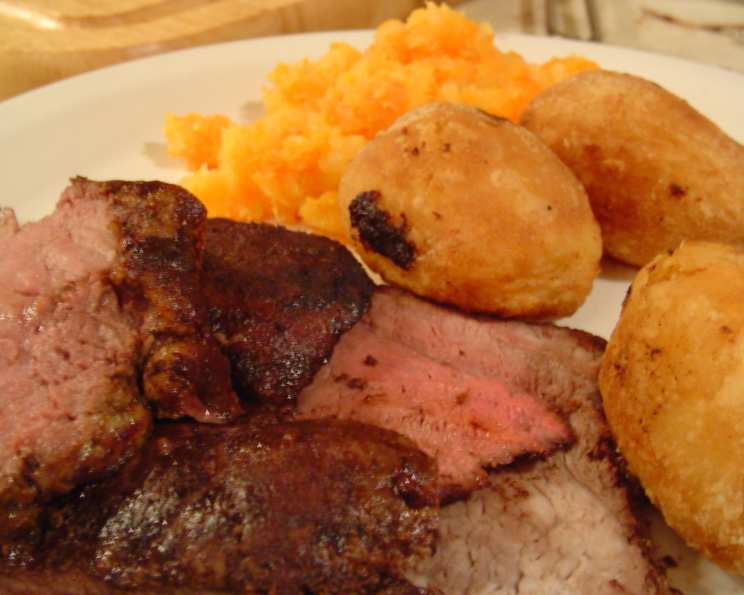
Roast Beef, English Style: A Timeless Classic
The scent of roasting beef, slowly filling the house on a Sunday afternoon, is a memory etched in my childhood. My grandmother, a true Yorkshirewoman, would preside over the oven, occasionally basting the meat with its own savory juices. The resulting roast, sliced thin and served with towering Yorkshire puddings and a rich gravy, was the highlight of our week—a taste of home, comfort, and pure culinary tradition. This recipe, while perhaps simpler than Grandma’s (whose secrets she guarded fiercely!), captures the essence of that comforting English roast, bringing warmth and flavor to any gathering.
Recipe Overview
- Prep Time: 10 minutes
- Cook Time: 80-140 minutes (depending on desired doneness)
- Total Time: 90-150 minutes
- Servings: 8
- Yield: Approximately 8 slices
- Dietary Type: Generally Gluten-Free, Dairy-Free (check fat/oil source)
Ingredients
- 4 lbs sirloin tip roast
- ½ teaspoon dry mustard
- ½ teaspoon ground black pepper
- Salt to taste
- ¼ cup dripping (or preferred fat/oil) – Beef dripping is traditional, but vegetable oil, olive oil, or rendered bacon fat also work well.
Equipment Needed
- Oven
- Frying pan
- Baking dish
- Meat thermometer
Instructions
-
Preheat oven to 350°F (175°C). Ensure your oven is properly calibrated for accurate cooking.
-
Trim meat and score remaining fat. Remove any excess silver skin or tough connective tissue from the sirloin tip roast. Lightly score the fat cap in a diamond pattern; this helps render the fat during cooking, resulting in a crispier exterior and self-basting. Be careful not to cut into the meat itself.
-
Rub surface of meat with the spices. In a small bowl, combine the dry mustard, ground black pepper, and salt. Generously rub this mixture all over the surface of the sirloin tip roast, ensuring even coverage. The spices create a flavorful crust as the meat roasts.
-
Heat dripping in frying pan until hot. Place a frying pan over medium-high heat. Add the dripping (or preferred fat/oil) and heat until it is shimmering and almost smoking. This high heat is crucial for achieving a good sear.
-
Place meat fat side down in drippings; brown on all sides. Carefully place the sirloin tip roast, fat side down, into the hot frying pan. Sear for 2-3 minutes per side, until deeply browned and crusty. This searing process creates a Maillard reaction, which enhances the flavor and color of the roast. Use tongs to turn the roast and brown all sides evenly.
-
Place meat in a baking dish fat side up. Transfer the browned sirloin tip roast to a baking dish, placing it fat side up. This allows the melting fat to baste the meat as it cooks, keeping it moist and flavorful.
-
Insert meat thermometer. Insert a meat thermometer into the thickest part of the roast, being careful not to touch any bone. This is the most accurate way to determine the internal temperature and ensure the roast is cooked to your desired level of doneness.
-
Bake approximately 20 minutes/pound or until thermometer reads 140°F (60°C) (rare) to 170°F (77°C) (well-done). Place the baking dish in the preheated oven and bake for approximately 20 minutes per pound of meat. Monitor the internal temperature closely using the meat thermometer.
- Rare: 140°F (60°C)
- Medium-Rare: 145°F (63°C)
- Medium: 160°F (71°C)
- Medium-Well: 165°F (74°C)
- Well-Done: 170°F (77°C)
Note: Cooking times are approximate and can vary depending on the accuracy of your oven and the shape of the roast. Always rely on the meat thermometer for the most accurate results. If the roast is browning too quickly, loosely tent it with foil.
-
Let the roast rest. Once the roast reaches your desired internal temperature, remove it from the oven and transfer it to a cutting board. Tent it loosely with foil and let it rest for at least 15-20 minutes before carving. This allows the juices to redistribute throughout the meat, resulting in a more tender and flavorful roast.
-
Carve and serve. After resting, carve the roast against the grain into thin slices. Serve immediately with your favorite sides, such as Yorkshire pudding, roasted vegetables, and gravy.
Expert Tips & Tricks
- Dry brining: For an even more flavorful and tender roast, consider dry brining it 24-48 hours in advance. Simply rub the roast with a generous amount of salt (about 1 teaspoon per pound) and let it sit uncovered in the refrigerator. This allows the salt to penetrate the meat, drawing out moisture and then reabsorbing it, resulting in a more seasoned and juicy roast.
- Herb infusion: Add fresh herbs like rosemary, thyme, or garlic cloves to the pan during the last 30 minutes of roasting to infuse the meat with their aroma.
- Pan gravy: Don’t discard the pan drippings! Use them to make a rich and flavorful gravy. Skim off any excess fat, then whisk in a tablespoon or two of flour. Cook for a minute or two, then gradually add beef broth, stirring constantly until thickened. Season with salt, pepper, and any desired herbs.
- Reverse Sear: For an ultra-crispy crust, try the reverse sear method. Cook the roast at a lower temperature (around 250°F or 120°C) until it’s about 15-20 degrees below your desired doneness. Then, sear it in a very hot pan or under the broiler for a few minutes per side to achieve a beautiful crust.
Serving & Storage Suggestions
Serve the Roast Beef, English Style immediately after carving. Traditional accompaniments include Yorkshire pudding, roasted potatoes, carrots, parsnips, and a rich beef gravy. Leftover roast beef can be stored in an airtight container in the refrigerator for up to 3-4 days. It’s delicious in sandwiches, salads, or reheated for another meal. To reheat, gently warm the slices in a pan with a little beef broth or gravy to prevent them from drying out. You can also freeze leftover roast beef for up to 2-3 months. Wrap it tightly in plastic wrap and then in a freezer bag. Thaw overnight in the refrigerator before reheating.
Nutritional Information
Note: Nutritional information is an estimate and may vary based on specific ingredients and portion sizes.
| Nutrient | Amount per Serving | % Daily Value |
|---|---|---|
| Calories | 482 kcal | N/A |
| Calories from Fat | 293 kcal | N/A |
| Total Fat | 32.6 g | 50% |
| Saturated Fat | 12.9 g | 64% |
| Cholesterol | 149.7 mg | 49% |
| Sodium | 129.3 mg | 5% |
| Total Carbohydrate | 0.2 g | 0% |
| Dietary Fiber | 0.1 g | 0% |
| Sugars | 0 g | 0% |
| Protein | 43.6 g | 87% |
Variations & Substitutions
- Different cuts of beef: While sirloin tip roast is a good choice for its flavor and affordability, you can also use other cuts of beef, such as ribeye roast, tenderloin roast, or top round roast. Adjust cooking times accordingly.
- Flavor variations: Experiment with different spice rubs. Try adding garlic powder, onion powder, paprika, or dried herbs to the spice mixture.
- Wine pairing: A classic pairing for roast beef is a full-bodied red wine, such as Cabernet Sauvignon, Merlot, or Shiraz.
- Vegetarian option: While not a direct substitution, a large portobello mushroom roasted with similar spices and herbs can provide a satisfying vegetarian alternative.
FAQs (Frequently Asked Questions)
Q: What is “dripping” and where can I find it?
A: Dripping is rendered beef fat, traditionally collected from previous roasts. It adds incredible flavor. You can find it at some butcher shops or specialty stores, or you can render your own from beef fat trimmings. If unavailable, use a preferred cooking oil such as vegetable, olive or bacon fat.
Q: How can I tell if my roast is done without a meat thermometer?
A: While a meat thermometer is the most accurate method, you can also use the touch test. Press the center of the roast with your finger. If it feels very soft, it’s rare. If it’s slightly firm, it’s medium-rare. If it’s firm, it’s well-done. However, the thermometer is still highly recommended for consistent results.
Q: My roast is browning too quickly. What should I do?
A: If the roast is browning too quickly, loosely tent it with aluminum foil to protect the surface from excessive heat.
Q: Can I make this roast ahead of time?
A: You can roast the beef ahead of time, but it’s best served fresh. If you do make it ahead, carve it just before serving. Reheat gently with pan juices, or make a gravy, to prevent it from drying out.
Q: What’s the best way to carve the roast?
A: After the roast has rested, use a sharp carving knife to slice it thinly against the grain. This helps to tenderize the meat and makes it easier to chew.
Final Thoughts
Roast Beef, English Style is more than just a meal; it’s an experience. It’s about bringing people together around a table, sharing stories, and savoring the simple pleasures of good food. Don’t be intimidated by the process – this recipe is designed to be straightforward and rewarding. So gather your ingredients, preheat your oven, and prepare to create a memorable culinary masterpiece. And if you try it, please share your feedback – I’d love to hear about your experience and any variations you make! Perhaps pair it with a robust red wine and good company for a truly unforgettable occasion.