
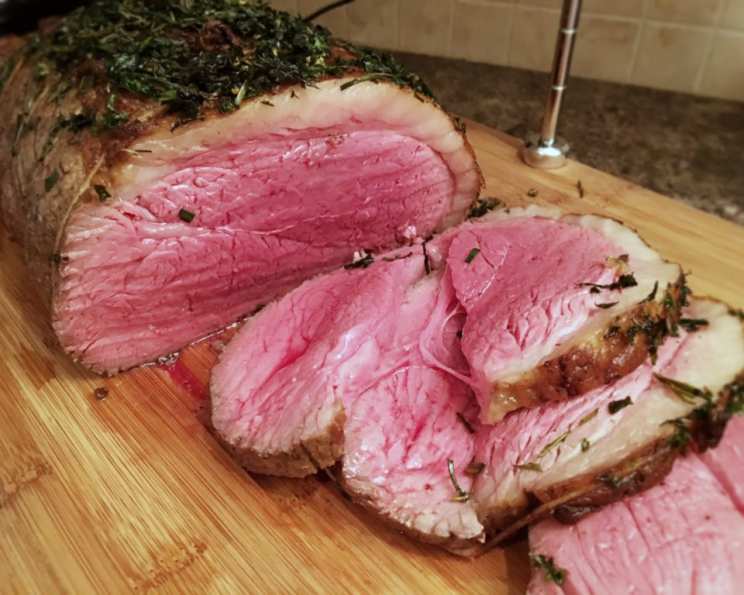
Roast Beef with Fresh Herbs: A Culinary Ode to Simplicity
The aroma of roasting beef, mingled with the bright, earthy notes of fresh herbs, instantly transports me back to my grandmother’s kitchen. She had a way of transforming simple ingredients into feasts that nourished both body and soul. Her roast beef, always generously seasoned with herbs from her garden, was the centerpiece of countless Sunday dinners, a testament to the power of good food shared with loved ones. To this day, that scent evokes feelings of warmth, comfort, and the joy of coming home.
Recipe Overview
- Prep Time: 15 minutes
- Cook Time: 55 minutes
- Total Time: 1 hour 10 minutes
- Servings: 6
- Yield: 6 servings
- Dietary Type: Gluten-Free
Ingredients
- 3 lbs boneless top sirloin roast
- ½ teaspoon sea salt
- 1 teaspoon black pepper
- 1 teaspoon dry mustard (or to taste)
- 3 tablespoons extra virgin olive oil (or to taste)
- ¼ cup rosemary, chopped
- ¼ cup mint, chopped
- ¼ cup basil, chopped
- ¼ cup chives, chopped
- ¼ cup parsley, chopped
- 2 garlic cloves, pressed
- 1 tablespoon grapeseed oil (or as needed)
Equipment Needed
- Oven-proof pan
- Medium bowl
- Meat thermometer/probe
- Carving board
- Aluminum foil
Instructions
-
Begin by preheating your oven to 425ºF (220°C). It’s crucial to have the oven properly heated for that initial sear.
-
Let the roast sit at room temperature for about 30 minutes before cooking. This helps ensure more even cooking. Pat the roast dry with paper towels. This step is important because a dry surface will sear more effectively.
-
Season generously with salt, pepper, and dry mustard. Don’t be shy – proper seasoning is key to a flavorful roast.
-
Heat an oven-proof pan over medium-high heat and add extra virgin olive oil. Ensure the pan is hot before adding the roast for optimal searing.
-
When the oil is hot, carefully sear the roast on all sides and ends until a rich brown crust forms. This process, called the Maillard reaction, develops incredible flavor.
-
Place a rack inside the oven-proof pan and position the roast on the rack with the fat side up. This allows the fat to render and baste the roast naturally as it cooks.
-
Insert a meat thermometer or probe into the center of the roast. This is the most accurate way to monitor the internal temperature.
-
Transfer the pan to the preheated oven and cook for 20 minutes at 425ºF (220°C). This initial high-temperature blast helps to create a beautiful crust.
-
Reduce the oven temperature to 325ºF (160°C) and continue cooking until the internal temperature registers 140ºF (60°C) for medium-rare. Remember that the internal temperature will continue to rise slightly as the roast rests.
-
While the roast is cooking, prepare the herb mixture. In a medium bowl, combine the chopped rosemary, mint, basil, chives, and parsley.
-
Add the pressed garlic cloves to the herb mixture.
-
Pour in the grapeseed oil, stirring until the herb mixture is moist and evenly coated. The oil helps the herbs adhere to the roast and infuses it with their flavor.
-
When the roast‘s internal temperature reaches 115ºF (46°C), remove it from the oven. This is a crucial step to ensure the herbs don’t burn.
-
Quickly and evenly spread the herb mixture on top of the roast, pressing down lightly to help it adhere.
-
Return the roast to the oven to finish cooking until it reaches the target internal temperature of 140ºF (60°C).
-
Remove the roast from the oven and place it on a carving board.
-
Tent the roast loosely with aluminum foil and let it rest for 20 to 30 minutes before slicing. Resting allows the juices to redistribute, resulting in a more tender and flavorful roast.
-
If the roast is too rare for some, quickly sauté both sides in a hot pan with a little gravy for up to 2 minutes per side. This is a great way to customize the doneness for individual preferences.
Note: Bone-in prime rib will require a longer cooking time in the oven. Adjust cooking time accordingly, monitoring the internal temperature closely.
Expert Tips & Tricks
- For an even deeper flavor, marinate the roast overnight in a mixture of olive oil, balsamic vinegar, garlic, and herbs before cooking.
- Use a digital meat thermometer for the most accurate internal temperature readings.
- Don’t overcrowd the pan when searing the roast. Sear in batches if necessary to ensure proper browning.
- If the herbs start to brown too quickly in the oven, loosely tent the roast with foil until the last 10 minutes of cooking.
- For a richer gravy, deglaze the roasting pan with red wine or beef broth after removing the roast.
Serving & Storage Suggestions
Serve the roast beef sliced thinly against the grain. The herb crust adds a beautiful visual appeal and a burst of fresh flavor. Accompany it with classic sides like roasted potatoes, Yorkshire pudding, and steamed vegetables.
Leftover roast beef can be stored in an airtight container in the refrigerator for up to 3-4 days. For longer storage, freeze the sliced roast beef in freezer-safe bags or containers for up to 2-3 months.
To reheat, gently warm the sliced roast beef in a skillet with a little broth or gravy, or microwave on low power until heated through. Be careful not to overcook it, as it can become dry.
Nutritional Information
| Nutrient | Amount per Serving | % Daily Value |
|---|---|---|
| Calories | 450 kcal | 23% |
| Total Fat | 30g | 46% |
| Saturated Fat | 12g | 60% |
| Cholesterol | 150mg | 50% |
| Sodium | 300mg | 13% |
| Total Carbohydrate | 2g | 1% |
| Dietary Fiber | 1g | 4% |
| Sugars | 0g | 0% |
| Protein | 40g | 80% |
Note: Nutritional information is an estimate and may vary based on specific ingredients and cooking methods.
Variations & Substitutions
- For a spicier kick, add a pinch of red pepper flakes to the herb mixture.
- Substitute the herbs with your favorite combinations. Thyme, oregano, and sage are excellent alternatives.
- If you don’t have dry mustard, you can use Dijon mustard instead.
- For a leaner roast, choose a sirloin tip roast instead of top sirloin.
- Make a pan sauce with red wine and beef broth to serve alongside the roast.
FAQs (Frequently Asked Questions)
Q: How do I ensure my roast beef is tender?
A: Allowing the roast to sit at room temperature before cooking, searing it properly, and letting it rest after cooking are all crucial steps for a tender result. Also, slicing against the grain makes a big difference.
Q: Can I use dried herbs instead of fresh?
A: While fresh herbs provide the best flavor, you can substitute dried herbs. Use about 1 tablespoon of dried herbs for every ¼ cup of fresh herbs.
Q: What’s the best way to check the internal temperature of the roast?
A: A reliable meat thermometer is essential. Insert it into the thickest part of the roast, avoiding any bone.
Q: My roast is browning too quickly. What should I do?
A: Loosely tent the roast with aluminum foil to slow down the browning process.
Q: How long can I store leftover roast beef in the freezer?
A: Properly stored, leftover roast beef can be frozen for up to 2-3 months without significant loss of quality.
Final Thoughts
This roast beef recipe is more than just a set of instructions; it’s an invitation to create a culinary experience that will delight your senses and bring people together. The combination of perfectly cooked beef and fragrant herbs is a timeless classic that never fails to impress. So, gather your ingredients, preheat your oven, and embark on this delicious journey. I encourage you to experiment with different herbs and seasonings to create your own signature roast beef. And most importantly, don’t forget to share your creations and feedback with others! Pair this roast with a robust red wine like Cabernet Sauvignon for the ultimate dining experience. Happy cooking!