
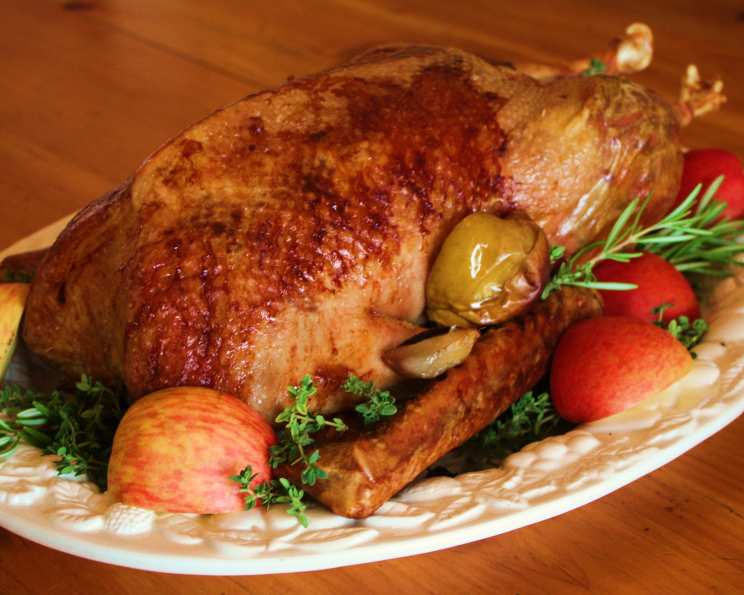
Roast Goose With Apples: A Holiday Feast
The aroma still transports me back to childhood Christmases. Not my own, precisely, but the kind I glimpsed in old movies, all crackling fireplaces and rosy-cheeked carolers. It was the image, more than reality, that sparked a lifelong fascination with roast goose. I never actually ate goose until I was a seasoned chef, but the mythical perfection of it simmered in my imagination. It’s richer, more flavorful than turkey or chicken, and when prepared right, it’s an unforgettable centerpiece for any holiday table. This recipe, handed down from a Russian friend’s grandmother, brings that dream to life, filling your home with an intoxicating fragrance of roasted bird, apples, and herbs.
Recipe Overview
- Prep Time: 30 minutes
- Cook Time: 2 hours
- Total Time: 2 hours 30 minutes
- Servings: 12
- Yield: 1 roast goose
- Dietary Type: Omnivore
Ingredients
- 1 goose (12-14 lbs.)
- Salt and freshly ground black pepper
- 1 head garlic, cut in half
- 1 bunch fresh thyme sprigs
- 1 bunch fresh sage
- 1 onion, quartered
- 1 dried bay leaf
- 2 cups water
- 4 large shallots, halved
- 1 red apple, quartered
- 1 green apple, quartered
Equipment Needed
- Large roasting pan
- Sharp knife
- Wooden toothpick
- Kitchen twine
- Baster
- Instant-read thermometer
- Platter
Instructions
-
If your goose is frozen, place it in the refrigerator 24-48 hours before roasting to thoroughly defrost. This is crucial for even cooking.
-
Remove the goose from the refrigerator and let it sit at room temperature for 30 minutes. This allows the bird to relax and cook more evenly.
-
Preheat your oven to 400 degrees Fahrenheit (200 degrees Celsius).
-
Remove the neck and giblets from the goose cavity. Rinse the goose thoroughly inside and out with cold running water. Pat it completely dry with paper towels, inside and out.
-
Trim as much of the excess fat as possible from the opening of the cavity. Goose is naturally fatty, and removing some of the excess will help render the skin crispier and prevent excessive smoking in the oven.
-
Using the point of a sharp knife, carefully prick the skin all over the goose, making sure not to pierce the flesh underneath. This step is essential as it allows the fat beneath the skin to render out during roasting, resulting in wonderfully crispy skin. Prick the skin every inch or so.
-
Fold the neck flap under the body of the goose and pin the flap down with a wooden toothpick. This helps maintain the shape of the goose and prevents the neck flap from burning.
-
Generously sprinkle the inside of the cavity with salt and pepper.
-
Stuff the cavity with the aromatic ingredients: the halved garlic, red and green apple quarters, quartered onion, halved shallots, fresh thyme sprigs, fresh sage, and dried bay leaf. These ingredients will infuse the goose with incredible flavor from the inside out.
-
Tie the legs together securely with a piece of kitchen twine. This helps the goose cook evenly and maintains its presentation.
-
Sprinkle the outside of the goose generously with salt and pepper. Don’t be shy – the goose needs a good amount of seasoning.
-
Place the goose breast side up in a shallow roasting pan. A roasting pan with a rack is ideal, as it allows air to circulate around the goose, but a standard roasting pan will also work.
-
Carefully pour 2 cups of water into the bottom of the pan. This will prevent the grease that drips into the pan from burning and creating excessive smoke.
-
Roast the goose in the preheated oven for one hour, or until it turns a golden brown color.
-
Every 30 minutes or so, use a baster to carefully remove the rendered grease from the pan. This is important to prevent the goose from essentially frying in its own fat. Reserve the rendered fat for other culinary uses; it’s delicious for roasting potatoes or vegetables.
-
After one hour of roasting at 400 degrees Fahrenheit (200 degrees Celsius), reduce the oven temperature to 325 degrees Fahrenheit (160 degrees Celsius).
-
Continue to roast the goose until it is very well browned all over and an instant-read thermometer inserted into the thickest part of a breast (being careful not to touch the bone) registers 180 degrees Fahrenheit (82 degrees Celsius). This usually takes about one hour after reducing the heat, but it’s essential to rely on the thermometer reading for accuracy.
-
Remove the roasted goose from the oven and carefully transfer it to a serving platter.
-
Allow the goose to rest for 15-20 minutes before carving and serving. This resting period allows the juices to redistribute throughout the meat, resulting in a more tender and flavorful bird.
-
Dress the platter with the roasted apples and herbs from the cavity (optional, but adds a beautiful presentation), and serve.
Expert Tips & Tricks
- Salting is Key: Don’t skimp on the salt! Goose is a large bird, and it needs ample seasoning to bring out its flavor. Consider dry-brining the goose overnight in the refrigerator for even better results. Liberally salt the goose, then leave uncovered in the fridge.
- Crispy Skin Secret: Pricking the skin thoroughly is paramount for crispy skin. The smaller the holes, the better, and be vigilant to avoid piercing the flesh.
- Fat is Flavor (and a Hazard): Regularly remove the rendered fat during roasting. Not only does this prevent smoking and splattering, but the rendered goose fat is a culinary treasure. Use it to roast potatoes, vegetables, or even to confit garlic. Strain it well and store in the refrigerator for up to a month.
- Thermometer is Your Friend: Don’t rely solely on cooking time. An instant-read thermometer is the most accurate way to ensure the goose is cooked to a safe and delicious temperature.
- Don’t Toss the Giblets: Use the neck and giblets to make a flavorful gravy to serve with the goose.
Serving & Storage Suggestions
Serve the roast goose immediately after carving. Arrange the carved meat attractively on a platter and garnish with the roasted apples, shallots, and herbs from the cavity. Serve with your favorite holiday sides, such as mashed potatoes, roasted vegetables, cranberry sauce, and stuffing.
Leftover roast goose should be stored in an airtight container in the refrigerator. It will keep for up to 3-4 days. Reheat gently in the oven or microwave until warmed through. You can also use leftover goose meat in sandwiches, salads, or stews.
Rendered goose fat can be stored in an airtight container in the refrigerator for up to a month. It can also be frozen for longer storage.
Nutritional Information
| Nutrient | Amount per Serving | % Daily Value |
|---|---|---|
| Calories | 447.6 kcal | N/A |
| Calories from Fat | 261 g | 58% |
| Total Fat | 29.1 g | 44% |
| Saturated Fat | 9.1 g | 45% |
| Cholesterol | 117.4 mg | 39% |
| Sodium | 95.2 mg | 3% |
| Total Carbohydrate | 13.1 g | 4% |
| Dietary Fiber | 3 g | 11% |
| Sugars | 2.8 g | N/A |
| Protein | 33.7 g | 67% |
Note: Nutritional information is an estimate and may vary based on specific ingredients and cooking methods.
Variations & Substitutions
- Herbs: Feel free to experiment with different herbs in the cavity. Rosemary, oregano, or marjoram would all be delicious additions.
- Fruit: Pears or quince can be substituted for the apples, or a mix of different fruits can be used. Dried cranberries or apricots could also be added for a sweeter flavor.
- Gluten-Free: This recipe is naturally gluten-free. Ensure any side dishes or sauces you serve with the goose are also gluten-free.
- Spices: Add a pinch of ground ginger, cinnamon, or nutmeg to the cavity for a warmer, more festive flavor.
- Wine: Deglaze the roasting pan with a splash of dry white wine after roasting to create a flavorful pan sauce.
FAQs (Frequently Asked Questions)
Q: Why is it important to prick the skin of the goose?
A: Pricking the skin allows the fat beneath to render out during roasting, resulting in crispy skin and preventing the goose from becoming greasy.
Q: How do I know when the goose is done?
A: The most accurate way to determine doneness is to use an instant-read thermometer. Insert it into the thickest part of a breast, avoiding the bone. The temperature should register 180 degrees Fahrenheit (82 degrees Celsius).
Q: Can I prepare the goose ahead of time?
A: Yes, you can prep the goose a day ahead by rinsing it, patting it dry, and stuffing the cavity. Store it covered in the refrigerator until ready to roast.
Q: What can I do with the rendered goose fat?
A: Rendered goose fat is a culinary treasure! Use it to roast potatoes, vegetables, or confit garlic. Strain it well and store it in the refrigerator or freezer.
Q: My goose is smoking a lot in the oven. What should I do?
A: This likely means there’s too much rendered fat in the pan. Carefully remove the pan from the oven and use a baster to remove the excess fat. Lowering the oven temperature slightly can also help.
Final Thoughts
Roasting a goose may seem intimidating, but it’s a rewarding culinary experience. Don’t be afraid to try this recipe and share the delicious results with your loved ones. The rich flavor and crispy skin are sure to impress. Consider pairing it with a hearty red wine like Pinot Noir or a crisp white wine like Riesling. I hope this dish brings as much joy to your table as it does to mine. Happy roasting!