
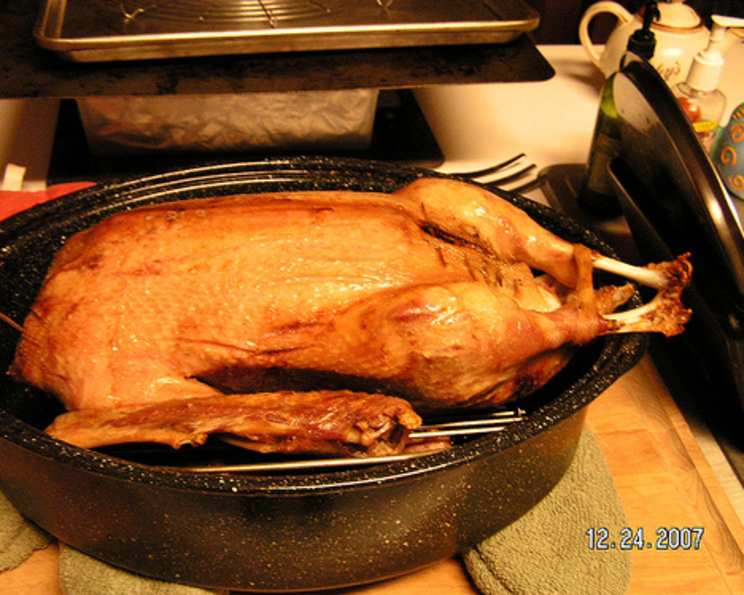
Roast Goose With Juniper Sauce
The first time I truly understood the magic of goose was on a blustery December evening in the Cotswolds. The air was crisp, the pub was warm, and the aroma of roasting meat hung heavy, promising comfort. The goose, burnished a deep mahogany, sat proudly on a platter, surrounded by laughter and the clinking of glasses. It was a moment of pure, unadulterated conviviality, and I’ve been chasing that goose-induced bliss ever since.
Recipe Overview
- Prep Time: 30 minutes
- Cook Time: 2 hours
- Total Time: 2 hours 30 minutes
- Servings: 6
- Yield: 1 goose
- Dietary Type: Not Gluten-Free, Not Dairy-Free
Ingredients
- 14 lbs goose, washed and patted dry
- 3 medium onions, peeled and sliced in thick segments
- 2 tablespoons olive oil
- 2 tablespoons all-purpose flour
- 2 glasses dry marsala
- 3 cups stock or 3 cups water
- 1 1/4 teaspoons English mustard powder
- 1 tablespoon whole grain mustard
- 12 crushed juniper berries
- 2 tablespoons red currant jam
- Salt, to taste
- Pepper, to taste
Equipment Needed
- Roasting pan
- Fork
- Aluminum foil
- Large pot or saucepan
- Whisk
- Carving knife
Instructions
-
Preheat your oven to 425°F (220°C).
-
Remove any large lumps of fat from the inside cavity of the goose. Thoroughly prick the goose all over with a fork. This helps the fat render properly, ensuring crispy skin.
-
Rub salt generously on the inside and outside of the goose. Wrap the legs in aluminum foil to prevent them from burning during the long cooking process.
-
Place the goose in a roasting pan upside down. This allows the fat from the back to render and baste the bird. Place the pan in the preheated oven and roast for twenty-five minutes.
-
Reduce the oven temperature to 350°F (175°C). Roast for 1 hour.
-
Carefully remove the roasting pan from the oven. Use a bulb baster or spoon to pour out the accumulated fat from the pan. Be extremely cautious, as the fat will be very hot. Remove the foil from the legs.
-
At this stage, you can add parboiled potatoes to the pan, if desired. They will roast in the rendered goose fat, becoming incredibly flavorful.
-
Turn the goose right side up and return it to the oven for another 30 minutes to 1 hour, or until done.
-
While the goose is roasting, prepare the juniper sauce. In a large pot or saucepan, cook the onions in olive oil over low heat for about 30 minutes, stirring occasionally, until they are soft and translucent.
-
Stir in the flour and cook for a few more minutes, stirring constantly, to create a roux. This will help thicken the sauce.
-
Gradually stir in the marsala, stock (or water), and crushed juniper berries.
-
Season with salt, pepper, and mustard powder. Bring to a simmer and simmer gently for 20 minutes, stirring occasionally.
-
Stir in the whole grain mustard and simmer for 5 more minutes.
-
To check for doneness, pierce the thigh meat of the goose with a fork. If the juices run clear, the bird is done. If the juices are still pink, return the goose to the oven for a bit longer. A meat thermometer inserted into the thickest part of the thigh should read 180°F (82°C).
-
Remove the goose from the oven and let it rest for about 10 minutes before carving. This allows the juices to redistribute, resulting in a more tender and flavorful bird.
-
Just before serving, stir the red currant jam into the juniper sauce. This adds a touch of sweetness and balances the richness of the sauce.
Expert Tips & Tricks
- Pricking the skin: Don’t be shy when pricking the skin. The more holes, the more fat that will render out, resulting in crispier skin. Use a thin skewer or a very sharp fork.
- Rendering the fat: Goose fat is liquid gold. Save the rendered fat from the roasting pan. It can be used for roasting potatoes, vegetables, or even for confit.
- Brining the goose: For an extra-moist bird, consider brining the goose overnight before roasting.
- Aromatics: Stuffing the cavity with aromatics like apples, oranges, and herbs can add another layer of flavor to the goose.
- Make-ahead sauce: The juniper sauce can be made a day or two in advance. Simply reheat it before serving and stir in the red currant jam at the last minute.
Serving & Storage Suggestions
Serve the roast goose hot, carved into slices. Drizzle generously with the juniper sauce. Accompany with roasted potatoes, seasonal vegetables, and cranberry sauce.
Leftover roast goose can be stored in an airtight container in the refrigerator for up to 3 days. Reheat gently in the oven or microwave. Goose also freezes well. Wrap tightly in plastic wrap and then in aluminum foil. It can be stored in the freezer for up to 3 months. Thaw overnight in the refrigerator before reheating.
Nutritional Information
| Nutrient | Amount per Serving | % Daily Value |
|---|---|---|
| Calories | 1415 kcal | N/A |
| Calories from Fat | 909 kcal | 64% |
| Total Fat | 101 g | 155% |
| Saturated Fat | 30.8 g | 153% |
| Cholesterol | 399.2 mg | 133% |
| Sodium | 336.9 mg | 14% |
| Total Carbohydrate | 7.9 g | 2% |
| Dietary Fiber | 1 g | 4% |
| Sugars | 2.5 g | 9% |
| Protein | 111.4 g | 222% |
Variations & Substitutions
- Duck instead of goose: If you can’t find a goose, a duck can be substituted, though the cooking time may need to be adjusted.
- Gluten-free: To make this recipe gluten-free, substitute the all-purpose flour with a gluten-free all-purpose flour blend.
- Different berries: If you don’t have juniper berries, try using cranberries or lingonberries in the sauce for a similar tartness.
- Wine substitution: If you don’t have marsala, a dry sherry or madeira wine can be used as a substitute.
- Spice it up: Add a pinch of red pepper flakes to the sauce for a touch of heat.
FAQs (Frequently Asked Questions)
Q: Why do I need to prick the goose skin?
A: Pricking the skin allows the fat underneath to render out during roasting, resulting in crispy skin and a less greasy bird.
Q: Can I stuff the goose?
A: While stuffing a goose is traditional, it can increase the cooking time and make it more difficult to ensure the goose is cooked through properly. If you choose to stuff it, make sure the stuffing reaches a safe internal temperature.
Q: How do I know when the goose is done?
A: The best way to check for doneness is to insert a meat thermometer into the thickest part of the thigh. It should read 180°F (82°C). Also, the juices should run clear when pierced with a fork.
Q: What can I do with the rendered goose fat?
A: Rendered goose fat is a culinary treasure! Use it for roasting potatoes, vegetables, or for confit. Store it in the refrigerator for several weeks or in the freezer for several months.
Q: Can I make the sauce ahead of time?
A: Yes, the juniper sauce can be made a day or two in advance. Simply reheat it before serving and stir in the red currant jam at the last minute.
Final Thoughts
Roast goose with juniper sauce is more than just a meal; it’s an experience. The rich, savory flavor of the goose, the crispy skin, and the tart-sweet sauce create a symphony of tastes that will delight your palate. Gather your loved ones, pour a glass of wine, and savor the moment. Don’t be intimidated by the process; embrace it, and create a memory that will last a lifetime. I urge you to try this recipe, and I hope you’ll share your feedback and any variations you might try. It pairs beautifully with a crisp Riesling or a hearty Pinot Noir. Enjoy!