
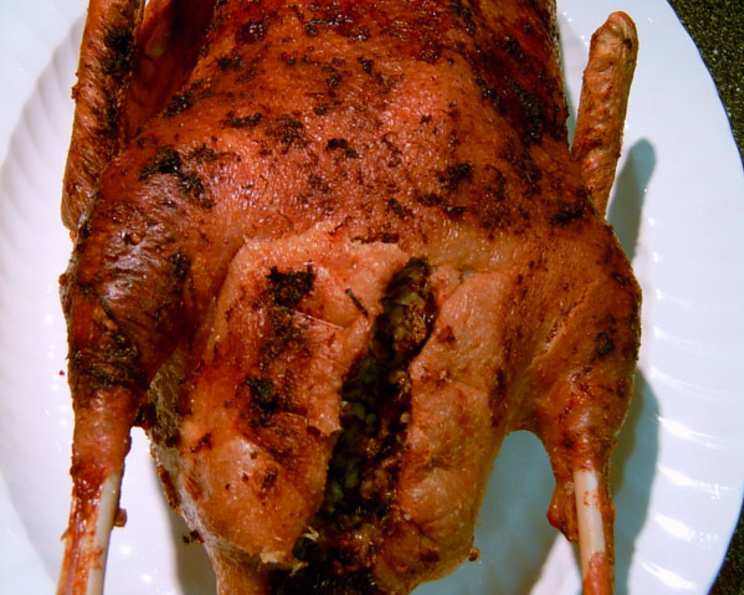
Roast Goose With Wild Rice-Chestnut Stuffing
The scent of roasting goose always takes me back to my grandmother’s kitchen. Every Christmas, the centerpiece of her holiday feast was a magnificent goose, its skin burnished to a deep mahogany. The aroma, rich and savory, mingled with the sweet smell of pine from the tree and the spicy warmth of cinnamon, creating a symphony of festive cheer that filled her home. It wasn’t just a meal; it was a tradition, a moment of connection and togetherness that I cherish to this day.
Recipe Overview:
- Prep Time: 2 hours (includes rice cooking and cooling)
- Cook Time: 3 hours 20 minutes
- Total Time: 5 hours 20 minutes
- Servings: 6
- Yield: 1 stuffed goose
- Dietary Type: Not specified
Ingredients:
- 1 cup raw wild rice
- 1 10-12 lb goose
- Salt and pepper to taste
- 4 tablespoons grated orange zest
- 6 slices bacon, chopped
- 1 onion, chopped
- 1 cup celery, sliced (with leaves)
- ½ cup chopped Italian parsley
- 1 (17 ounce) can whole chestnuts, drained and coarsely chopped (ensure they are not packed in syrup)
- 3 tablespoons chopped fresh sage leaves (or 1 teaspoon dried sage)
- 1 teaspoon dried thyme
- 1 teaspoon dried marjoram
Equipment Needed:
- Large pot
- Skillet
- Shallow roasting pan with rack
- Skewers
- Cotton twine
Instructions:
- Begin by cooking the wild rice according to the package instructions. This should yield approximately 4 cups cooked rice. Set aside to cool completely. This step is crucial as stuffing the goose with hot rice can affect the cooking process and final texture.
- Preheat your oven to 350°F (175°C). Ensure your oven rack is positioned in the center for even cooking.
- Remove the giblets from the goose cavity. Inspect the cavity openings for any loose fat and remove it. You can discard the fat or reserve it for another culinary purpose, such as rendering it for cooking potatoes or other vegetables.
- Using a skewer, prick the skin and fat of the goose in several places, being careful not to pierce the meat itself. This step is important as it allows excess fat to render out during roasting, resulting in a crispier skin and less greasy final product.
- Generously sprinkle the goose inside and out with salt and pepper. Then, rub the entire goose with the grated orange zest, ensuring it’s evenly distributed. The orange zest will impart a subtle citrusy aroma and flavor that complements the richness of the goose.
- In a large skillet, fry the chopped bacon until crisp. Remove the bacon from the skillet and set aside, leaving the rendered bacon fat in the pan.
- Add the chopped onion, sliced celery (including the leaves), and chopped Italian parsley to the skillet with the bacon fat. Sauté for about 5 minutes, or until the vegetables are softened and fragrant.
- In a large bowl, combine the cooked and cooled wild rice, sautéed vegetables, crisp bacon, coarsely chopped chestnuts, chopped fresh sage leaves (or dried sage), dried thyme, and dried marjoram. Season the mixture to taste with salt and pepper. Mix well to ensure all ingredients are evenly distributed. This is your flavorful stuffing.
- Carefully stuff the goose cavity with the prepared wild rice-chestnut stuffing. Do not overstuff the goose, as the stuffing will expand during cooking.
- Using skewers and cotton twine, “sew” the cavity shut to prevent the stuffing from spilling out during roasting. Make sure the closure is secure. Note: Do not stuff the goose until you are ready to roast it. Stuffing the goose too far in advance can create a breeding ground for bacteria.
- Place the goose breast side up on a rack in a shallow roasting pan. The rack elevates the goose, allowing hot air to circulate evenly around it, which promotes crispy skin.
- Roast the goose in the preheated oven for approximately 20 minutes per pound. For a 10-12 pound goose, this will take around 3 hours 20 minutes to 4 hours. If the skin begins to brown too much during roasting, cover the goose loosely with aluminum foil to prevent burning.
- To check for doneness, insert a meat thermometer into the thickest part of the thigh, avoiding the bone. The internal temperature should reach 165°F (74°C). You can also pierce the thigh with a fork; if the juices run clear, the goose is done.
- Once the goose is cooked, remove it from the oven and transfer it to a cutting board. Let the goose rest for at least 15 minutes before carving. This allows the juices to redistribute, resulting in a more tender and flavorful bird.
- Remove the stuffing from the goose and place it in a serving bowl. Carve the goose and serve immediately.
Expert Tips & Tricks:
- Render the Fat: During the first hour of roasting, spoon off the rendered fat from the bottom of the pan every 20-30 minutes. This will prevent the goose from sitting in excess fat and ensure crisper skin. Save the rendered goose fat; it’s liquid gold for roasting potatoes or other vegetables!
- Brining for Extra Moisture: For an even more succulent goose, consider brining it for 12-24 hours before roasting. A simple brine of salt, sugar, and water (along with aromatics like peppercorns, bay leaves, and citrus peels) will help the goose retain moisture during cooking.
- Crispy Skin Secret: After the initial roasting period, you can increase the oven temperature to 400°F (200°C) for the last 30-45 minutes to achieve extra crispy skin. Just keep a close eye on it to prevent burning.
- Make-Ahead Stuffing: The wild rice-chestnut stuffing can be prepared a day in advance and stored in the refrigerator. This saves time on the day of roasting. Just be sure to bring it to room temperature before stuffing the goose.
Serving & Storage Suggestions:
Serve the roasted goose hot, accompanied by the wild rice-chestnut stuffing. A tart cranberry sauce or a rich gravy made from the pan drippings complements the richness of the goose beautifully. Roasted root vegetables, such as carrots, parsnips, and sweet potatoes, also make excellent side dishes.
Leftover roasted goose and stuffing should be stored separately in airtight containers in the refrigerator. They will keep for 3-4 days. To reheat the goose, wrap it in foil and bake in a preheated oven at 325°F (160°C) until heated through. Reheat the stuffing separately in the oven or microwave.
For longer storage, cooked goose and stuffing can be frozen for up to 2-3 months. Thaw completely in the refrigerator before reheating.
Nutritional Information:
| Nutrient | Amount per Serving | % Daily Value |
|---|---|---|
| Calories | 1261.8 kcal | N/A |
| Calories from Fat | 663 g | 53% |
| Total Fat | 73.7 g | 113% |
| Saturated Fat | 23 g | 114% |
| Cholesterol | 290.6 mg | 96% |
| Sodium | 306.8 mg | 12% |
| Total Carbohydrate | 59.3 g | 19% |
| Dietary Fiber | 3 g | 11% |
| Sugars | 1.8 g | 7% |
| Protein | 85.6 g | 171% |
Note: Nutritional information is an estimate and may vary based on specific ingredients and portion sizes.
Variations & Substitutions:
- Gluten-Free Stuffing: To make the stuffing gluten-free, ensure that the bacon used is gluten-free and omit the dried thyme and marjoram.
- Fruit Stuffing: For a sweeter stuffing, add dried cranberries, apricots, or apples to the wild rice mixture.
- Nut Variations: If you don’t have chestnuts, you can substitute them with walnuts, pecans, or almonds. Toast the nuts lightly before adding them to the stuffing for a richer flavor.
- Herb Variations: Experiment with different herbs in the stuffing. Rosemary, savory, or oregano can add unique flavors.
FAQs (Frequently Asked Questions):
Q: Can I use store-bought cooked wild rice instead of cooking it myself?
A: Yes, you can use store-bought cooked wild rice to save time. Just make sure it is plain and unseasoned. You’ll need about 4 cups of cooked rice.
Q: How do I prevent the goose from drying out during roasting?
A: Pricking the skin allows fat to render, basting the goose with its own fat during roasting, and not overcooking it are crucial for keeping the goose moist. Brining also helps retain moisture.
Q: Can I prepare the stuffing the day before and stuff the goose just before roasting?
A: Yes, preparing the stuffing a day in advance is fine. However, it’s best to stuff the goose just before roasting to prevent bacterial growth.
Q: What if I don’t have orange zest?
A: If you don’t have orange zest, you can substitute it with lemon zest or omit it altogether. The orange zest adds a subtle citrus flavor but isn’t essential.
Q: How do I make gravy from the goose drippings?
A: To make gravy, strain the pan drippings and skim off the excess fat. In a saucepan, whisk together the drippings with a slurry of cornstarch or flour and water. Cook over medium heat, stirring constantly, until the gravy thickens. Season to taste with salt, pepper, and herbs.
Final Thoughts:
Roasting a goose is a truly special culinary experience, one that evokes warmth, tradition, and celebration. The rich, savory flavor of the goose, paired with the earthy sweetness of the wild rice-chestnut stuffing, creates a symphony of flavors that is sure to impress your guests. Don’t be intimidated by the process; with a little preparation and attention to detail, you can create a show-stopping centerpiece for your next holiday feast. Give this recipe a try, share your feedback, and pair it with a beautiful bottle of Pinot Noir for the ultimate dining experience.