
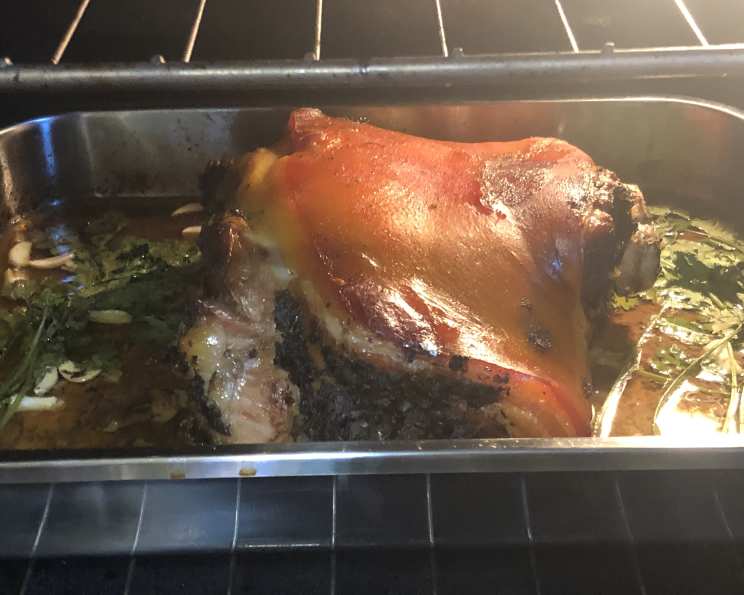
Pernil: A Puerto Rican Roast Pork Celebration
The aroma still lingers in my memory – that unmistakable scent of garlic, oregano, and slow-roasted pork that permeated every corner of my Abuela’s house every Christmas. Waking up to that smell wasn’t just waking up; it was an announcement, a herald of joy and togetherness. It meant family, laughter, music, and of course, the centerpiece: the glistening, crackling-skinned pernil, a dish that for me, embodies the heart and soul of Puerto Rican celebration. It wasn’t just a meal; it was a tradition, a legacy, and a delicious one at that!
Recipe Overview
- Prep Time: 24 hours
- Cook Time: 4-5 hours
- Total Time: 1 day, 4-5 hours
- Servings: 10
- Yield: 1 large roast
- Dietary Type: Gluten-Free, Dairy-Free
Ingredients
- 8-10 lbs pork shoulder
- ½ cup corn oil
- ¼ cup white vinegar
- 10 garlic cloves (or garlic powder to taste, but fresh is best)
- 3 (1 ounce) packages sazon goya
- Adobo seasoning, goya to taste
- 4 teaspoons black pepper
- 1 teaspoon oregano
Equipment Needed
- Large roasting pan
- Pilón (mortar and pestle) or food processor
- Sharp knife
- Aluminum foil
Instructions
- The night before you plan to cook, prepare the marinade. Peel the garlic cloves and, using a pilón (mortar and pestle), mash them into a smooth paste. Alternatively, you can use a food processor for this step.
- In a large bowl, combine the garlic paste with the corn oil, white vinegar, sazon goya, adobo seasoning (to taste), black pepper, and oregano. Whisk all ingredients together until well combined and set aside.
- Rinse the pork shoulder thoroughly in warm water. Pat it dry with paper towels.
- Using a sharp knife, make 1-inch deep slits all over the pork shoulder. The more slits you make, the more flavor will penetrate the meat.
- Place the pork shoulder in the roasting pan, skin side down. Generously rub the prepared marinade all over the pork, ensuring it gets into every slit you created.
- Cover the roasting pan tightly with aluminum foil and refrigerate overnight. This allows the flavors to fully infuse the pork.
- The next day, preheat your oven to 275°F (135°C).
- Place the covered roasting pan with the pork shoulder in the preheated oven and cook for the first 2 hours.
- After 2 hours, carefully remove the aluminum foil. Turn the pork shoulder over so that the skin side is now facing up.
- Increase the oven temperature to 350°F (175°C) and continue cooking uncovered for another 2+ hours. The exact cooking time will depend on the size of your pork shoulder and the accuracy of your oven.
- TIP: Begin checking the pork for doneness every 30-60 minutes after the initial 2 hours uncovered. Use a roasting fork to poke the pork. As the pernil cooks, you will notice a change in the texture – it will become increasingly tender.
- To ensure the pork is cooked through, insert a meat thermometer into the thickest part of the shoulder, avoiding the bone. The internal temperature should reach at least 190°F (88°C), but ideally closer to 200-205°F (93-96°C) for maximum tenderness.
- The pernil is ready when the juices run clear when pierced with a fork, and the skin is beautifully crisp and hard – the coveted “cuerito” that everyone fights for!
- Once cooked, remove the pernil from the oven and let it rest for at least 30 minutes before carving. This allows the juices to redistribute, resulting in a more moist and flavorful roast.
Expert Tips & Tricks
- Maximize Flavor: Don’t skimp on the marinade! The overnight marinating process is crucial for infusing the pork with that signature Puerto Rican flavor.
- Crispy Skin Secrets: For extra crispy skin, you can try broiling the pernil for the last 5-10 minutes of cooking. Watch it carefully to prevent burning. Another trick is to pour some of the rendered fat over the skin during the last hour of cooking.
- Don’t overcrowd the pan: Use a roasting pan that is large enough to accommodate the pork shoulder without it touching the sides. This will ensure even cooking.
- Make-Ahead Magic: The marinade can be made up to 2 days in advance and stored in the refrigerator. The pernil itself can be cooked a day ahead and reheated, although the skin may not be as crispy.
- Dealing with a Tough Cut: If your pork shoulder seems tough after cooking, try braising it in some of the pan juices for an additional hour or two at a low temperature. This will help to break down the connective tissue and make it more tender.
Serving & Storage Suggestions
Pernil is traditionally served with arroz con gandules (rice with pigeon peas), tostones (fried plantains), and ensalada de papa (potato salad). It’s a festive dish meant to be shared with family and friends!
Leftover pernil can be stored in the refrigerator for up to 3-4 days in an airtight container. To reheat, you can slice the pork and warm it in a skillet with a little bit of the pan juices, or you can reheat the entire roast in a low oven (250°F/120°C) until heated through. You can also freeze leftover pernil for up to 2-3 months. Thaw it overnight in the refrigerator before reheating.
Nutritional Information
| Nutrient | Amount per Serving | % Daily Value |
|---|---|---|
| Calories | 960.7 kcal | N/A |
| Calories from Fat | 686 g | 71% |
| Total Fat | 76.2 g | 117% |
| Saturated Fat | 24.1 g | 120% |
| Cholesterol | 257.6 mg | 85% |
| Sodium | 237.1 mg | 9% |
| Total Carbohydrate | 1.6 g | 0% |
| Dietary Fiber | 0.3 g | 1% |
| Sugars | 0.1 g | 0% |
| Protein | 62.6 g | 125% |
Note: Nutritional information is an estimate and may vary based on specific ingredients and preparation methods.
Variations & Substitutions
- Spicy Pernil: Add a pinch of cayenne pepper or a few chopped scotch bonnet peppers to the marinade for a spicy kick.
- Citrus Infusion: Add the juice of one orange and one lime to the marinade for a brighter, more citrusy flavor.
- Smoked Pernil: If you have access to a smoker, you can smoke the pork shoulder for a few hours before roasting it in the oven. This will add a delicious smoky flavor.
- Garlic Powder Alternative: If you don’t have fresh garlic, you can substitute it with 2-3 teaspoons of garlic powder.
- Vinegar Substitution: Apple cider vinegar can be used instead of white vinegar.
FAQs (Frequently Asked Questions)
Q: Can I use a different cut of pork?
A: While pork shoulder (also known as Boston butt) is the most traditional cut, you can use pork leg as well. However, pork shoulder has more fat, which renders during cooking and keeps the meat moist and flavorful.
Q: How do I know when the pernil is done?
A: The best way to check for doneness is to use a meat thermometer. The internal temperature should reach at least 190°F (88°C), but ideally closer to 200-205°F (93-96°C) for maximum tenderness. The juices should also run clear when pierced with a fork, and the skin should be crispy.
Q: Can I make the pernil ahead of time?
A: Yes, you can cook the pernil a day ahead and reheat it. However, the skin may not be as crispy. To help crisp it up, you can broil it for a few minutes before serving.
Q: What if I don’t have sazon goya?
A: Sazon goya is a seasoning blend that is commonly used in Puerto Rican cooking. If you can’t find it, you can try making your own blend by combining annatto powder, cumin, coriander, garlic powder, and oregano.
Q: How do I get the skin extra crispy?
A: Ensure the skin is dry before roasting. You can pat it dry with paper towels. Also, broiling it for a few minutes at the end of the cooking process, or pouring some of the rendered fat over the skin during the last hour, helps.
Final Thoughts
This pernil recipe is more than just a set of instructions; it’s an invitation to experience a taste of Puerto Rican culture. The aroma alone will transport you to a sun-drenched island filled with music, laughter, and the warmth of family. Don’t be intimidated by the long cooking time—it’s mostly hands-off. Gather your ingredients, embrace the process, and prepare to be rewarded with a truly unforgettable dish. I encourage you to try this recipe, share it with your loved ones, and perhaps even pair it with a refreshing piña colada! And please, let me know what you think – your feedback is invaluable. Buen provecho!