
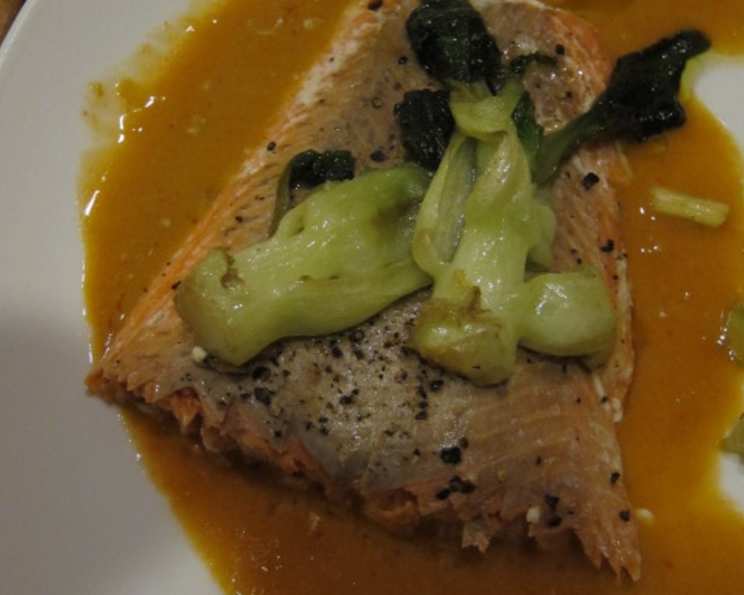
Roast Salmon With Thai Red Curry and Bok Choy
I remember the first time I tasted Thai red curry. It was at a tiny, unassuming restaurant tucked away in a corner of Seattle’s Pike Place Market. The aroma alone – a vibrant mix of lemongrass, ginger, and chilies – was enough to transport me. I was hooked from that moment. And ever since, I’ve been playing around with different ways to incorporate those bold, fragrant flavors into my cooking. This recipe, pairing succulent roast salmon with a creamy Thai red curry sauce and tender bok choy, is one of my favorite culinary creations.
Recipe Overview
- Prep Time: 15 minutes
- Cook Time: 12 minutes
- Total Time: 27 minutes
- Servings: 4
- Dietary Type: Gluten-Free
Ingredients
- 8 whole baby bok choy
- 2 teaspoons vegetable oil
- 2 tablespoons vegetable oil
- 1/2 teaspoon Thai red curry paste
- 14 ounces unsweetened coconut milk
- 1/4 cup lemongrass, finely chopped or 1 tablespoon lemon peel, grated
- 1 tablespoon brown sugar
- 2 1/2 tablespoons fresh lime juice
- 2 tablespoons fish sauce (nam pla)
- 24 ounces salmon fillets
Equipment Needed
- Large Pot
- Heavy Large Skillet
- Ovenproof Skillet
- Nonstick Skillet
Instructions
-
Begin by prepping the bok choy. Bring a pot of salted water to a boil. Add the bok choy and cook until crisp-tender, about 2 minutes. Immediately drain the bok choy and set aside. This quick blanch ensures they retain a vibrant color and slightly crunchy texture.
-
Next, prepare the Thai red curry sauce. Heat 2 teaspoons of vegetable oil in a heavy large skillet over medium heat. Add the Thai red curry paste and stir continuously for about 30 seconds, until fragrant. Be careful not to burn the paste! This step blooms the spices, releasing their full flavor.
-
Pour in the unsweetened coconut milk, add the chopped lemongrass (or grated lemon peel), and 1 tablespoon of brown sugar. Bring the mixture to a boil, then reduce the heat and simmer until the sauce has slightly thickened and reduced to about 1 cup, approximately 5 minutes. Stir occasionally to prevent scorching.
-
Remove the skillet from the heat and stir in 2 1/2 tablespoons of fresh lime juice and 1 tablespoon of fish sauce. This balances the sweetness and adds a crucial umami depth to the sauce. Set the curry sauce aside.
-
Preheat your oven to 400°F (200°C).
-
Now, prepare the salmon. Heat 1 tablespoon of vegetable oil in a heavy large ovenproof skillet over high heat until the oil shimmers. Pat the salmon fillets dry with paper towels, then sprinkle them generously with salt and pepper. Place the salmon skin-side down (if applicable) into the hot skillet.
-
Cook the salmon for 2 minutes per side, searing to create a beautiful crust.
-
Transfer the skillet to the preheated oven. Bake the salmon until it is opaque in the center and flakes easily with a fork, about 6 minutes. The exact baking time will depend on the thickness of your fillets, so check for doneness after 5 minutes.
-
While the salmon is baking, sauté the bok choy. Heat the remaining 1 tablespoon of vegetable oil in a large nonstick skillet over medium-high heat. Add the blanched bok choy and sauté until it begins to brown in spots, about 4 minutes.
-
Drizzle the bok choy with the remaining 1 tablespoon of fish sauce during the last minute of cooking. This adds a savory kick and enhances its flavor.
-
To serve, bring the curry sauce to a simmer. Ladle the curry sauce onto four plates.
-
Arrange one salmon fillet and two pieces of bok choy atop the curry sauce on each plate. Serve immediately and enjoy!
Expert Tips & Tricks
- For extra flavor, marinate the salmon in a mixture of lime juice, fish sauce, and a touch of soy sauce for 30 minutes before cooking.
- If you don’t have lemongrass, lemon peel is an acceptable substitute. However, the flavor of fresh lemongrass is far superior. Look for it in the produce section of most well-stocked grocery stores or Asian markets.
- Don’t overcook the salmon! It should be moist and tender, not dry. Use an instant-read thermometer to ensure it reaches an internal temperature of 145°F (63°C).
- To prevent the bok choy from getting soggy, make sure to dry it thoroughly after blanching.
- If you’re short on time, you can skip the searing step and bake the salmon directly in the oven. However, searing adds a wonderful depth of flavor and texture.
Serving & Storage Suggestions
This dish is best served immediately while the salmon is still warm and the bok choy is crisp-tender. For a complete meal, serve with steamed jasmine rice or quinoa to soak up the delicious curry sauce.
Leftovers can be stored in an airtight container in the refrigerator for up to 2 days. Reheat the salmon gently in a skillet over low heat or in the microwave. Reheat the bok choy separately to prevent it from becoming soggy. The curry sauce can also be reheated separately. Note that reheated salmon may not be as moist as when freshly cooked.
It is not recommended to freeze this dish, as the texture of the salmon and bok choy may be compromised.
Nutritional Information
| Nutrient | Amount per Serving | % Daily Value |
|---|---|---|
| Calories | 522.9 kcal | N/A |
| Calories from Fat | 340 g | 65% |
| Total Fat | 37.8 g | 58% |
| Saturated Fat | 21.3 g | 106% |
| Cholesterol | 77.4 mg | 25% |
| Sodium | 899.1 mg | 37% |
| Total Carbohydrate | 10.2 g | 3% |
| Dietary Fiber | 0.8 g | 3% |
| Sugars | 4.8 g | 19% |
| Protein | 38.3 g | 76% |
Variations & Substitutions
- Spicier Curry: Add more Thai red curry paste or a pinch of red pepper flakes for extra heat.
- Vegetarian Option: Substitute the salmon with firm tofu or tempeh. Be sure to press the tofu to remove excess moisture before cooking.
- Vegetable Variations: Add other vegetables such as bell peppers, snap peas, or mushrooms to the sauté.
- Coconut Milk Substitute: You can use light coconut milk for a lower-fat option, but the sauce will be less creamy.
- Herbs: Garnish with fresh cilantro or basil for added flavor and visual appeal.
- Sweetness: Adjust the amount of brown sugar to your taste. Honey or maple syrup can be used as substitutes.
- Fish Sauce: If you are vegetarian or vegan, you can substitute the fish sauce with soy sauce or tamari, but it will alter the flavor slightly.
FAQs (Frequently Asked Questions)
Q: Can I use frozen salmon fillets for this recipe?
A: Yes, you can use frozen salmon fillets. Thaw them completely before cooking and pat them dry to remove excess moisture.
Q: Can I make the curry sauce ahead of time?
A: Absolutely! The curry sauce can be made up to 2 days in advance and stored in the refrigerator. Reheat gently before serving.
Q: What if I don’t have an ovenproof skillet?
A: If you don’t have an ovenproof skillet, you can sear the salmon in a regular skillet and then transfer it to a baking sheet lined with parchment paper to finish cooking in the oven.
Q: How can I tell if the salmon is cooked through?
A: The salmon is cooked through when it is opaque in the center and flakes easily with a fork. You can also use an instant-read thermometer to check for an internal temperature of 145°F (63°C).
Q: Can I use different types of fish for this recipe?
A: While salmon is the star of this dish, you could also use other firm-fleshed fish such as cod, halibut, or sea bass. Adjust the cooking time accordingly.
Final Thoughts
This Roast Salmon with Thai Red Curry and Bok Choy is a dish that truly celebrates the vibrant flavors of Thai cuisine. The combination of the rich, creamy curry sauce, the tender, flaky salmon, and the slightly bitter bok choy is simply divine. I encourage you to try this recipe and experience the magic for yourself! Feel free to experiment with different variations and substitutions to make it your own. And if you do, please share your feedback – I’d love to hear how it turns out! This dish pairs beautifully with a crisp Sauvignon Blanc or a light-bodied Pinot Noir. Enjoy!