
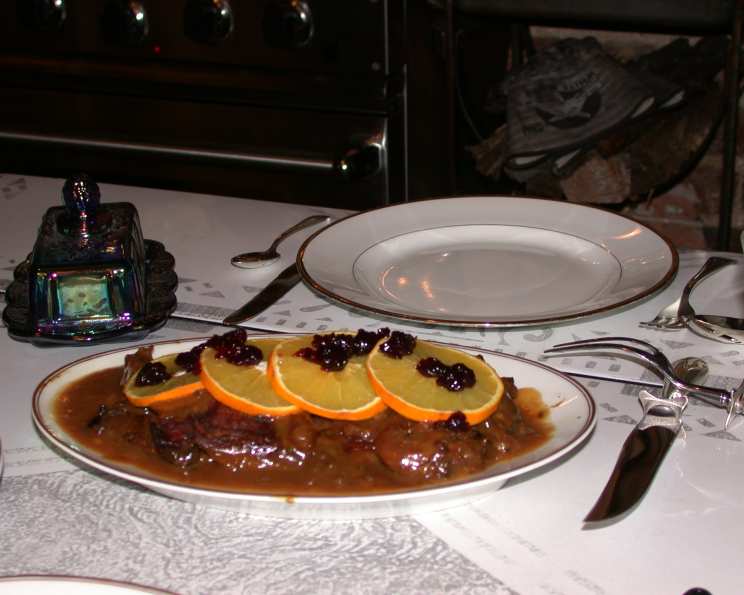
The Wild Game Feast: Slow-Roasted Venison with Black Currant Glaze
I’ll never forget the first time I tasted truly exceptional venison. It was at a small hunting lodge nestled in the misty hills of Scotland. The air was thick with the scent of peat and woodsmoke, and the centerpiece of the evening was a perfectly roasted haunch of venison, glistening with a rich, dark glaze. That succulent, gamey flavor, balanced by the sweetness of berries and the warmth of spices, sparked a lifelong love affair with this magnificent meat. This recipe, refined over years, aims to capture that unforgettable experience, bringing the taste of the wild to your table.
Recipe Overview:
- Prep Time: 45 minutes
- Cook Time: 6 hours
- Total Time: 6 hours 45 minutes
- Servings: 6
- Yield: 1 roast
- Dietary Type: Gluten-Free (if using gluten-free flour)
Ingredients:
- 1 venison roast (leg)
- 4 ounces salt pork
- 1 teaspoon salt
- 1 teaspoon pepper (freshly ground)
- 1 tablespoon ground ginger
- 1 teaspoon dried oregano
- 1 tablespoon olive oil
- 1/2 cup butter (melted)
- 1 cup orange juice
- 1 cup stock (beef or vegetable)
- 1 cup sherry wine (very dry)
- 1/3 cup flour (all-purpose or gluten-free blend)
- 1/2 cup Chianti wine
- 1/2 cup sherry wine (very dry)
- 1 orange (for 1 tablespoon zest, then sliced)
- 1/2 cup black currant jelly
Equipment Needed:
- Roasting pan with lid
- Larding needle (optional, but recommended)
- Small plate
- Small bowl or measuring cup
- Whisk
- Gravy boat
Instructions:
-
Prepare the Herb Mixture: On a small plate, combine the salt, pepper, ground ginger, and dried oregano. Mix well to create a flavorful rub for the venison.
-
Lard the Venison (Optional but Recommended): Cut the salt pork into strips approximately 2 inches long and 1/4 inch wide. These strips should be sized to fit easily into your larding needle. If you don’t have a larding needle, you can skip this step, though the salt pork adds significant moisture and flavor.
-
Season the Salt Pork: Roll each strip of salt pork in the herb seasoning mixture, ensuring they are well coated. This infuses the fat with aromatic flavors that will permeate the venison during roasting. You can even freeze the seasoned strips at this point for easier handling, especially if your kitchen is warm.
-
Lard the Venison: Using the larding needle, insert the seasoned salt pork strips into the venison roast. Distribute the strips evenly throughout the roast to ensure consistent flavor and moisture.
-
Prepare the Roast: Rub the venison roast with olive oil. This helps the seasoning adhere and promotes browning. Place the roast in a roasting pan.
-
Season the Roast: Pat any remaining herb seasoning onto the surface of the venison roast. This ensures a well-seasoned crust.
-
Add Melted Butter: Pour the melted butter evenly over the venison roast. The butter will help keep the roast moist and contribute to a rich flavor.
-
Prepare the Braising Liquid: In a bowl or large measuring cup, mix together the orange juice, stock, and sherry wine. This aromatic liquid will braise the venison, keeping it incredibly tender.
-
Braise the Venison: Pour the orange juice mixture over the venison roast in the roasting pan.
-
Slow Roast: Cover the roasting pan tightly with a lid or aluminum foil. Bake in a preheated oven at 325 degrees Fahrenheit (160 degrees Celsius) for 5 hours.
-
Baste Frequently: During the 5-hour roasting period, baste the venison roast every 15 to 20 minutes with the pan juices. This helps keep the roast moist and develops a rich, flavorful crust.
-
Remove Roast and Skim Fat: After 5 hours, remove the roasting pan from the oven. Carefully remove the venison roast from the pan and set it aside. Skim the excess fat from the surface of the natural gravy in the pan. This step is crucial for achieving a smooth and flavorful gravy.
-
Prepare the Gravy: In a small bowl, make a smooth paste by combining some of the skimmed fat from the pan with the flour. Gradually whisk in the Chianti wine, sherry wine, and orange zest. This mixture will thicken and enrich the gravy.
-
Simmer the Gravy: Stir the wine and flour mixture back into the natural gravy in the roasting pan. Cook over low heat for 10 minutes, stirring constantly, until the gravy has thickened to your desired consistency.
-
Glaze and Finish Roasting: Return the venison roast to the roasting pan, nestled in the gravy. Spread 1/4 cup of the black currant jelly evenly over the top of the roast. This glaze will add a beautiful sheen and a touch of sweetness.
-
Final Roast: Cover the roasting pan again and continue baking in the oven for another hour, basting the roast with the gravy as needed. This final hour allows the glaze to set and the flavors to meld together beautifully.
-
Rest and Garnish: Remove the roasting pan from the oven. Transfer the venison roast to a serving platter. Garnish the roast with the remaining black currant jelly and arrange the orange slices around the platter for a festive presentation.
-
Serve Immediately: Transfer the gravy to a gravy boat. Serve the slow-roasted venison hot, accompanied by baked potatoes and a green vegetable.
Expert Tips & Tricks:
- Larding is Key: If you can, invest in a larding needle. The salt pork not only adds flavor but also bastes the venison from the inside, ensuring it stays incredibly moist.
- Don’t Skip Basting: Basting every 15-20 minutes might seem tedious, but it’s essential for developing a beautiful crust and keeping the venison from drying out.
- Low and Slow is the Way to Go: Resist the urge to crank up the heat. The low temperature allows the venison to become incredibly tender and flavorful.
- Adjust the Glaze: If you prefer a less sweet glaze, reduce the amount of black currant jelly. You can also add a tablespoon of balsamic vinegar for a tangy twist.
- Make Ahead: The gravy can be made a day ahead and reheated. This will save you time on the day of your feast.
Serving & Storage Suggestions:
Serve the roasted venison hot, sliced against the grain. It pairs beautifully with creamy mashed potatoes, roasted root vegetables, or a simple green salad. For a truly special occasion, consider serving it with wild rice pilaf and cranberry sauce.
Leftover venison can be stored in an airtight container in the refrigerator for up to 3 days. For longer storage, freeze the venison in individual portions. Reheat gently in the oven or microwave, adding a little extra gravy to prevent it from drying out.
Nutritional Information:
| Nutrient | Amount per Serving | % Daily Value |
|---|---|---|
| Calories | 695 kcal | N/A |
| Calories from Fat | 297 kcal | N/A |
| Total Fat | 33.1g | 50% |
| Saturated Fat | 15.6g | 78% |
| Cholesterol | 56.9mg | 18% |
| Sodium | 790.7mg | 32% |
| Total Carbohydrate | 41.3g | 13% |
| Dietary Fiber | 1.4g | 5% |
| Sugars | 22.4g | 89% |
| Protein | 2.7g | 5% |
Note: Nutritional information is an estimate and may vary based on specific ingredients and preparation methods.
Variations & Substitutions:
- Red Wine Reduction: Substitute the sherry in the gravy with a full-bodied red wine like Cabernet Sauvignon for a richer, more intense flavor.
- Juniper Berry Infusion: Add a tablespoon of crushed juniper berries to the herb rub for a distinctly gamey flavor.
- Seasonal Vegetables: Roast root vegetables such as carrots, parsnips, and potatoes alongside the venison for a complete one-pan meal.
- Spice it Up: A pinch of cayenne pepper to the herb rub will add a subtle kick.
- Gluten-Free Gravy: Use a gluten-free flour blend to thicken the gravy and ensure the dish is suitable for those with gluten sensitivities.
FAQs (Frequently Asked Questions):
Q: Can I use a different cut of venison?
A: While the leg roast is recommended for its tenderness and flavor, you can use other cuts such as the shoulder roast. Adjust cooking time accordingly, as leaner cuts may require less time to prevent them from drying out.
Q: What if I don’t have a larding needle?
A: If you don’t have a larding needle, you can skip the larding step. Instead, consider placing slices of bacon over the roast during the cooking process to provide extra moisture and flavor.
Q: Can I use different types of jelly for the glaze?
A: While black currant jelly is classic, you can experiment with other fruit jellies such as red currant or lingonberry for a slightly different flavor profile.
Q: How do I know when the venison is cooked through?
A: Use a meat thermometer to check the internal temperature. For medium-rare, aim for 130-135°F (54-57°C); for medium, aim for 140-145°F (60-63°C).
Q: Can I prepare this dish in a slow cooker?
A: Yes, you can adapt this recipe for a slow cooker. Brown the venison in a skillet first, then transfer it to the slow cooker with the braising liquid and herbs. Cook on low for 6-8 hours, or until the venison is very tender.
Final Thoughts:
This slow-roasted venison recipe is more than just a meal; it’s an experience. From the aromatic herbs to the rich, dark glaze, every element is designed to transport you to a wild and beautiful place. Don’t be intimidated by the length of the recipe – the slow cooking process is what makes it so special. I encourage you to try it, to share it with your loved ones, and to savor every delicious bite. Pair it with a hearty red wine and enjoy the taste of the wild!