
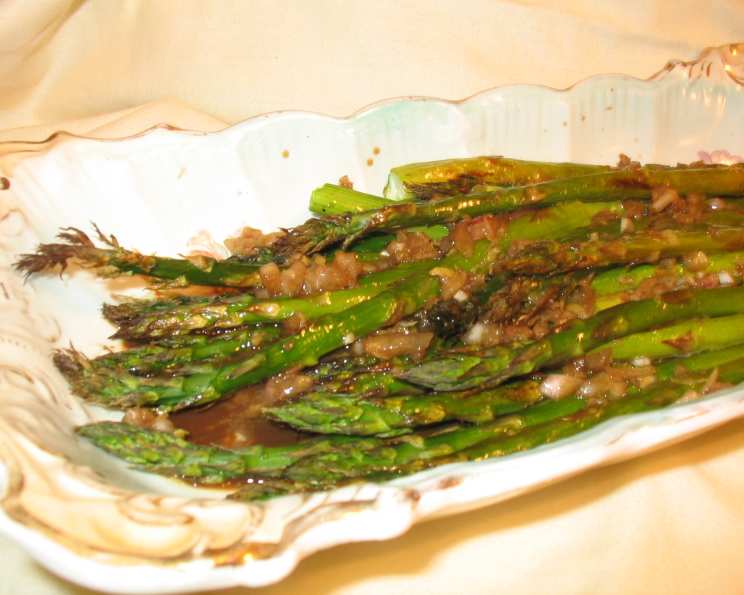
Roasted Asparagus with Balsamic-Shallot Butter: A Springtime Delight
The first time I tasted asparagus prepared with balsamic vinegar, I was a young cook, overwhelmed by the bounty of spring at a farmer’s market. A grizzled vendor, seeing my wide-eyed wonder, insisted I try his family’s recipe. He handed me a warm spear glistening with a dark, sweet glaze. The combination of the earthy asparagus, the tangy balsamic, and the subtle sweetness of shallots was pure magic, a taste of sunshine and new beginnings that I’ve cherished ever since. This recipe captures that essence, bringing a touch of springtime elegance to any table.
Recipe Overview
- Prep Time: 10 minutes
- Cook Time: 15 minutes
- Total Time: 25 minutes
- Servings: 8
- Yield: About 2 lbs of asparagus
- Dietary Type: Gluten-Free
Ingredients
- 3 tablespoons finely chopped shallots
- 2 tablespoons butter, melted
- 2 tablespoons balsamic vinegar
- 1 teaspoon chopped fresh thyme
- 1/4 teaspoon salt
- 1/2 teaspoon grated fresh lemon rind
- 2 lbs asparagus spears
- Cooking spray
Equipment Needed
- Shallow baking pan
- Whisk
- Oven
Instructions
- Begin by preparing the balsamic-shallot butter. In a small bowl, combine the 3 tablespoons of finely chopped shallots, 2 tablespoons of melted butter, 2 tablespoons of balsamic vinegar, 1 teaspoon of chopped fresh thyme, 1/4 teaspoon of salt, and 1/2 teaspoon of grated fresh lemon rind. Stir these ingredients together thoroughly with a whisk until they are well combined. Set aside. The shallots will mellow slightly as they sit in the butter and vinegar.
- Preheat your oven to 450 degrees Fahrenheit (232 degrees Celsius). Ensuring the oven is fully preheated is crucial for achieving that perfectly crisp-tender asparagus.
- Prepare the asparagus by snapping off the woody ends. Hold each spear near the base and gently bend it; it will naturally snap at the point where it becomes tough. Discard the woody ends. This ensures you are only cooking the tender, flavorful part of the asparagus.
- Arrange the prepared asparagus spears in a single layer on a shallow baking pan. Before placing the asparagus, lightly coat the baking pan with cooking spray. This will prevent the asparagus from sticking and ensure even cooking. It’s important to arrange the spears in a single layer so they roast properly instead of steaming.
- Cover the baking pan tightly with aluminum foil. Place the covered pan in the preheated oven and bake for 5 minutes. The foil helps to gently steam the asparagus initially, ensuring it is tender before it roasts.
- Carefully remove the foil from the baking pan. Continue to bake the asparagus uncovered for an additional 10 minutes, or until the asparagus is crisp-tender. The exact baking time may vary slightly depending on the thickness of your asparagus spears and the accuracy of your oven. Keep a close eye on them to prevent them from becoming overcooked and mushy. You’re looking for a vibrant green color and slightly wrinkled texture.
- Remove the baking pan from the oven. While the asparagus is still hot, pour the prepared balsamic-shallot butter mixture evenly over the asparagus spears. Gently toss the asparagus to coat them thoroughly with the butter mixture. Make sure each spear is glistening with the tangy-sweet balsamic glaze.
- Serve the roasted asparagus with balsamic-shallot butter immediately. It’s best enjoyed while it’s still warm and the asparagus is at its peak crisp-tender texture.
Expert Tips & Tricks
- For a richer flavor, brown the butter before adding the shallots and balsamic vinegar. Be careful not to burn the butter; you’re looking for a nutty aroma and a golden-brown color.
- If you don’t have fresh thyme, you can substitute with dried thyme. Use about 1/3 teaspoon of dried thyme for every teaspoon of fresh thyme. Remember that dried herbs are more potent than fresh, so you’ll need less.
- Adjust the balsamic vinegar to your liking. If you prefer a sweeter glaze, use a balsamic glaze or a slightly aged balsamic vinegar. If you like a tangier flavor, use a younger balsamic vinegar.
- If your asparagus spears are particularly thick, you may need to increase the cooking time by a few minutes. Conversely, if they are very thin, reduce the cooking time to prevent them from overcooking.
- Don’t overcrowd the pan. If necessary, use two pans to ensure the asparagus roasts evenly. Overcrowding will cause the asparagus to steam instead of roast, resulting in a less desirable texture.
Serving & Storage Suggestions
Serve the roasted asparagus with balsamic-shallot butter as a side dish to grilled meats, fish, or poultry. It also pairs well with risotto or pasta dishes. To elevate the presentation, arrange the asparagus spears neatly on a platter and drizzle any remaining butter sauce over the top.
Leftover roasted asparagus can be stored in an airtight container in the refrigerator for up to 3 days. To reheat, you can gently warm it in a skillet over medium heat, in the oven at 350°F (175°C) for a few minutes, or even in the microwave. Be careful not to overcook it during reheating, as it can become mushy. While freezing is possible, the texture of the asparagus will be compromised, so it’s best enjoyed fresh.
Nutritional Information
| Nutrient | Amount per Serving | % Daily Value |
|---|---|---|
| Calories | 57 kcal | 3% |
| Fat | 3.1 g | 4% |
| Saturated Fat | 1.9 g | 9% |
| Cholesterol | 7.6 mg | 2% |
| Sodium | 115.3 mg | 4% |
| Carbohydrate | 6 g | 2% |
| Fiber | 2.3 g | 9% |
| Sugars | 2.1 g | 8% |
| Protein | 2.9 g | 5% |
Note: Nutritional information is an estimate and may vary based on specific ingredients and portion sizes.
Variations & Substitutions
- Vegan: Substitute the butter with a vegan butter alternative or olive oil for a dairy-free version. The flavor will be slightly different, but still delicious.
- Garlic Infusion: Add 1-2 cloves of minced garlic to the shallots while making the butter for a more pungent flavor.
- Citrus Burst: Use orange or grapefruit zest instead of lemon zest for a different citrusy note.
- Spicy Kick: Add a pinch of red pepper flakes to the butter mixture for a subtle heat.
- Parmesan Finish: Sprinkle grated Parmesan cheese over the asparagus after coating it with the butter mixture for a savory finish.
FAQs (Frequently Asked Questions)
Q: Can I make the balsamic-shallot butter ahead of time?
A: Yes, you can! The butter mixture can be made up to 2 days in advance and stored in the refrigerator. Just bring it to room temperature before using.
Q: Can I use frozen asparagus for this recipe?
A: Fresh asparagus is highly recommended for the best texture and flavor. Frozen asparagus tends to be more watery and may not roast as well. If you must use frozen, thaw it completely and pat it dry before roasting.
Q: How do I know when the asparagus is done?
A: The asparagus should be bright green and slightly tender with a bit of crispness. You should be able to pierce it easily with a fork, but it shouldn’t be mushy.
Q: Can I grill the asparagus instead of roasting it?
A: Absolutely! Grilling adds a smoky flavor. Toss the asparagus with the balsamic-shallot butter and grill over medium heat for 5-7 minutes, turning occasionally, until tender-crisp.
Q: What if I don’t have shallots?
A: You can substitute with finely chopped red onion. The flavor will be a bit stronger, so use slightly less than the amount of shallots called for in the recipe.
Final Thoughts
Roasted asparagus with balsamic-shallot butter is a simple yet elegant dish that’s perfect for any occasion. The combination of the tender asparagus, the tangy balsamic vinegar, and the savory shallots is truly irresistible. I encourage you to try this recipe and experience the magic for yourself. Feel free to experiment with variations and substitutions to create your own unique twist. And don’t forget to share your creations and feedback with me! This dish pairs wonderfully with a crisp white wine or a light rosé, making it the perfect addition to a spring or summer meal. Enjoy!